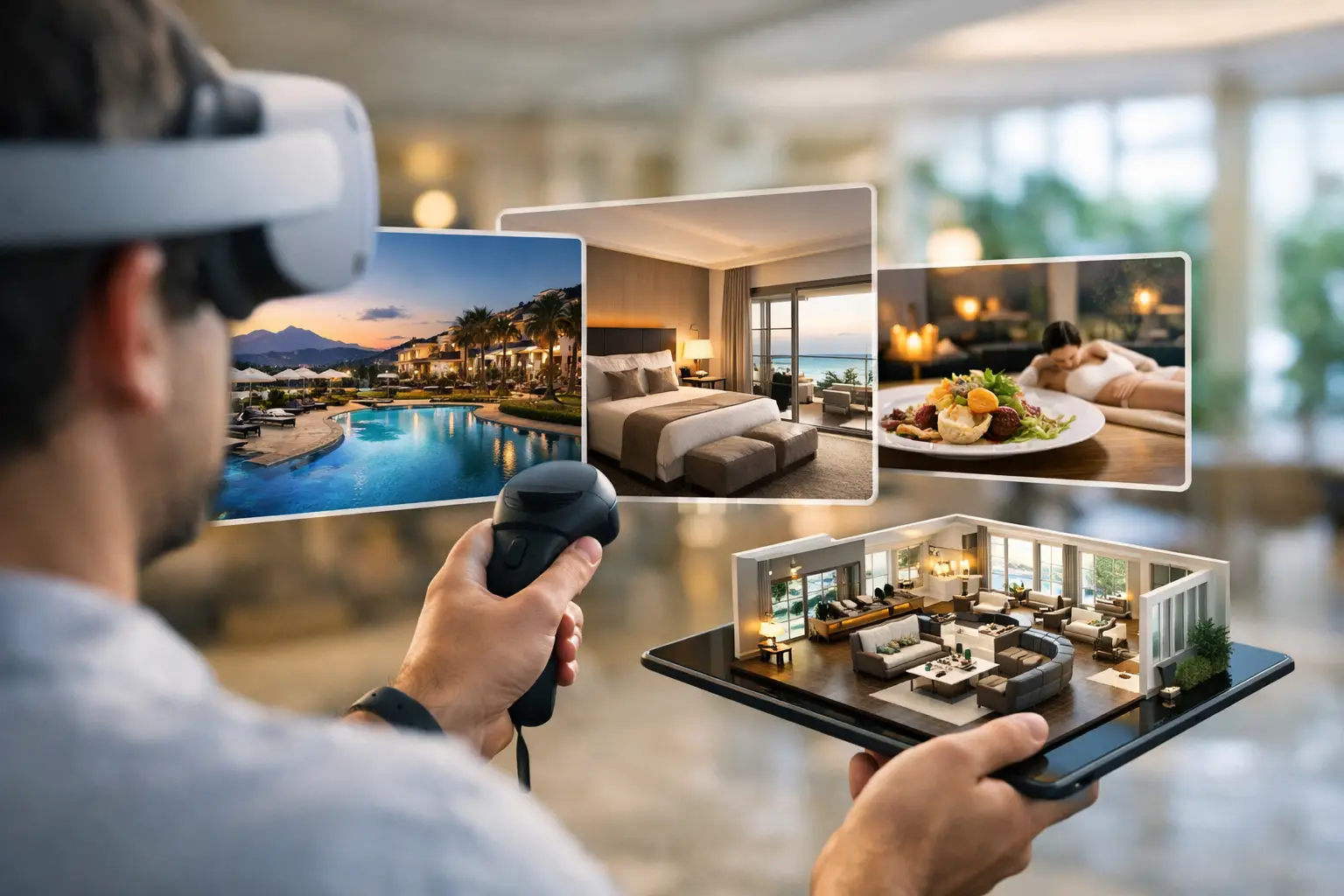

A buyer reviewing a commercial property from another country does not need more photos. They need enough spatial context to assess access, scale, condition, layout, and fit before committing to a call or site visit. This guide to virtual property marketing explains how to create that confidence with immersive visual assets that move prospects from casual interest to informed action.
For developers, brokers, hospitality operators, and venue teams, virtual marketing is no longer limited to placing a 360-degree camera in a room. The strongest programs combine accurate spatial capture, focused storytelling, and a clear conversion path. The result is a digital property experience that works around the clock for local and international decision-makers.
What virtual property marketing should achieve
Virtual property marketing turns a physical environment into an interactive digital asset used to attract, qualify, and convert prospects. Depending on the property and sales cycle, that asset may include a Matterport digital twin, 360 virtual tour, drone imagery, CGI walkthrough, virtual staging, commercial photography, video, or interactive floor plan.
The commercial objective is not simply to impress visitors. It is to reduce uncertainty before the first conversation. A well-produced experience can help a prospect understand whether a warehouse has the right loading configuration, whether a hotel event space supports a desired setup, or whether a residence delivers the flow promised in the listing.
This is particularly valuable when the audience is remote, the asset is large or complex, or a physical visit requires significant coordination. In markets such as Malaysia and Singapore, where cross-border interest and time-sensitive decisions are common, digital access can widen the qualified buyer pool without replacing the value of an in-person viewing.
Start with the decision you need to support
A virtual property campaign should be planned around the questions a prospect must answer, not around the equipment available. Residential buyers may need to compare room proportions, daylight, finishes, and neighborhood context. Commercial tenants may prioritize access routes, ceiling height, unit configuration, parking, nearby transport, and expansion potential.
For hospitality and event venues, the decision is often experiential. Can guests visualize arrival, movement through public spaces, meeting-room capacity, and the quality of the guest environment? For industrial facilities, the conversation may be more operational: how does material flow through the space, where are critical assets located, and can remote stakeholders inspect site conditions efficiently?
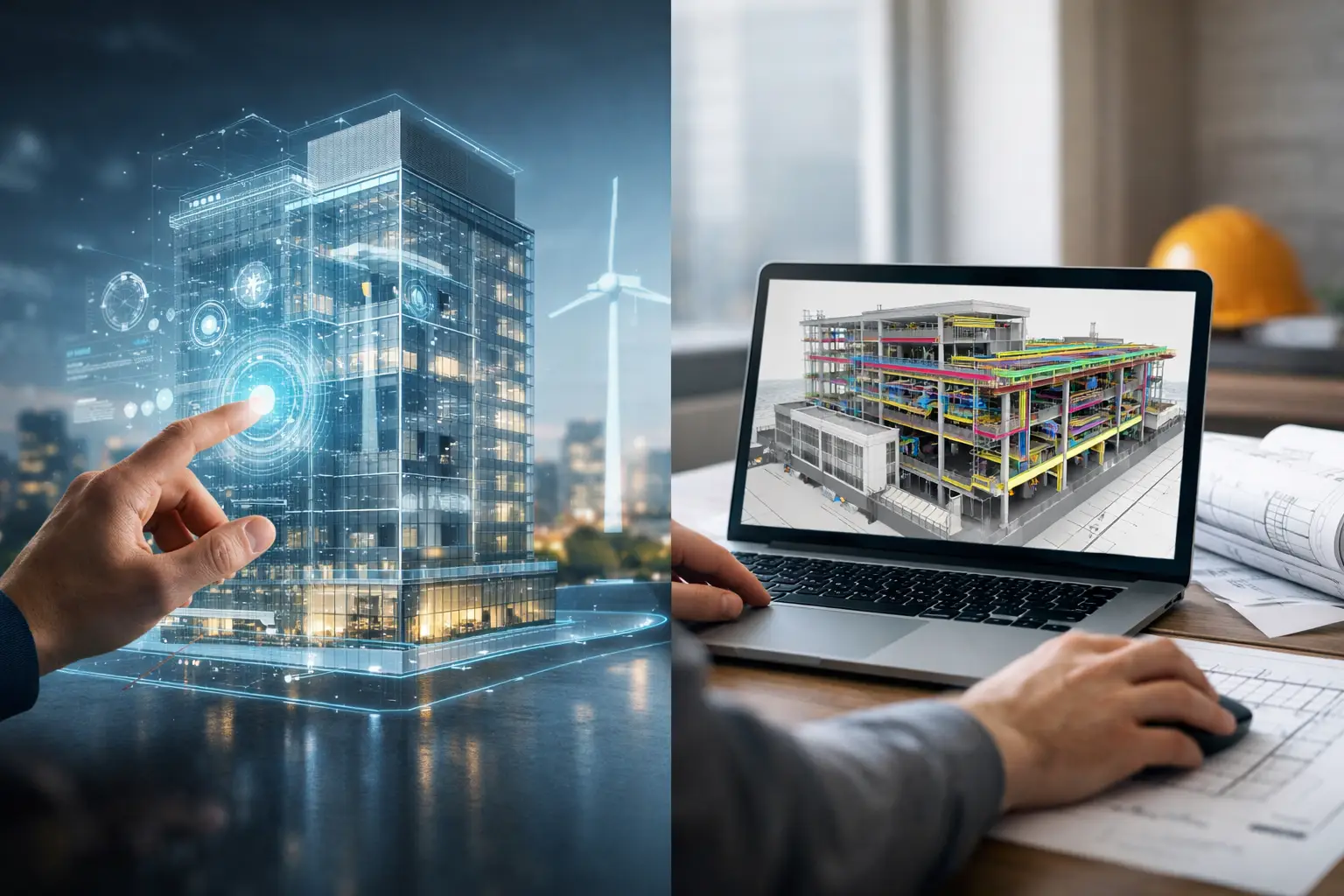
Before capture begins, define the primary audience, the action you want them to take, and the evidence required to support that action. A prospecting campaign may need a high-impact aerial film and a concise virtual tour. A leasing campaign may benefit from a digital twin with labeled points of interest, floor plans, and embedded specifications. A renovation or asset-management project may require LiDAR data and Scan-to-BIM outputs alongside the marketing experience.
Match the visual format to the property
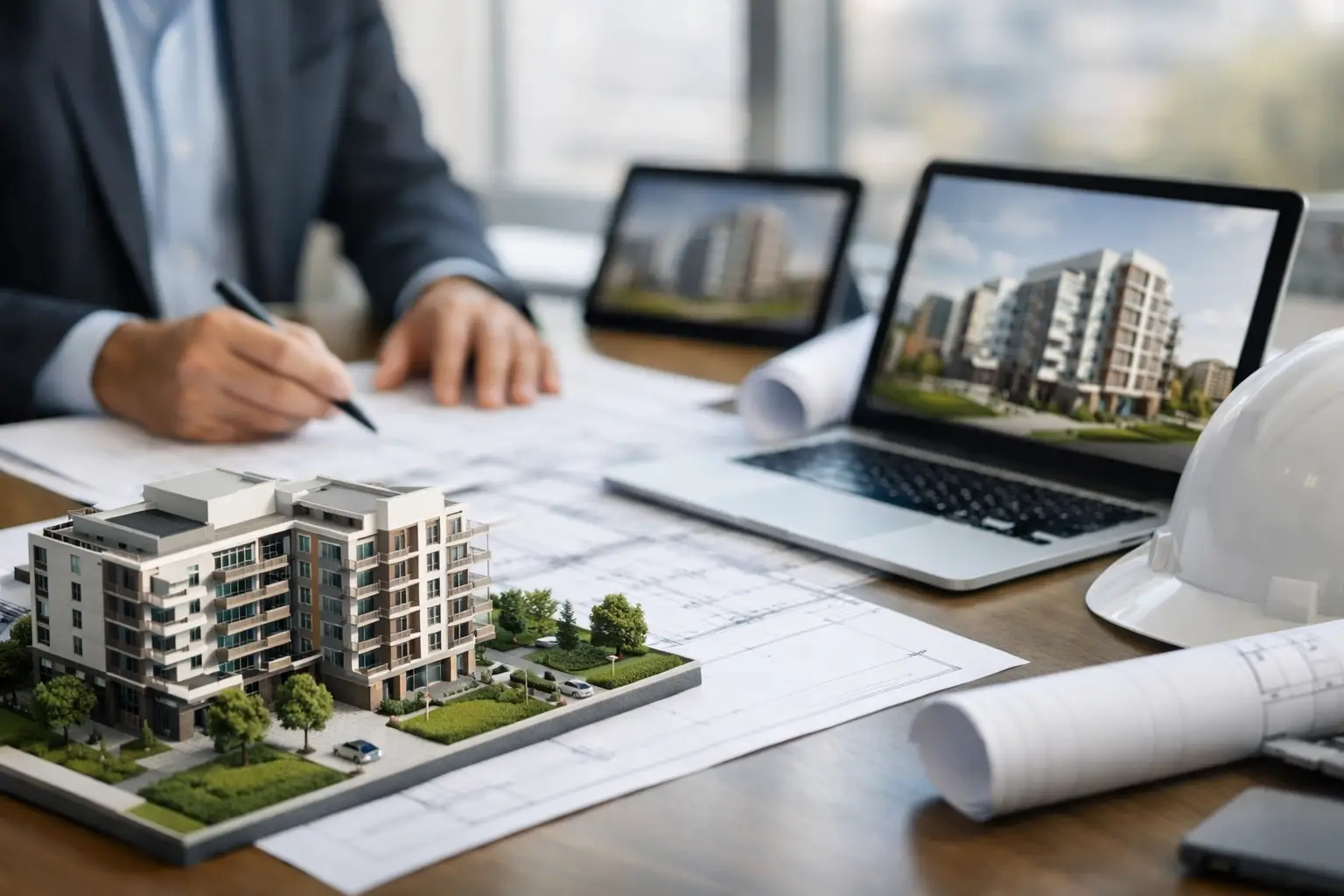
Not every property needs every format. A compact condominium may convert effectively with polished photography, virtual staging, and a walkthrough. A large mixed-use development usually needs layered content: aerial context, a digital twin of key spaces, 3D renderings for unbuilt areas, and concise video for campaign reach.
Digital twins are especially effective when spatial navigation is part of the evaluation process. They allow prospects to move at their own pace, revisit details, and understand how rooms connect. For properties with technical, architectural, or operational complexity, a data-rich twin can provide more value than a visually dramatic video alone.
CGI visualization has a different role. It is essential when the asset is still under construction, being repositioned, or offered with multiple fit-out options. It can show a future experience with control over lighting, furniture, materials, and occupancy. The trade-off is that CGI must be accurate and clearly aligned with what will be delivered. Rendering a space attractively is not enough if dimensions, finishes, or circulation are misleading.
Drone photography and aerial mapping add context that ground-level content cannot provide. They are useful for developments, resorts, industrial sites, and commercial assets where roads, visibility, surrounding amenities, land boundaries, or waterfront access influence value. Use aerial content to answer a location question, not as generic opening footage.
Build a capture plan that protects quality
The quality of the final experience is largely decided before the camera arrives. Prepare the property as if it were hosting an important physical viewing. Remove temporary clutter, repair obvious defects, confirm lighting, clean glass and reflective surfaces, and decide which areas should remain restricted.
For operational facilities, preparation also includes safety and workflow planning. Capture teams need access to relevant zones without disrupting production, exposing sensitive information, or creating hazards. A short pre-capture walkthrough with the property owner, marketing team, and site representative prevents expensive reshoots and establishes what should be visible, labeled, blurred, or excluded.
Accuracy matters when the virtual asset will support more than promotion. LiDAR-based capture can provide precise spatial data for as-built documentation, planning, and coordination. When a project calls for both sales enablement and technical reference, collecting data once for multiple business uses can improve the return on the capture investment.
Make the virtual experience easy to act on
An immersive tour is a strong engagement tool, but engagement by itself does not create pipeline. The experience should guide visitors toward a next step that matches their level of intent. Someone exploring an office floor for the first time may want a brochure or availability schedule. A highly engaged buyer may be ready to request a private viewing or speak with a leasing representative.
Place useful information where questions occur. A clickable point near a ballroom can explain capacity and configuration options. A marker in an industrial unit can highlight loading doors, power supply, or clear height. In a residential project, points of interest can clarify appliance packages, storage, or nearby amenities. Keep annotations selective. Overloading a tour with labels makes it feel like a technical manual rather than a decision tool.
The campaign environment matters as much as the tour itself. Property teams should present immersive content on landing pages, listing portals, sales presentations, email follow-ups, and social media assets that direct viewers to the full experience. The message should remain consistent across each touchpoint: what the property offers, who it is for, and why a prospect should take the next step.
Design for mobile without sacrificing detail
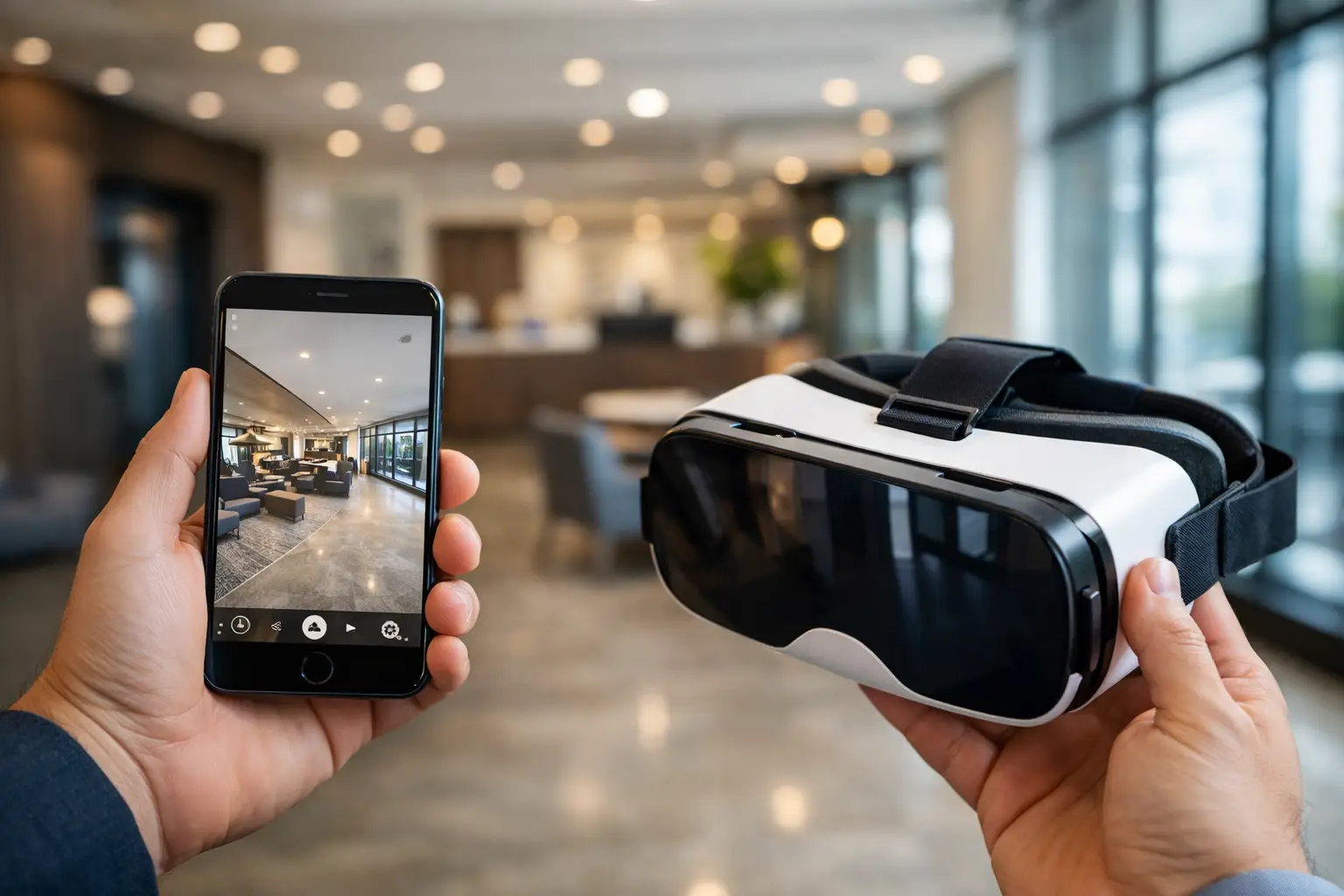
Many early-stage views happen on a phone. The initial experience must load quickly, display cleanly, and communicate value within seconds. That does not mean reducing the digital twin to a basic slideshow. It means using an effective preview image, concise introductory copy, and a logical entry point into the space.
Desktop users, meanwhile, may spend more time comparing layouts, inspecting finishes, or sharing the asset internally. Make sure the experience supports both behaviors. A virtual campaign that looks excellent only on a large monitor will miss a meaningful part of its audience.
Measure quality of leads, not just views
Views are useful, but they can be misleading. A short social video may reach thousands of people while generating little sales value. The more useful question is whether virtual content improves the quality and speed of the next conversation.
Track how long visitors engage with the tour, which areas attract attention, how often they return, and whether tour users are more likely to submit an inquiry, request a viewing, or progress to proposal. Compare these results with campaigns that use static imagery alone. Over time, this data shows which content formats deserve greater investment for specific property types.
There are practical trade-offs. High-accuracy capture, detailed CGI, and custom integration require more planning and budget than a quick photo shoot. They are justified when the property value, sales cycle, audience geography, or operational complexity makes better qualification commercially meaningful. For a short-term listing with limited differentiation, a lighter package may be the right decision. For a flagship development, hotel, showroom, or multi-site portfolio, a reusable digital asset can support marketing and operations long after launch.
Treat the asset as part of your property infrastructure
The most effective virtual property programs are maintained rather than published once and forgotten. Availability changes, spaces are renovated, tenant fit-outs evolve, and new campaign messages emerge. Review whether the digital experience still reflects the physical asset and update it when the gap becomes meaningful.
This is where a strategic visualization partner adds value. Novo Reperio helps organizations connect spatial capture, immersive presentation, and practical business use cases, from property marketing through documentation and remote decision-making. The aim is not more media for its own sake. It is a reliable digital representation of the space that supports the people responsible for selling, operating, and improving it.
A prospect who can understand a property before arriving is more likely to arrive with purpose. Build your virtual experience around that moment of confidence, and it becomes more than a viewing tool – it becomes a better starting point for the decision that follows.