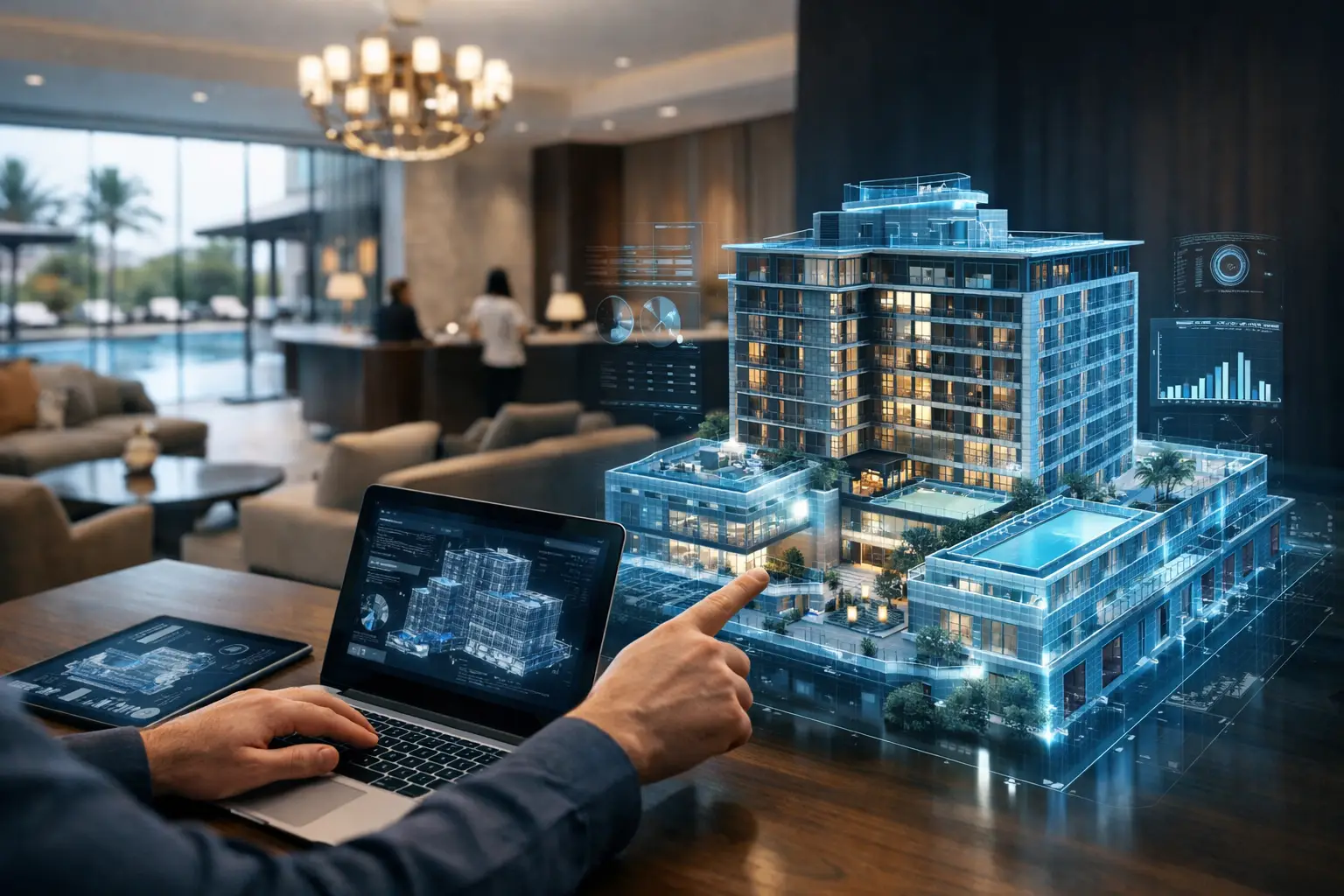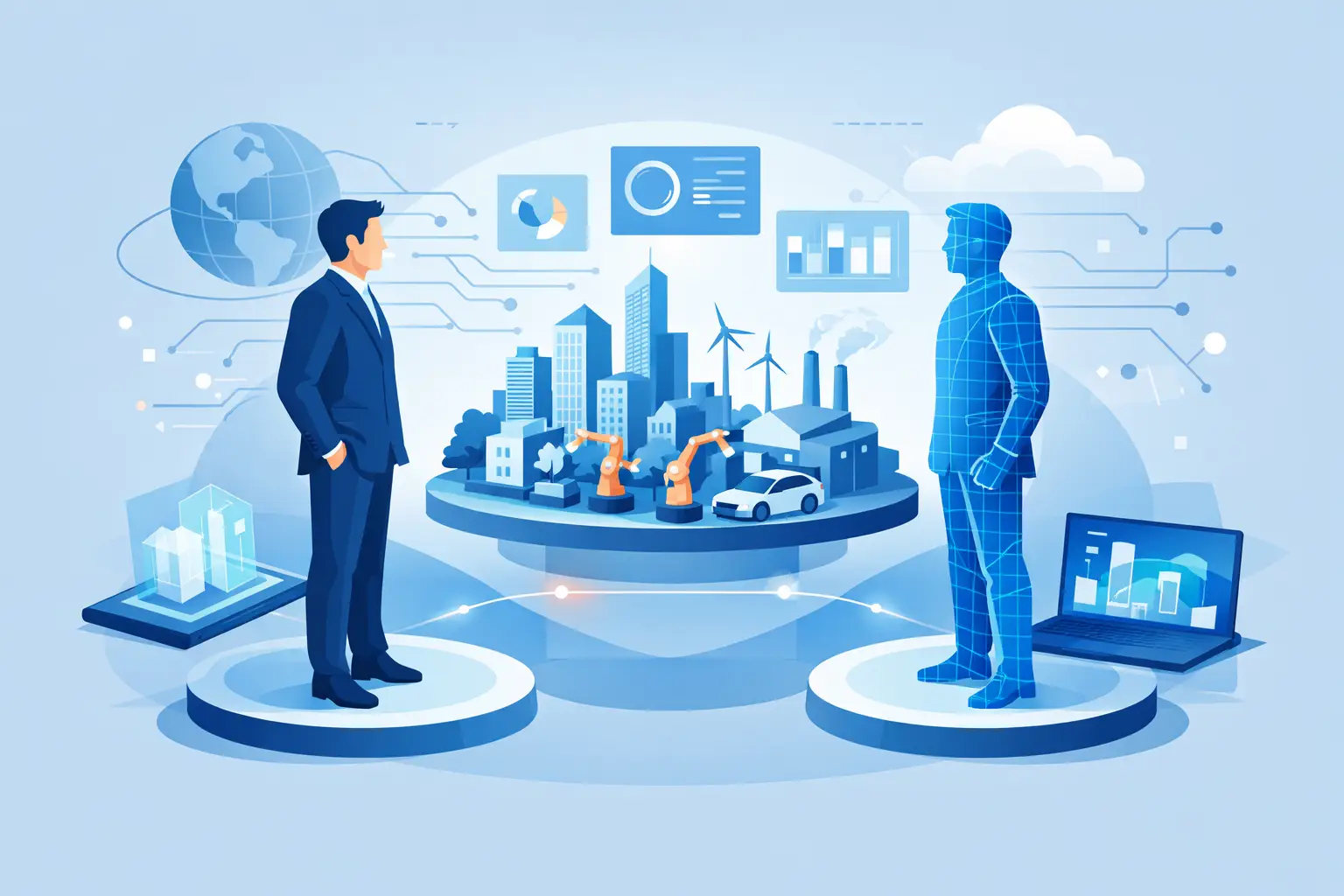

A hotel group reviewing renovation priorities from another country, a property developer pre-selling units before handover, and a facility team checking equipment access without visiting the site all have the same underlying need: a reliable digital version of a physical space. That is why the future of digital twins matters now. It is no longer just about creating an impressive virtual walkthrough. It is about turning buildings, venues, retail environments, and industrial assets into working digital infrastructure.
For commercial teams, this shift changes the value equation. A digital twin used only for presentation supports marketing. A digital twin connected to documentation, asset data, operational workflows, and stakeholder collaboration supports the business itself. That difference will define which organizations treat digital twins as a campaign asset and which use them as a long-term operational advantage.
What the future of digital twins really looks like
The next phase will not be driven by visuals alone. High-quality visualization still matters, especially in real estate, hospitality, and branded environments, but the market is moving toward connected utility. In practical terms, digital twins are becoming more useful when they combine spatial capture, accurate measurement, documentation layers, and integration with business systems.
For a property marketer, that may mean a virtual environment that does more than showcase a space. It may also support remote buyer qualification, internal sales training, and faster handover discussions. For an AEC or facility management team, it may mean using the same twin to reference as-built conditions, compare site changes, and coordinate maintenance planning.
This is where expectations are changing. Clients are increasingly asking not just, “Can we scan this?” but “What can this digital asset do after capture?” That question is shaping investment decisions across the region.
Why digital twins are moving from media asset to business system
Early adoption often focused on visual access. Businesses wanted to let people explore a property, showroom, hotel, or venue remotely. That use case remains strong because it improves engagement and reduces friction in the sales process. But once an organization sees a space in digital form, the next logical step is to ask how else that model can be used.
That is why the future of digital twins is closely tied to convergence. LiDAR scanning, 360 environments, drone mapping, Scan-to-BIM workflows, and 3D rendering are no longer separate conversations. They are parts of the same digital ecosystem.
When these elements are planned together, a digital twin can serve multiple departments at once. Marketing gets an immersive showcase. Operations gets a current visual reference. Technical teams get measurable spatial data. Leadership gets a clearer basis for remote approvals and investment decisions.
The commercial benefit is straightforward: one capture process can support many outcomes. That improves return on investment far more than a standalone virtual tour built for short-term attention.
The most important changes ahead
More live data, but only where it adds value
There is a lot of excitement around real-time digital twins. In some sectors, that makes sense. Industrial facilities, logistics sites, and complex buildings benefit when live equipment data, occupancy information, or environmental readings are layered into a spatial model.
But not every project needs that level of integration. A luxury property listing or hospitality marketing experience may gain more value from speed, presentation quality, and ease of navigation than from live sensor feeds. The smart approach is not to assume every twin must become a control room. It is to match the twin to the business objective.
Better accuracy will raise expectations
As capture technology improves, tolerance for outdated or approximate models will shrink. In AEC, insurance documentation, and renovation planning, precision affects cost, coordination, and risk. In commercial real estate, accurate dimensions and space understanding can shorten decision cycles.
This is why LiDAR-based workflows and structured scan methodologies will matter more over time. The visual layer gets attention, but the measurement integrity underneath is often what determines whether a digital twin can support serious downstream use.
Digital twins will become part of standard sales workflows
For sales-driven sectors, digital twins are becoming less of a novelty and more of a filter. A prospect who has already explored a property, event venue, retail unit, or hospitality space in detail arrives better informed. That improves the quality of inquiry and reduces time spent answering basic spatial questions.
In competitive markets such as Kuala Lumpur, Singapore, and major tourism or mixed-use developments across Southeast Asia, that efficiency matters. Teams are under pressure to respond faster, qualify leads earlier, and differentiate without adding friction. A well-implemented digital twin helps with all three.
Where the biggest gains will happen by industry
In real estate, the future of digital twins will center on sales acceleration and broader market reach. Developers and agencies will use them not just to attract attention but to support buyer confidence, especially for remote prospects and high-value assets where decision-making depends on spatial understanding.
In hospitality, digital twins will increasingly support both marketing and operations. A hotel can use one digital environment to drive direct inquiries, brief event planners, train staff, and assess upgrade opportunities across guest and back-of-house areas. The key advantage is continuity. The same asset can serve commercial and operational teams.
In AEC, growth will come from integration with Scan-to-BIM, renovation planning, and project coordination. The closer a digital twin sits to design documentation and site reality, the more useful it becomes. This is especially relevant for retrofits, adaptive reuse, and existing-building projects where unknown conditions create delays.
In industrial and facility management settings, value will come from reducing site dependency. When teams can inspect layouts, review equipment access, document conditions, and prepare maintenance activities remotely, they save time and reduce disruption. The twin becomes a decision support layer, not just a record.
What businesses often get wrong
The most common mistake is treating the deliverable as the strategy. A digital twin is not automatically valuable because it exists. It becomes valuable when capture quality, navigation, data structure, and business use case are aligned from the start.
Another mistake is underestimating change over time. Physical spaces evolve. Renovations happen. Tenant layouts shift. Equipment moves. If the twin is expected to support active operations or long sales cycles, update planning matters. A highly accurate model that is never refreshed can become misleading.
There is also a tendency to overbuild. Some businesses invest in features they will never use, while others choose the cheapest possible output and expect enterprise-level utility. Both approaches create disappointment. The right scope depends on who will use the twin, how often, and for what decisions.
How to prepare for the future of digital twins
Businesses do not need to wait for a perfect technology stack to get started. They do need a clearer view of purpose. Before commissioning any digital twin project, it helps to answer three commercial questions: what decision should this improve, who needs access, and what systems or documentation should connect to it later.
That framing changes the quality of implementation. It encourages teams to think beyond presentation and toward lifecycle value. It also helps avoid fragmented digital assets that look impressive but sit outside everyday workflows.
For many organizations, the strongest first move is a scalable one. Start with high-quality spatial capture and a digital environment that can serve current marketing or documentation needs. Then build additional layers such as BIM outputs, asset tags, drone context, or operational data when there is a defined use case.
That is the model many forward-looking companies are adopting. Instead of asking for a one-off virtual experience, they are investing in a digital foundation that can expand as business needs mature. For a partner like Novo Reperio, that means planning not just for capture and visualization, but for how spatial data can continue creating value long after launch.
The long-term outlook
The future will not belong to digital twins that are merely impressive. It will belong to digital twins that reduce uncertainty. The more they help people evaluate spaces, communicate clearly, plan remotely, and act with confidence, the more central they will become to property, hospitality, construction, and facility operations.
That is why this technology is gaining traction across more than one department. It supports revenue generation, operational clarity, and stakeholder alignment at the same time. Few digital tools can claim that range.
The businesses that benefit most will not be the ones chasing trends. They will be the ones treating physical spaces as strategic digital assets and building the right level of accuracy, accessibility, and usability around them from the start. That is where the future of digital twins becomes practical – and commercially decisive.