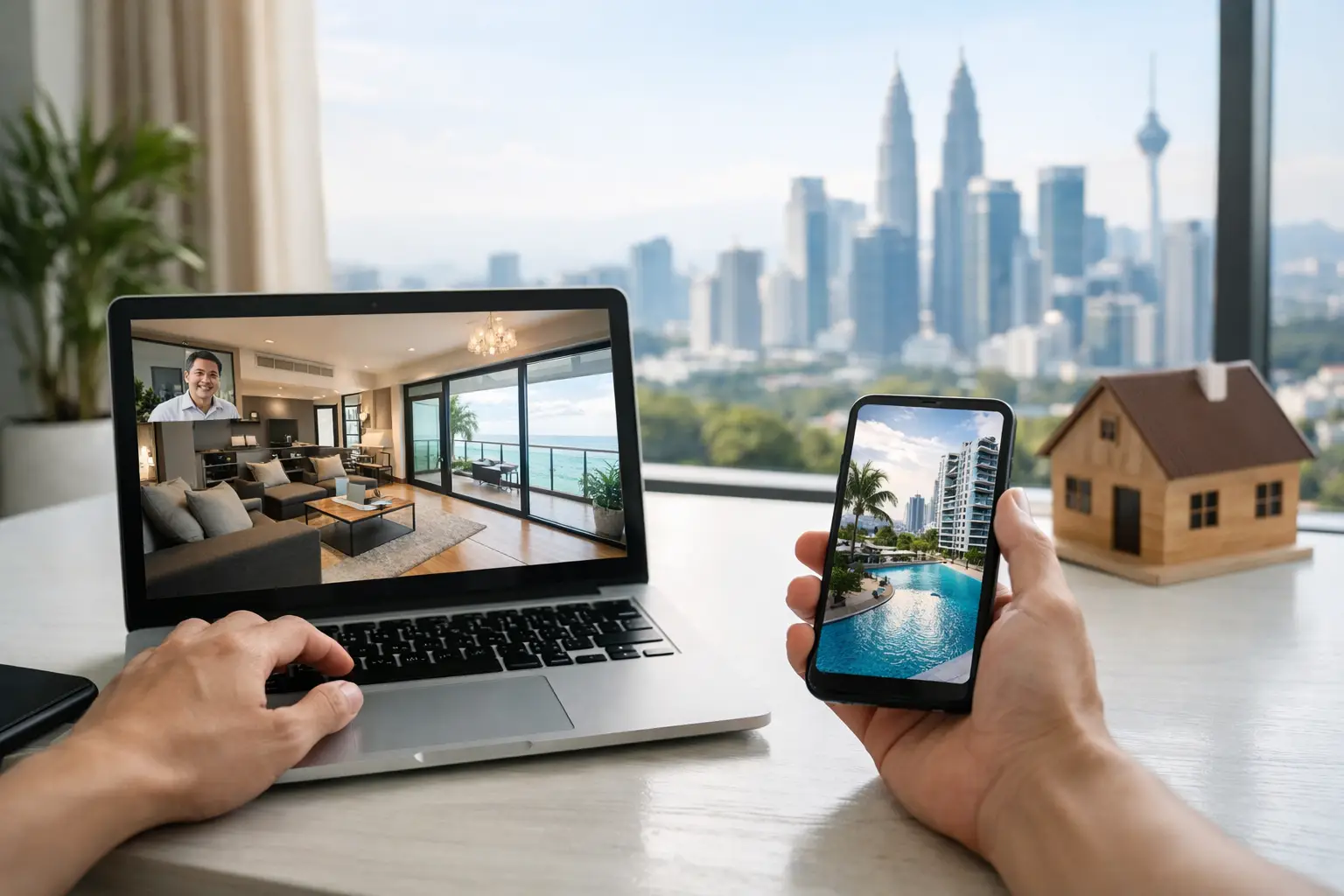

A buyer in Singapore asks for a second viewing. An investor in Dubai wants to compare floor plates before the weekend. A relocation client based in Penang needs to shortlist units in Kuala Lumpur without flying in. This is where remote property viewing Malaysia stops being a marketing extra and starts becoming a sales tool.
For developers, brokers, landlords, and commercial leasing teams, the question is no longer whether remote viewing should be offered. The real question is what kind of remote experience actually helps buyers make decisions. A slideshow of photos may generate curiosity, but it rarely creates enough spatial confidence to move a lead forward. If the goal is faster qualification, stronger engagement, and fewer wasted site visits, the viewing format matters.
Why remote property viewing Malaysia matters now
Malaysia’s property market is increasingly shaped by cross-border interest, multi-city decision-making, and tighter expectations around response time. Prospects often begin their search remotely, especially for high-value residential units, commercial space, hospitality assets, and mixed-use developments. If the first interaction with a property is weak, the buyer simply moves on.
Remote viewing solves a clear commercial problem. It allows decision-makers to evaluate a property without waiting for travel, scheduling, or physical access. That saves time, but the bigger value is confidence. A serious prospect needs to understand scale, layout, circulation, finishes, light, and context. Static visuals can only do part of that job.
The strongest remote viewing systems reduce uncertainty. They help buyers narrow choices faster, help sales teams qualify intent earlier, and help marketers present space in a way that feels measurable rather than promotional.
What buyers actually need from a remote viewing experience
Most property teams think remote viewing is about visibility. It is, but visibility alone does not close gaps in understanding. Buyers need enough detail to answer practical questions before they commit to the next step.
They want to know whether a lobby feels premium or compressed. They want to see how a unit connects from entrance to living area. Commercial tenants want to understand frontage, circulation, neighboring uses, and back-of-house conditions. Hospitality investors want a sense of guest flow, room positioning, and operational layout. When the experience cannot answer these questions, sales teams end up backfilling with calls, PDFs, and repeat explanations.
That is why a proper remote property viewing Malaysia strategy should be built around spatial clarity, not just attractive media. The more accurately a property is presented, the more useful the remote interaction becomes.
The formats that work best
Not all remote viewing tools perform the same way. Each one supports a different level of buyer intent.
360 virtual tours
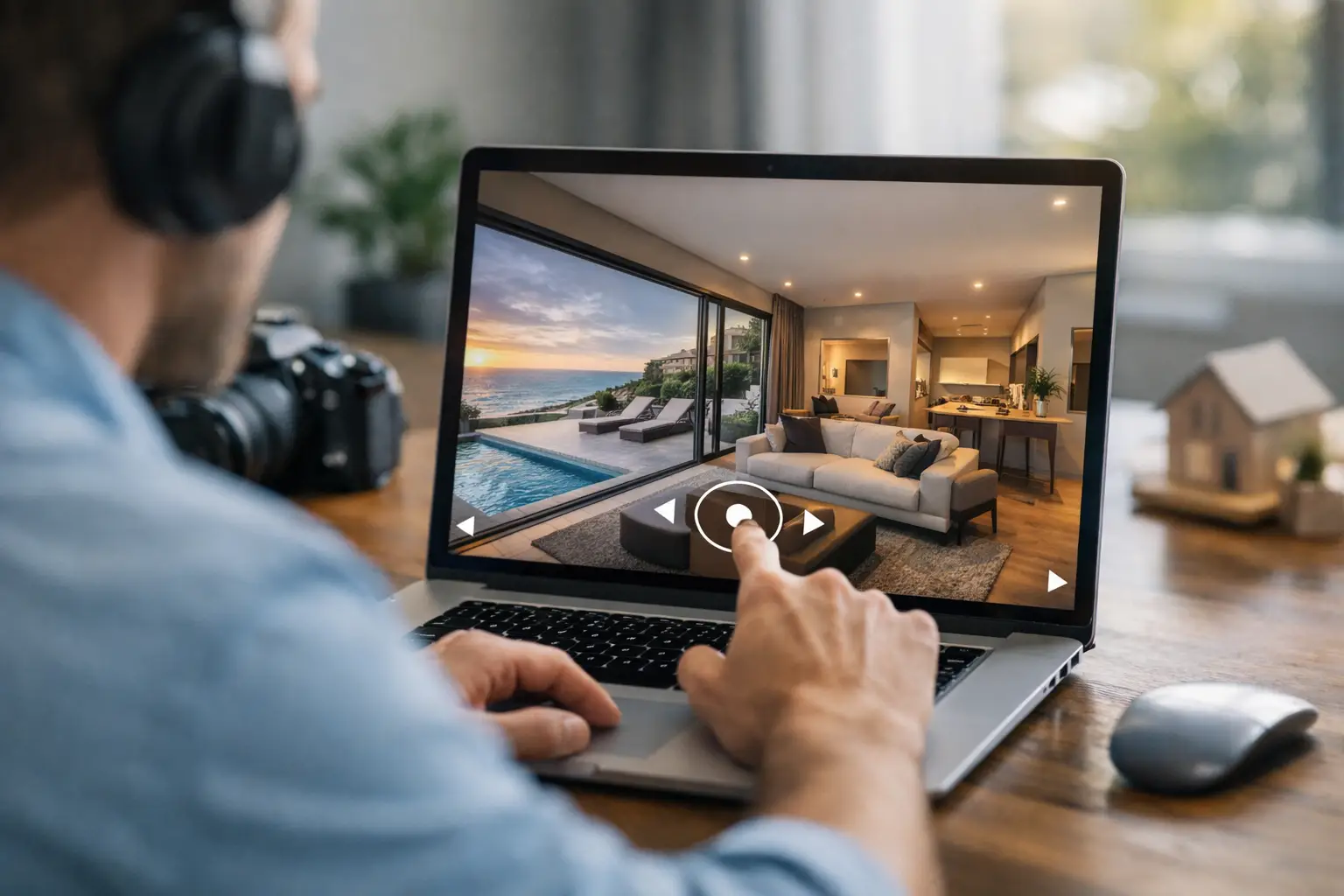
A 360 virtual tour is often the most practical starting point. It gives prospects control over where they look and how they move through a space. That alone creates a stronger sense of presence than video. For residential listings, serviced apartments, retail units, and hospitality spaces, 360 tours improve early-stage engagement because viewers can self-navigate at their own pace.
The trade-off is that basic 360 tours can still feel like media rather than infrastructure. If image quality is poor, transitions are awkward, or the tour lacks orientation, users may enjoy the experience without gaining decision-level clarity.
Digital twins
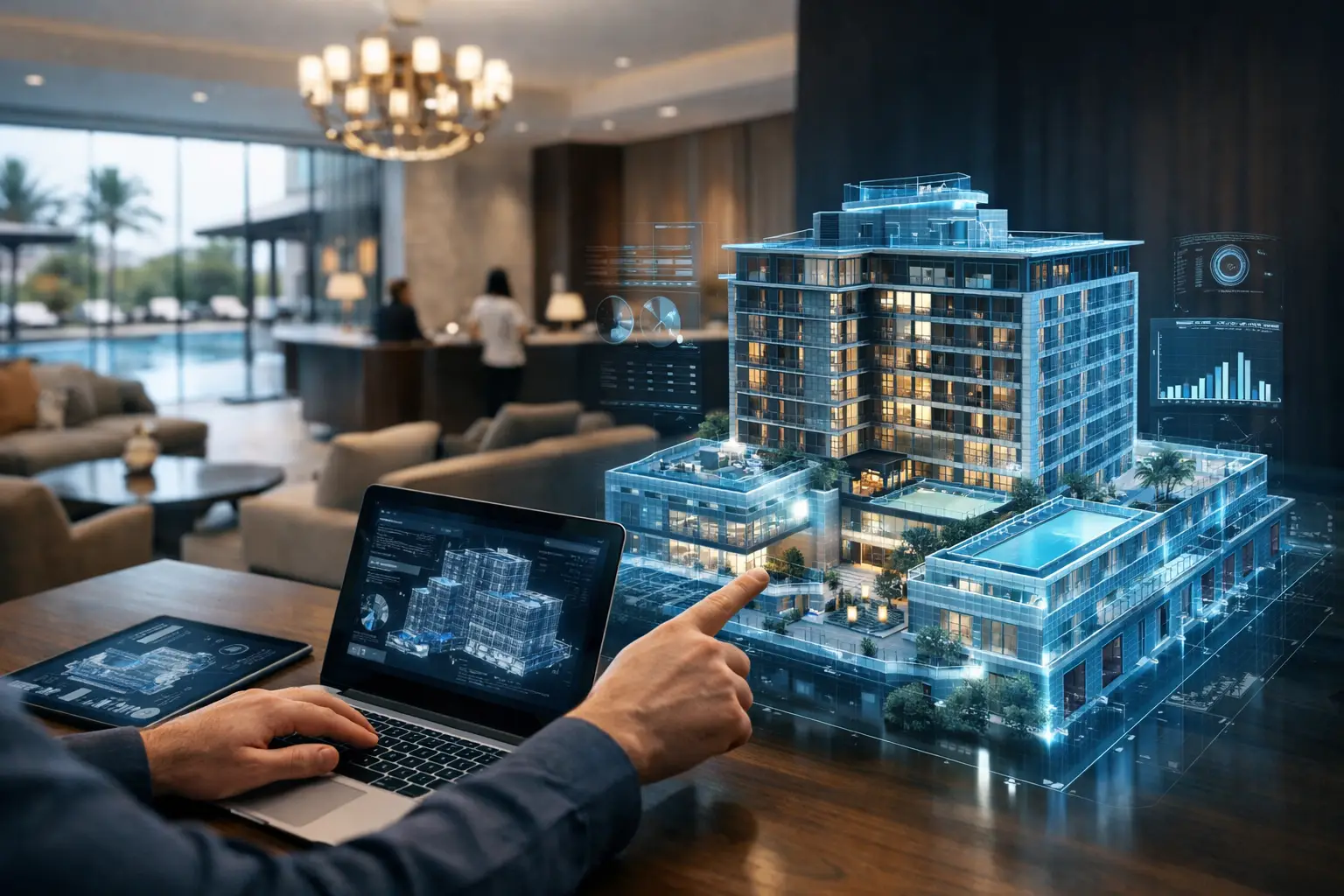
For higher-value assets, digital twins offer a stronger commercial case. A digital twin turns a physical property into an interactive spatial model that can be explored remotely with far more precision. This is especially useful when stakeholders are not only evaluating appearance, but also layout logic, access, dimensions, and asset condition.
In practice, digital twins are effective for premium residences, show units, office floors, industrial facilities, hotels, and large-scale commercial spaces. They help remote stakeholders inspect details more closely and revisit the environment without arranging another shoot or another physical visit.
Live guided virtual viewings
Some deals still benefit from a human-led walkthrough. A live guided viewing works well when a buyer wants immediate answers or when a leasing team needs to tailor the presentation to a prospect’s priorities. This format is useful for shortlisted buyers, especially in commercial leasing where requirements vary.
The limitation is consistency. Live sessions depend heavily on the presenter, signal quality, and timing. They can be persuasive, but they are harder to standardize and harder to reuse across multiple leads.
Drone and aerial context
For landed developments, industrial sites, resorts, and mixed-use projects, aerial imaging adds context that interior tours cannot provide. Access roads, surrounding developments, frontage visibility, topography, and neighborhood positioning often influence the decision as much as the interior itself.
Aerial visuals are most effective when they support, rather than replace, the ground-level viewing experience.
Why static listings underperform
A polished brochure and professional photography still have value. They frame the brand, highlight key design moments, and support campaign distribution. But they compress three-dimensional reality into selected viewpoints.
That creates friction. Prospects cannot tell what sits beyond the frame. They cannot judge room flow accurately. They may like the property, yet still hesitate because too much remains uncertain. In real estate, hesitation slows deals.
This is why high-intent buyers often ask for extra videos, floor plan clarifications, or repeat visits. The listing has done enough to attract interest, but not enough to support decision-making. Remote viewing closes that gap when it is built as an operational sales asset rather than a visual add-on.
Where remote property viewing delivers the best ROI
The strongest returns usually come from assets where travel, complexity, or presentation quality directly affect deal velocity.
For developers, remote viewing helps pre-qualify leads before show unit appointments. That means sales teams spend more time with serious buyers and less time managing casual inquiries. For commercial leasing, it shortens the path from initial inquiry to shortlist by giving tenants a better understanding of fit. For hospitality and venue sales, immersive viewing helps planners and operators assess experience, layout, and suitability without waiting for a site inspection.
There is also a long-tail benefit. Once a property is captured properly, the same digital asset can support marketing, tenant engagement, reporting, and internal review. The content works harder across the asset lifecycle.
What makes a remote viewing setup credible
A credible system is built on accuracy, usability, and relevance. Accuracy matters because buyers can tell when a space feels exaggerated or incomplete. Usability matters because even a high-quality model fails if it loads poorly or confuses the viewer. Relevance matters because different property types require different presentation logic.
A luxury residence may need emphasis on finishes, lighting, and lifestyle flow. An office floor needs orientation, access, and planning flexibility. A warehouse or industrial facility may require more technical spatial detail. The capture method and viewing interface should reflect the actual buying criteria.
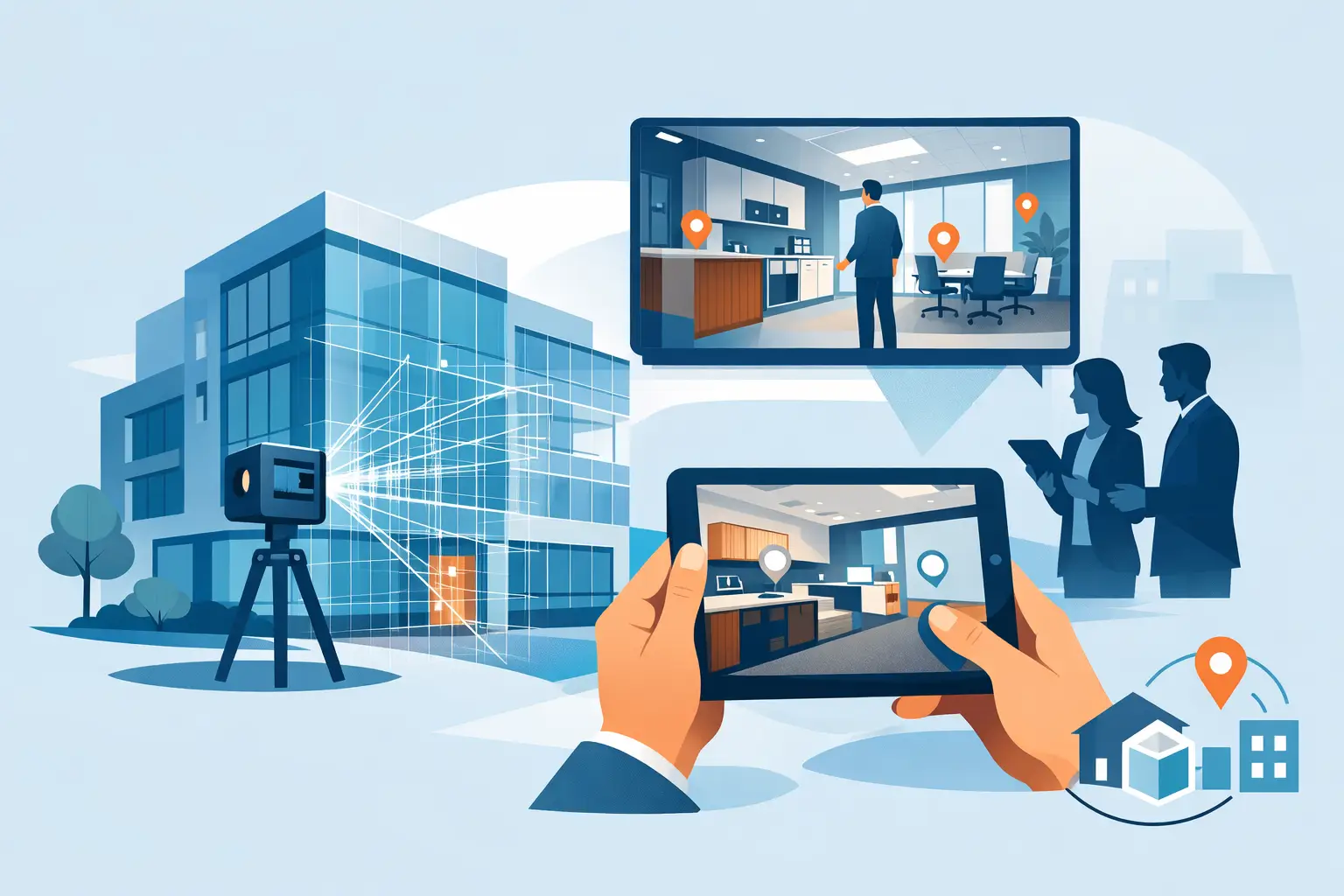
This is where technical execution becomes commercial strategy. High-quality spatial capture, digital twin workflows, LiDAR-backed documentation, and structured visual presentation do more than make a property look advanced. They remove ambiguity.
Common mistakes to avoid
The first mistake is treating all properties the same. A boutique condo unit and a logistics facility do not need the same remote experience. The second is focusing only on visual appeal. Attractive media may drive clicks, but if the experience does not answer buyer questions, the sales team still carries the burden.
Another common issue is fragmented delivery. Photos sit in one folder, floor plans in another, drone footage in another, and the agent fills in the rest over chat. That creates friction for both the buyer and the team. A better approach is to present spatial information in one connected environment.
Finally, speed should not come at the expense of quality. A rushed virtual tour with poor stitching, weak lighting, or inconsistent navigation can undermine trust faster than a standard listing.
How to choose the right approach
If the asset is simple, budget-sensitive, and aimed at broad inquiry volume, a well-produced 360 tour may be enough. If the property is premium, complex, large-scale, or likely to involve multiple decision-makers, digital twin capture is usually the stronger investment. If stakeholder buy-in depends on technical review, renovation planning, or operational assessment, a more data-rich spatial model becomes even more valuable.
The best choice depends on what the buyer needs to decide remotely and what your team needs to accelerate internally. In many cases, the answer is not one format but a layered approach that combines immersive interior viewing, aerial context, and structured visual documentation.
For teams operating across Malaysia, this is becoming less about innovation for its own sake and more about sales readiness. Buyers expect to assess space before they commit time, and serious sellers should be able to provide that with clarity.
Companies like Novo Reperio are helping bridge that gap by turning physical spaces into interactive digital assets that support not only marketing, but also qualification, communication, and remote decision-making.
Remote viewing works best when it respects how property decisions are actually made. Give buyers a sharper understanding of the space, and they move with more confidence. That is what shortens distance in a meaningful way.