
A project can be on schedule on paper and still be drifting off course in the field. By the time a dispute, delay, or rework issue becomes obvious, the missing piece is often the same: weak documentation. That is why knowing how to document construction progress is not an administrative detail. It is a control system for cost, quality, coordination, and accountability.
For owners, developers, contractors, and consultants, progress documentation should do more than prove that work happened. It should show what changed, when it changed, how much was completed, and whether the installed conditions match the design intent. When that record is clear, decisions move faster. When it is fragmented across phones, chats, and isolated reports, progress becomes harder to verify and even harder to manage.
Why construction progress documentation matters
Construction teams usually start documenting progress for practical reasons: payment claims, site reporting, and stakeholder updates. Those are valid needs, but they are only part of the picture. A reliable progress record also reduces commercial risk. If sequencing issues appear, subcontract scopes overlap, or hidden services create rework, a timestamped visual and spatial record gives everyone a factual reference point.
This matters even more on projects with multiple parties reviewing work remotely. Senior management, consultants, and clients cannot always be on site at the right moment. A good documentation process brings the site to them in a format they can actually use. That is where the gap between basic photo logging and structured digital capture becomes very clear.
There is also a quality dimension. Construction does not fail only because something was built incorrectly. It often fails because no one had a precise record of what was installed before it was covered, modified, or handed over. Documentation is not just about progress. It is about preserving evidence before the next layer of work removes visibility.
How to document construction progress with a usable system
The most effective approach is not to collect more data for its own sake. It is to build a documentation system that is consistent, comparable over time, and easy for different stakeholders to interpret.
Start by defining what needs to be tracked. On one project, that may mean structural milestones and MEP rough-ins. On another, the priority may be façade progress, interior fit-out sequencing, or compliance-related installations. If every team member documents different things in different ways, the record becomes difficult to trust.
Next, set a capture frequency that matches the pace and complexity of the site. Weekly reporting may be enough for slower phases, but high-change environments often need more frequent visual updates. The right interval depends on risk, not just routine. Fast-moving work packages benefit from tighter documentation because small misses can compound quickly.
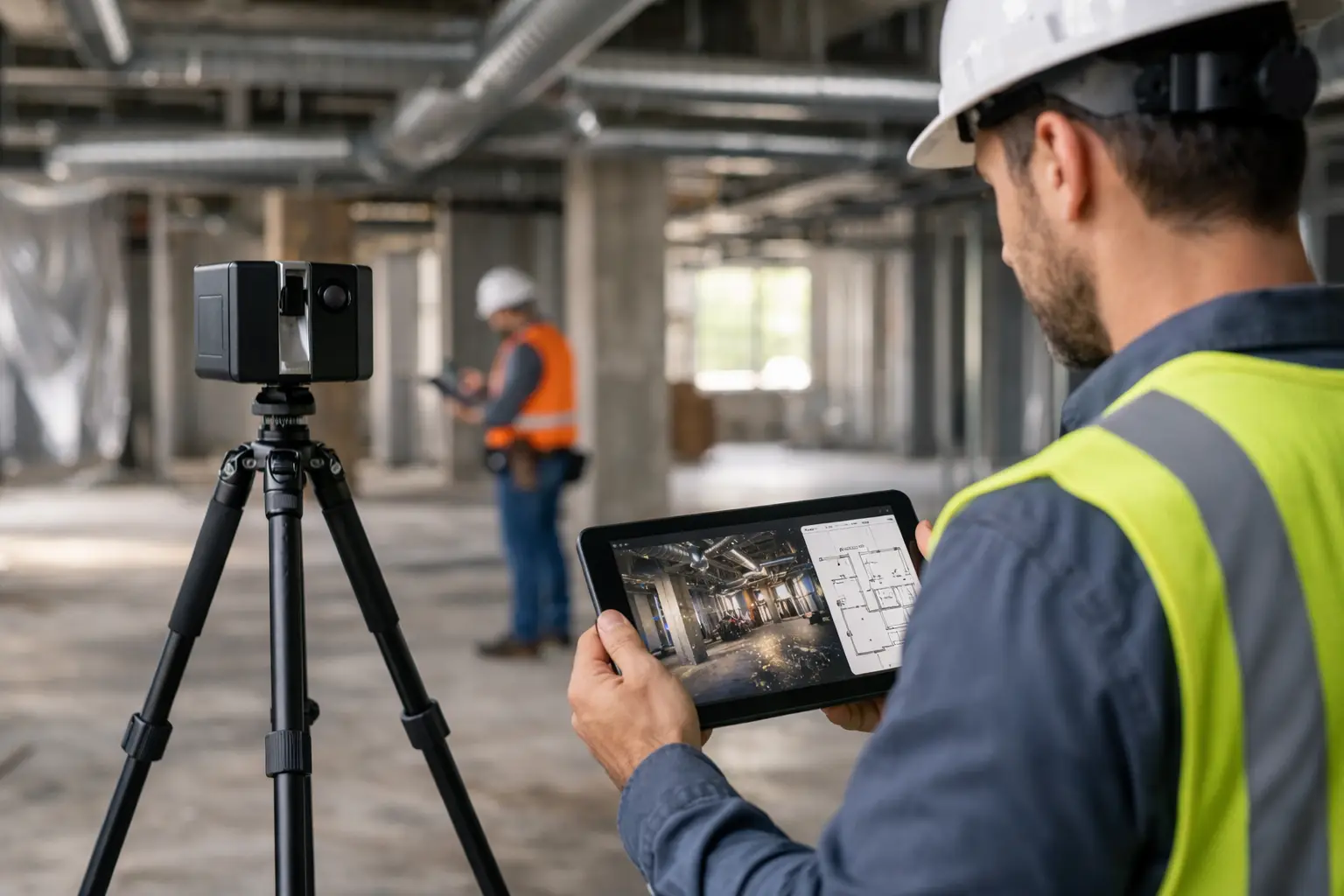
Just as important is consistency in viewpoint. Random site photos can be useful in the moment, but they are poor for comparison. Progress is easier to evaluate when imagery is captured from repeatable positions, at predictable intervals, and aligned to zones or floors. That creates continuity. Stakeholders can review conditions over time instead of trying to interpret disconnected snapshots.
The limits of traditional site photos
Most construction teams already use phone photos. The issue is not that photos are ineffective. The issue is that they are often unstructured.
A folder full of images labeled by date does not always answer the questions that matter. Where exactly was this taken? What elevation are we looking at? Was this before or after coordination changes? Does the image show enough context to confirm installation status? When projects become larger or more complex, these gaps start to hurt productivity.
Traditional photography also depends heavily on the person taking the image. One supervisor captures broad overviews, another focuses on defects, and a third only records items related to claims. You get documentation, but not a consistent dataset. That makes progress review subjective.
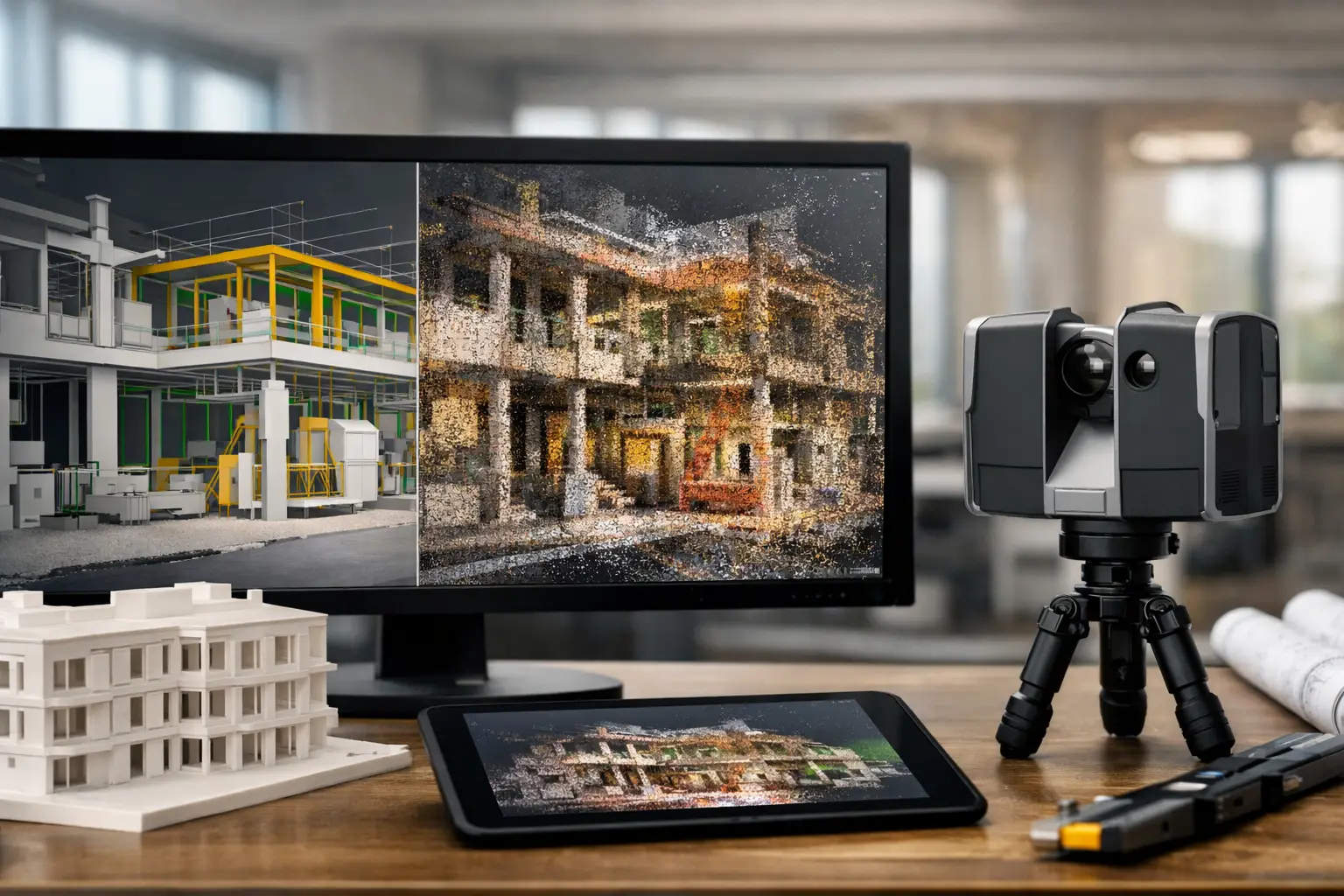
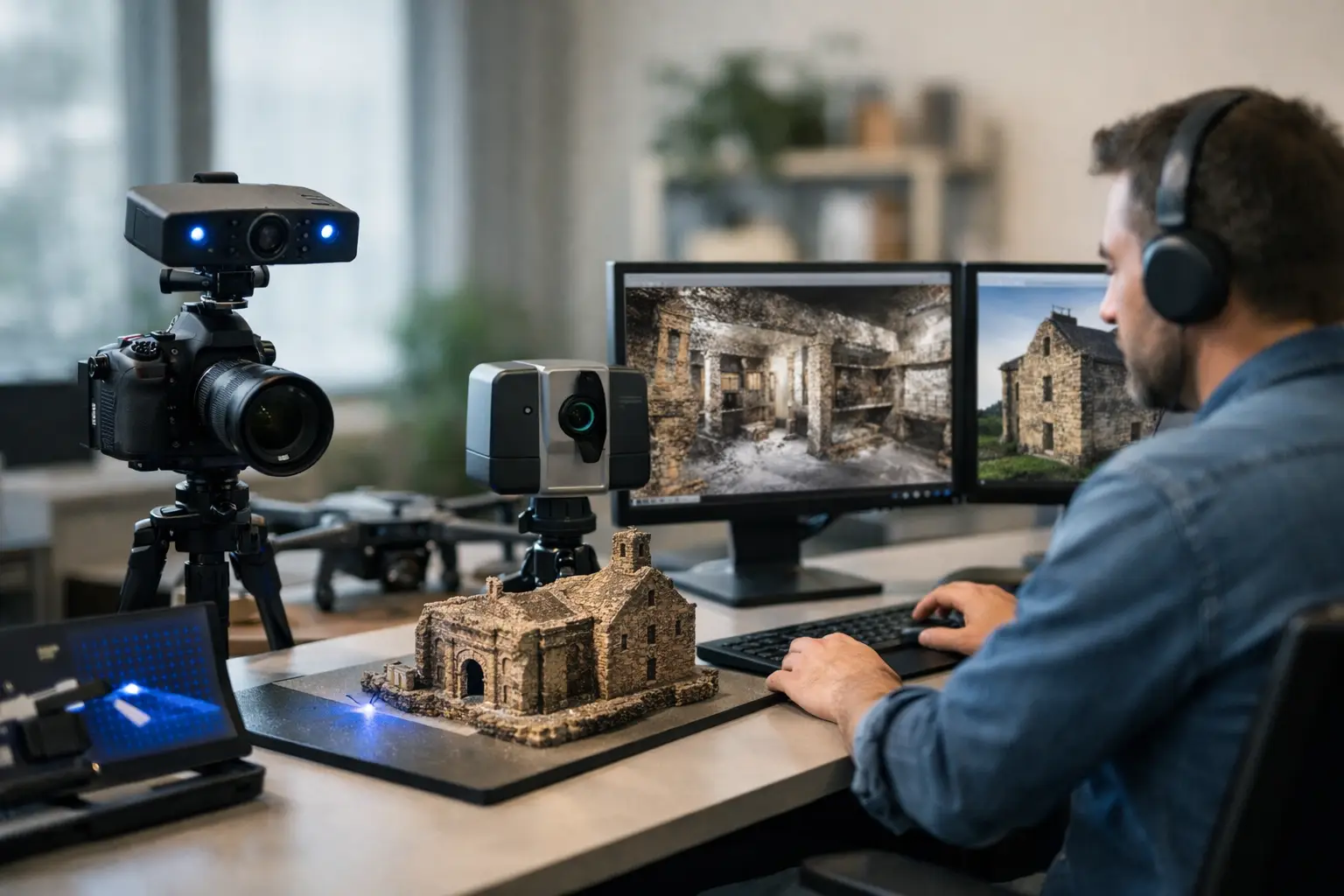
This is where more advanced visual capture methods add value. 360 imaging, drone mapping, LiDAR scanning, and digital twin workflows do not replace judgment on site. They make the record more complete, more navigable, and easier to verify.
When digital twins and LiDAR improve progress tracking
If the goal is simply to send a weekly update, standard photos may be enough. If the goal is to create a reliable, measurable site record, digital capture offers a stronger foundation.
A digital twin gives project teams an immersive visual record of the site that can be reviewed remotely. Instead of relying on a limited selection of images, stakeholders can move through the environment and inspect conditions with much more context. That is particularly useful for client teams, consultants, and decision-makers who need visibility without being physically present.
LiDAR adds another layer of value: accuracy. Visual records show what appears to be installed. Spatial data can help confirm what is actually there, where it sits, and how it aligns with the intended design. For high-value projects or technically demanding environments, this matters. It supports as-built verification, helps identify deviations earlier, and strengthens the transition from construction tracking to handover documentation.
There is a trade-off, of course. Not every project requires high-frequency LiDAR capture, and not every phase justifies a full digital twin workflow. The right method depends on project size, stakeholder needs, and risk exposure. But where rework costs are high, remote coordination is common, or record accuracy is commercially important, the return is usually easy to justify.
What good progress documentation should include
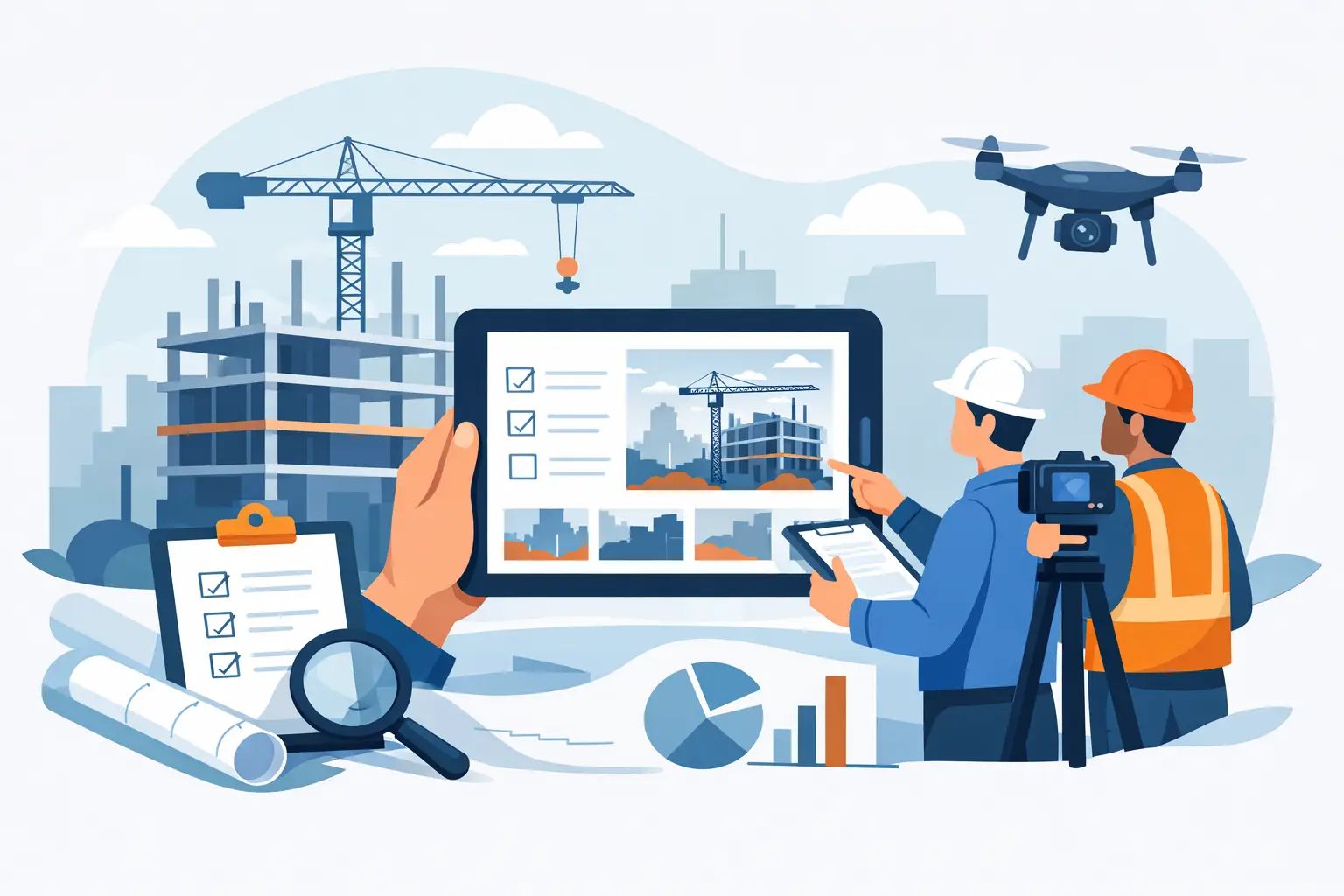
The strongest documentation systems combine visual evidence, spatial context, and reporting discipline. A useful record typically includes timestamped imagery, location-based organization, milestone tracking, and notes tied to what changed on site. If there are approved variations, blocked work fronts, or unresolved clashes, those should be visible in the record rather than buried in separate communication threads.
It also helps to document conditions before they become inaccessible. Ceiling voids, wall cavities, slab embeds, and service routes are common examples. Once these are closed up, proving what was installed becomes harder and more expensive. Capturing them properly during the work phase improves quality assurance and protects every party later.
Another overlooked point is naming convention and file structure. Documentation loses value when teams cannot retrieve it quickly. Organize by area, level, trade, date, and milestone so teams can compare like with like. The system does not need to be complicated, but it does need to be disciplined.
Align documentation with commercial decisions
Construction progress records should support action, not just archiving. That means connecting documentation to the decisions that owners and contractors actually need to make.
For payment valuation, the question is whether installed work can be verified clearly enough to support a claim. For project controls, the issue may be whether site conditions match the reported program status. For client communication, it may be whether progress can be presented in a way that builds confidence and reduces unnecessary site visits.
This is why better documentation often improves speed, not just transparency. When the evidence is clear, review cycles shorten. Teams spend less time clarifying what happened and more time deciding what to do next.
For regional projects across Malaysia and Southeast Asia, this becomes even more practical. Decision-makers are often managing multiple sites, consultants may be spread across locations, and not every stakeholder can attend frequent physical inspections. Structured visual and spatial documentation helps central teams maintain oversight without slowing site operations.
Common mistakes to avoid
The biggest mistake is treating documentation as a reporting task instead of a project control function. Once that happens, teams focus on producing updates rather than building a reliable record.
Another common issue is inconsistency. If one week captures exterior progress, the next focuses on interiors, and the following week only records problem areas, comparison becomes weak. The same goes for low-context imagery that cannot be tied to a precise location.
A third mistake is waiting too long to digitize the workflow. By the middle of a complex build, reconstructing missing records is difficult. It is far better to establish the method early and maintain it throughout the project lifecycle.
For firms investing in digital transformation, this is where a specialist partner adds value. Novo Reperio applies digital twin, LiDAR, and Scan-to-BIM workflows in ways that help project teams move beyond fragmented site reporting toward structured, decision-ready construction records.
Build a record that stays useful after the site is complete
The best answer to how to document construction progress is not a camera type or a reporting template. It is a system that creates clarity while the work is happening and remains useful after completion. Good documentation supports claims, coordination, quality control, and stakeholder communication in the short term. In the long term, it becomes part of the asset record that informs maintenance, renovation, and future planning.
That is the real standard to aim for. If your documentation only proves that someone visited the site, it is not doing enough. If it helps teams verify, decide, and act with confidence, it is already paying for itself.