
Renovation projects rarely fail because teams lack design intent. They fail because the building on paper is not the building on site. A column sits 200 millimeters off grid, ceiling services were rerouted years ago, or plant rooms contain undocumented changes that no one caught before procurement. This is where scan to BIM services move from a technical add-on to a commercial safeguard.
For owners, consultants, and contractors, the value is straightforward. Accurate spatial data reduces guesswork, improves coordination, and gives every stakeholder a shared reference point before decisions become expensive. When the existing condition is captured properly, the downstream work gets faster and more reliable.
What scan to BIM services actually deliver
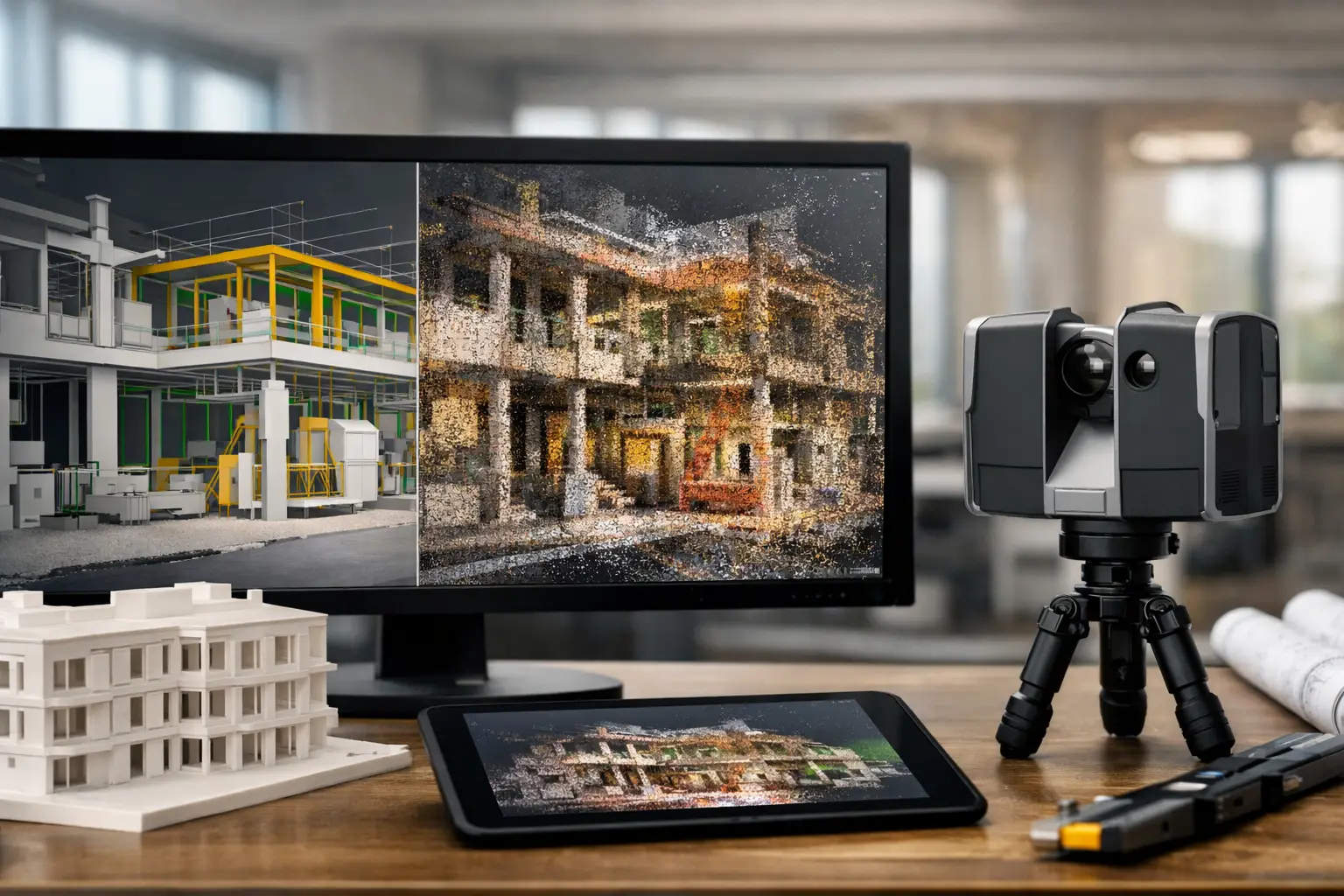
At a practical level, scan to BIM services convert real-world site conditions into intelligent 3D building models. The process usually starts with LiDAR scanning or similar reality capture methods that record millions of data points across a building or facility. That point cloud is then interpreted and modeled into BIM outputs that reflect walls, floors, ceilings, structural elements, MEP systems, facades, and other project-specific components.
The output is not just a visual model. It becomes a usable digital asset for design development, clash detection, as-built documentation, facility planning, retrofit analysis, and stakeholder coordination. Depending on the project, deliverables may include Revit models, CAD drawings, reflected ceiling plans, elevations, sections, asset-based modeling, and documentation aligned with required levels of detail.
That distinction matters. A scan is raw capture data. A BIM model is structured information that teams can use to design, coordinate, quantify, and manage.
Why accuracy matters more in existing buildings
New-build projects start with clean assumptions. Existing buildings do not. In commercial towers, hotels, retail environments, factories, and mixed-use developments, physical conditions tend to drift over time. Fit-outs change. Services are rerouted. Maintenance teams solve immediate issues without updating records. As a result, legacy drawings often become reference material rather than truth.
This creates a predictable commercial problem. If architects, engineers, and contractors are working from incomplete information, they spend more time validating dimensions, resolving clashes, and issuing revisions. Site teams face delays. Procurement decisions become riskier. Variation exposure increases.
Scan to BIM services address that problem at the source. Instead of relying on outdated documentation, teams work from measured conditions. That improves confidence in planning and reduces the cost of discovering errors late.
Where scan to BIM services create the most value
The strongest use case is renovation and refurbishment. When a project involves adapting existing space, accurate as-built intelligence is essential. Office upgrades, hotel refurbishments, hospital retrofits, industrial expansions, and retail reconfigurations all benefit from current-condition models that reflect what is actually there.
The same applies to facility management. Owners and operators often manage large property portfolios with inconsistent documentation quality. A BIM model built from verified scan data helps centralize spatial information for maintenance planning, asset tracking, future upgrades, and contractor coordination. It becomes easier to assess access constraints, understand service routes, and plan interventions without repeated manual site checks.
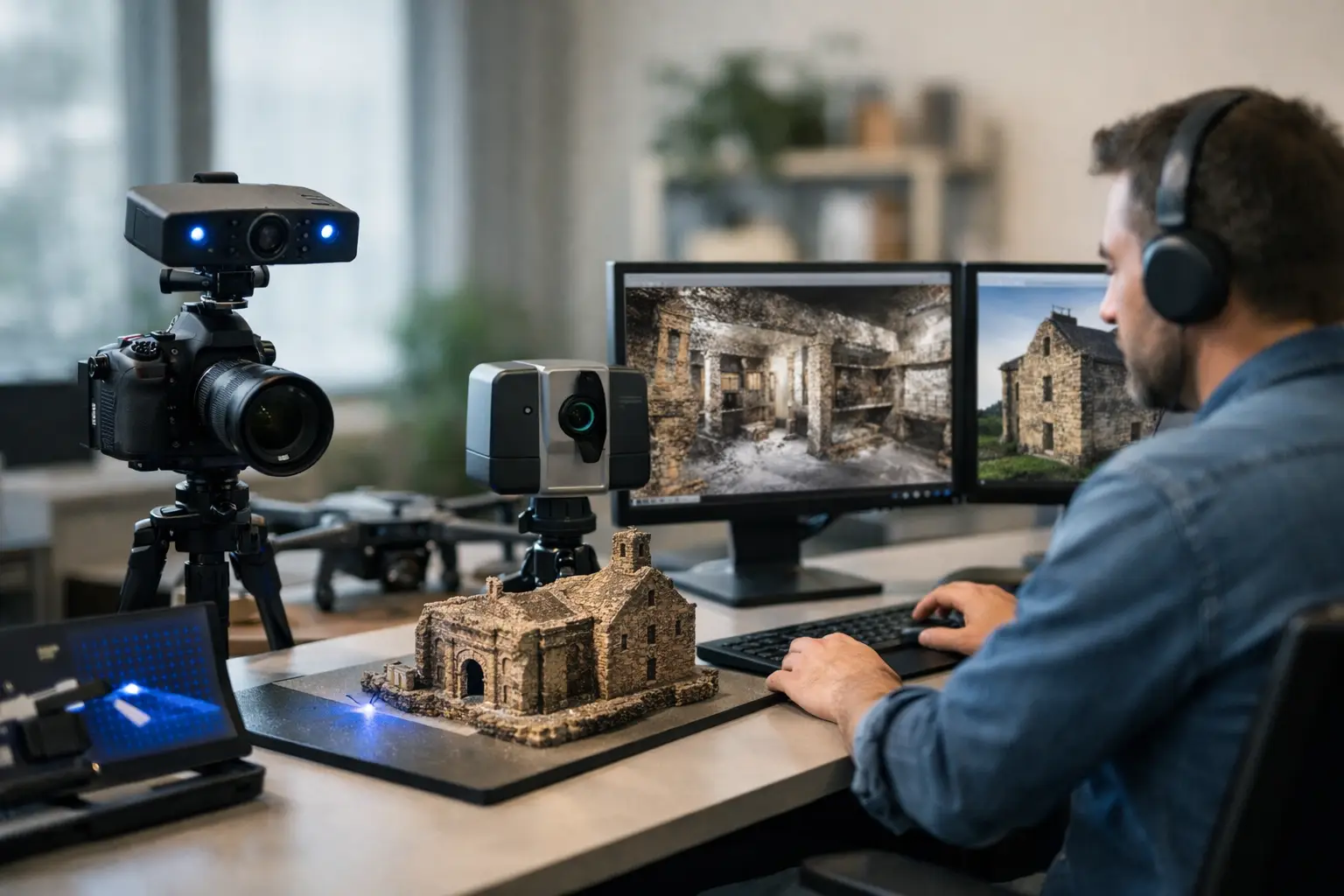
There is also strong value in heritage and complex structures. Older buildings typically contain irregular geometry, undocumented alterations, and architectural features that are difficult to record through manual measurement alone. In these cases, reality capture provides a level of fidelity that traditional surveying methods may struggle to match efficiently.
For industrial and logistics environments, the benefit is often operational. Warehouses, plants, and production facilities cannot always tolerate prolonged site disruption. High-speed scanning can capture large spaces quickly, allowing teams to document critical areas while minimizing downtime. The BIM output then supports layout planning, safety reviews, and future engineering work.
The process behind effective scan to BIM services
A successful project usually begins with scope clarity, not scanning. Teams need to define the purpose of the model before capture starts. Is the model required for concept design, construction coordination, space planning, MEP retrofit, asset documentation, or long-term facilities use? Each objective affects the modeling approach, the level of detail, and the zones that need to be captured.
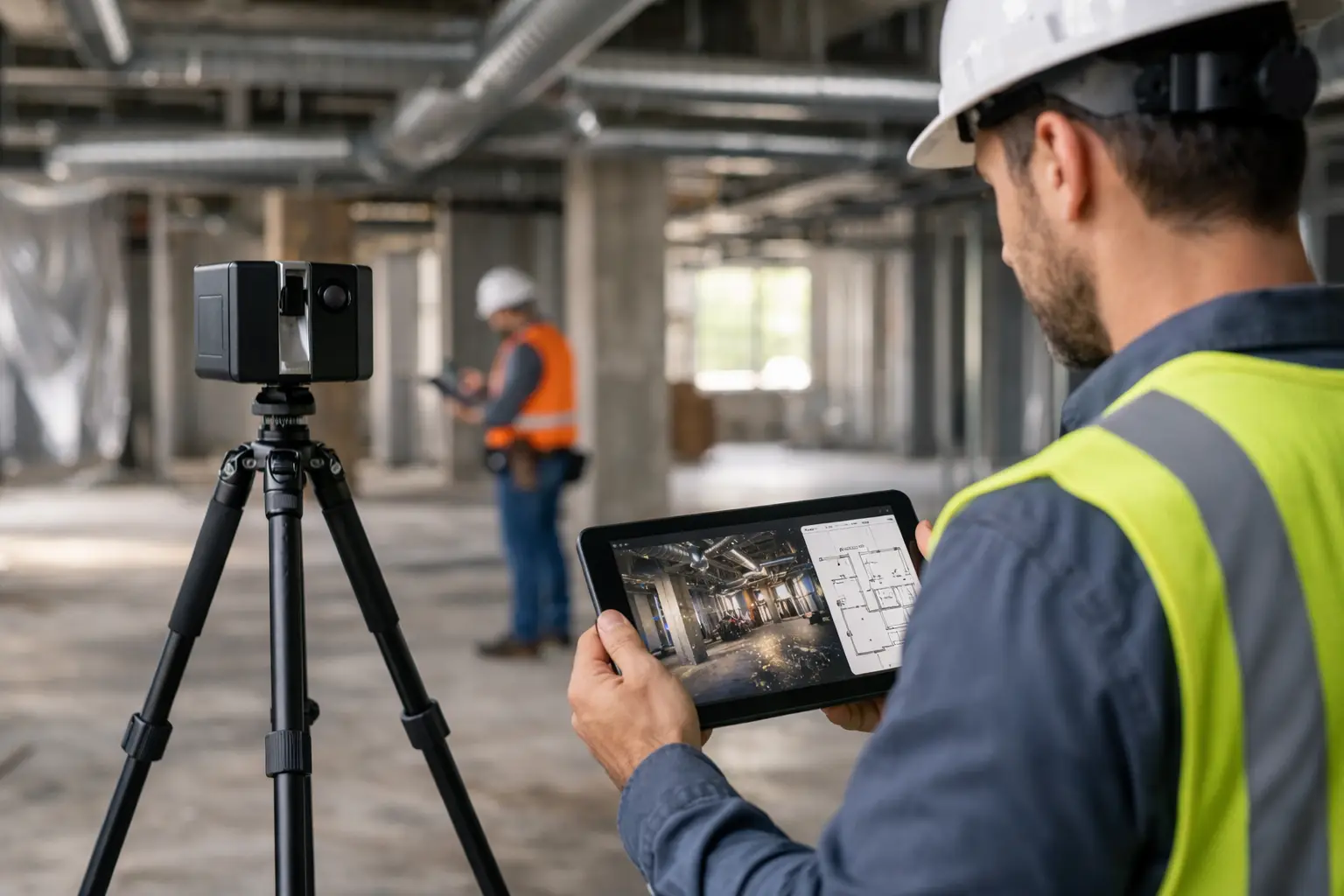
The fieldwork stage focuses on reality capture. LiDAR scanners collect dense spatial data across interior and exterior areas, while drones or mobile mapping may be used where site access, scale, or elevation makes them more efficient. Control points and registration workflows are then used to align scans accurately into a unified point cloud.
From there, modeling specialists translate the point cloud into BIM geometry and structured data. This is where expertise matters. Not every project needs every element modeled, and over-modeling can add cost without adding value. A commercially sound provider will model what the project needs, not everything the scanner sees.
Quality assurance is the final step that often separates useful output from decorative output. Model checks should verify dimensional consistency, alignment with the point cloud, file usability, and compliance with project standards. If consultants or contractors cannot work with the model easily, technical accuracy alone is not enough.
What to look for in a scan to BIM partner
Choosing a provider should not be based on equipment alone. Scanners matter, but project outcomes depend just as much on workflow discipline, modeling capability, and sector experience.
A credible partner should be able to discuss tolerances, deliverable formats, and intended use cases in plain business terms. They should ask how the model will support design, approvals, procurement, construction, or operations. They should also be transparent about trade-offs. For example, highly detailed MEP modeling may be justified in a major plant retrofit, but it may be unnecessary for early feasibility planning in a commercial fit-out.
Turnaround time is another factor, but speed should be evaluated carefully. Fast capture with weak QA can create hidden delays later when design teams discover inconsistencies. The better question is whether the provider can deliver reliable data on a timeline that fits the project program.
Regional experience can also make a difference. Buildings across Southeast Asia often present practical realities such as live occupancy, mixed documentation standards, humid service environments, and limited site access windows. Providers who understand these operating conditions tend to plan better and execute with fewer disruptions.
Common misconceptions that lead to poor outcomes
One common mistake is assuming a point cloud alone is enough for every team. In some cases it is. In many others, consultants and operators need structured BIM objects, documentation, and navigable model data to do their jobs efficiently. Raw scan data is valuable, but it does not automatically replace a usable model.
Another misconception is that more detail always means better value. It depends on the project. Excessive detail can slow modeling, increase cost, and create files that are difficult to use. The right output is the one aligned to project decisions, not the one with the most geometry.
There is also a tendency to treat scan to BIM as a one-time documentation exercise. In reality, its value grows when it supports a broader digital workflow. A verified building model can inform digital twin initiatives, remote stakeholder reviews, renovation planning, marketing visualization, and long-term property management. That is where spatial data starts contributing beyond design coordination.
The commercial case for getting it right early
Most project teams can absorb small measurement errors. What they struggle to absorb is cumulative uncertainty. When existing conditions are questionable, every downstream activity takes longer. Teams verify more, revise more, and commit later. That affects design efficiency, construction planning, tenant coordination, and budget control.
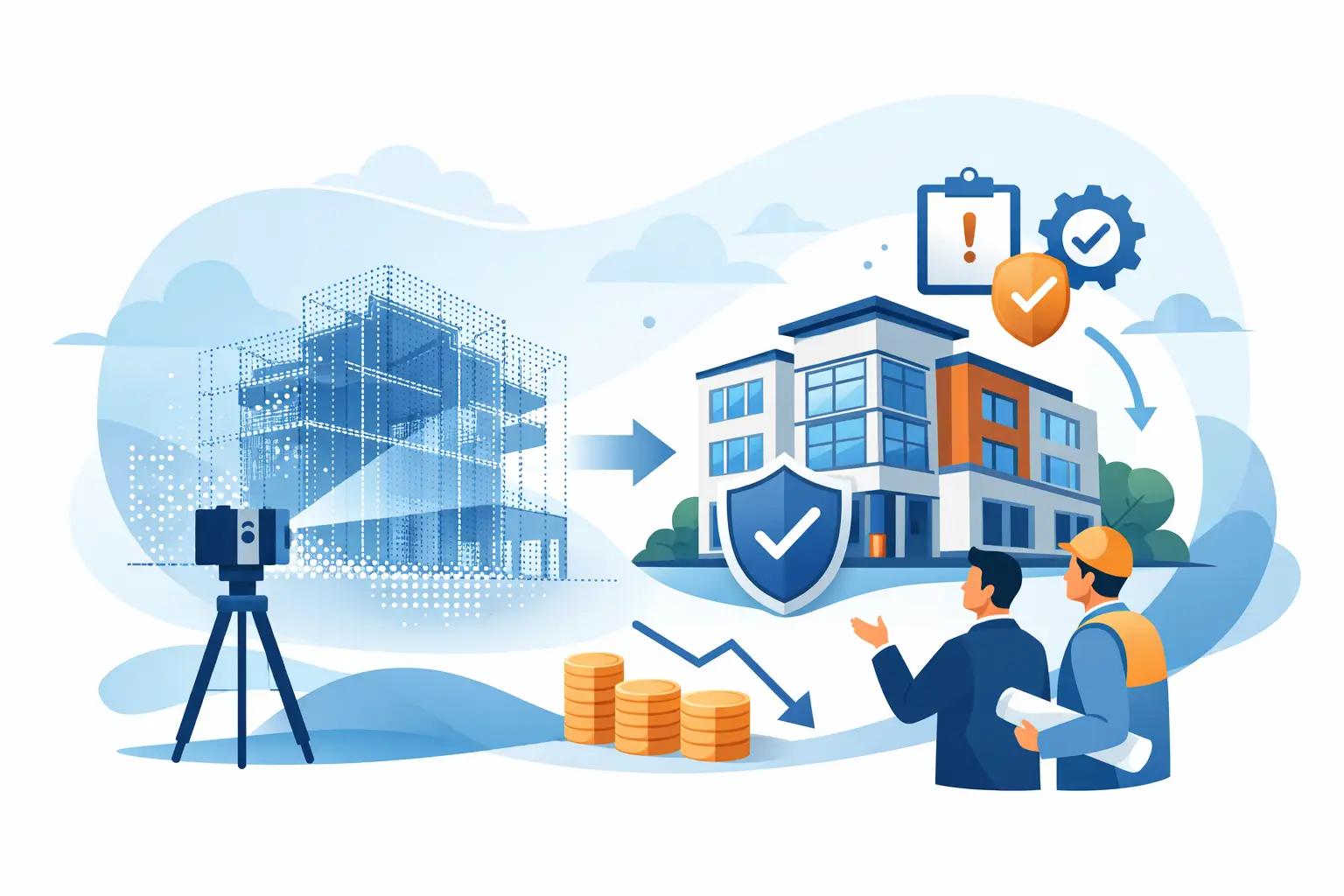
Scan to BIM services improve confidence at the front end, which tends to create value across the entire project lifecycle. Designers coordinate with fewer assumptions. Owners get clearer visibility into existing assets. Contractors reduce site surprises. Facilities teams inherit documentation that supports future decision-making rather than archive storage.
For businesses managing space as a commercial asset, this is not just about model quality. It is about reducing friction in how projects are approved, delivered, and operated. That is why companies such as Novo Reperio position reality capture and BIM not as isolated technical services, but as part of a wider digital infrastructure for better planning and faster decisions.
The strongest projects do not use scan data because it is advanced. They use it because uncertainty is expensive, and verified building intelligence gives teams a better place to start.