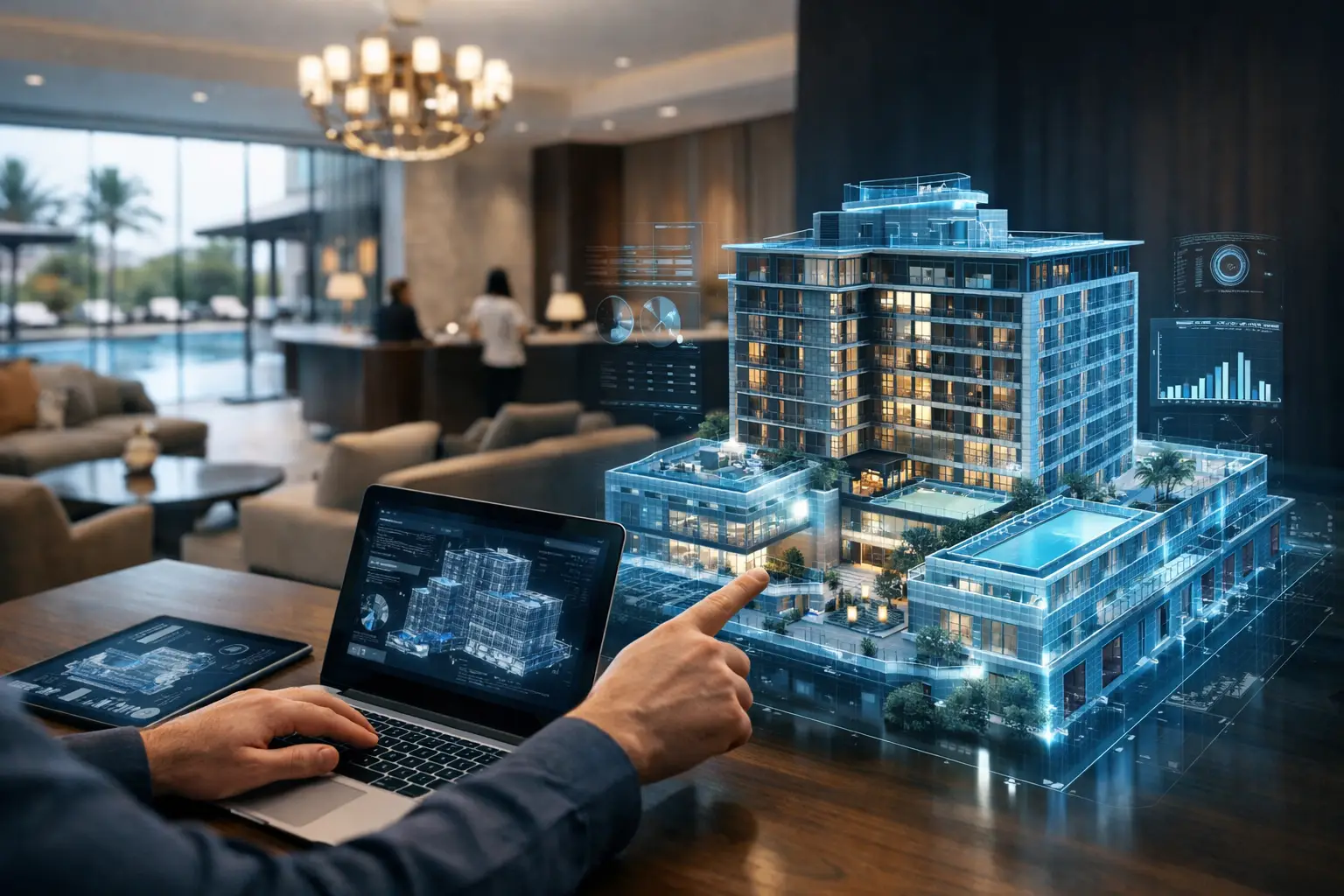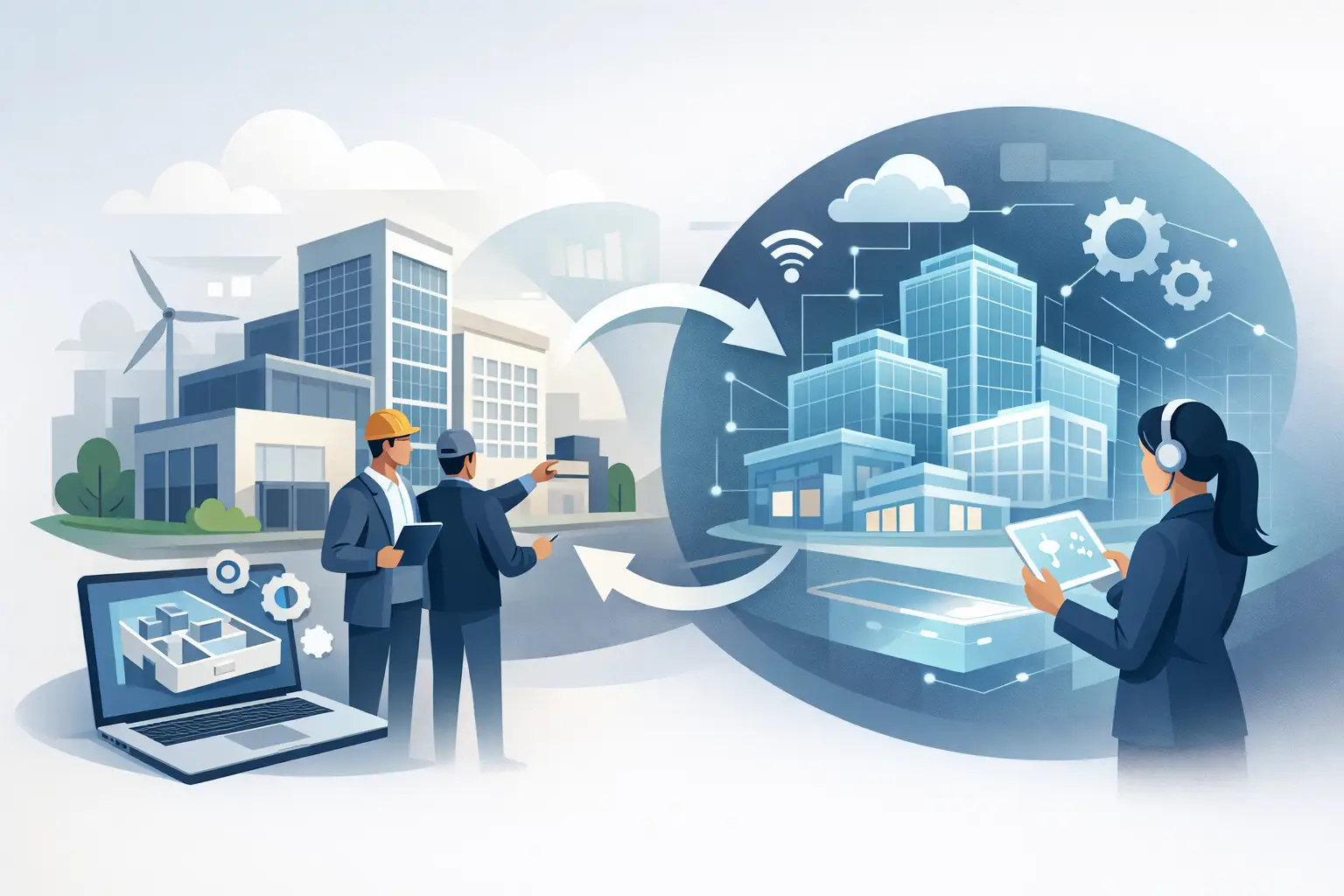

A chiller fails at 2:00 a.m., the maintenance team is called in, and the first problem is not the repair itself. It is figuring out exactly where the asset sits, what condition it was in last month, which systems connect to it, and whether the latest as-built drawings are still accurate. That gap between the physical building and the information used to manage it is where a digital twin for facility management starts to deliver real value.
For facility leaders, the appeal is straightforward. A digital twin turns a building, plant, hospital, warehouse, campus, or commercial property into a visual, data-linked environment that can be accessed remotely and used operationally. Instead of switching between PDFs, spreadsheets, outdated CAD files, and site visits, teams work from a current digital representation of the space tied to asset data, maintenance records, and building documentation.
What a digital twin for facility management actually means
The term gets used loosely, so it helps to define it properly. In facility management, a digital twin is not just a 3D model and it is not just a virtual tour. It is a digital environment that reflects the real facility with enough spatial and operational accuracy to support decisions.
That usually starts with high-quality spatial capture such as LiDAR scanning, 360 imaging, or both. The result is a navigable model of the facility that shows what is physically there, where it is located, and how spaces connect. When linked with asset registers, BIM data, maintenance logs, equipment specifications, warranty documents, and sensor inputs, the model becomes more than a visual reference. It becomes a working operational layer.
This distinction matters. A static model helps with presentation. A digital twin helps teams manage risk, reduce wasted time, and make faster calls when something changes on site.
Why facilities teams are adopting digital twins
Most facilities are still managed through fragmented systems. One team owns the asset list, another keeps the drawings, contractors have separate reports, and site knowledge sits in the heads of a few experienced staff. That setup works until a handover is incomplete, a renovation changes equipment layouts, or a critical technician is unavailable.
A digital twin reduces that dependency on scattered information. It gives operations teams a shared source of visual truth. If a building manager needs to plan preventive maintenance, onboard a vendor, assess access routes, or review plant room conditions before a shutdown, they can do that from a digital environment that reflects the real site.
For portfolios with multiple sites, the value grows quickly. Remote stakeholders can inspect conditions, compare facilities, and coordinate works without relying on repeated travel or incomplete site photography. In markets across Southeast Asia, where assets may be distributed and operational teams stretched across cities or regions, that efficiency is commercially meaningful.
Where the gains show up first
Faster maintenance planning
Maintenance teams spend more time than most organizations realize on locating assets, checking access, confirming surrounding conditions, and verifying documentation. A digital twin shortens that process. Teams can identify an air handling unit, trace its location in relation to nearby services, review linked documents, and prepare the job before anyone steps on site.
That does not eliminate fieldwork, but it improves the quality of fieldwork. Technicians arrive with better context, fewer surprises, and a clearer understanding of what is around the equipment.
Better asset visibility
In many facilities, the asset register is technically complete but practically difficult to use. It may include serial numbers and model references, yet offer limited context on where those assets sit or how they relate to adjacent systems.
A digital twin makes asset data spatial. That sounds simple, but it changes how teams work. When data is tied to a visible location, it becomes easier to audit, verify, and maintain. This is especially useful in large industrial facilities, hospitals, hotels, and mixed-use developments where asset density is high and access planning matters.
More reliable renovations and fit-outs
Facility management is not only about keeping the building running. It also involves change – tenant improvements, MEP upgrades, retrofits, space reconfiguration, and compliance-driven works. If the base documentation is outdated, every project starts with uncertainty.
A digital twin built from current scan data gives project teams a far better starting point. When paired with Scan-to-BIM workflows, it supports accurate as-built records and reduces the risk of designing against old drawings. That can save both time and rework, particularly in operational buildings where shutdown windows are limited.
Digital twin vs BIM vs CMMS
This is where many buying decisions get stuck. A digital twin is not a replacement for every existing system.
BIM is typically the structured building information model used during design, construction, and sometimes handover. A CMMS manages maintenance workflows, work orders, and asset servicing. A digital twin sits across the operational environment as the visual and spatial layer that helps people interact with those systems more intuitively.
If BIM is detailed but difficult for non-technical teams to access, the digital twin can make building information easier to use. If the CMMS stores maintenance records but gives little visual context, the twin can help staff find and understand assets faster. The strongest implementations are usually integrated, not isolated.
That said, not every facility needs full system integration on day one. For some organizations, the immediate return comes from accurate capture, remote access, and a validated visual record. For others, especially high-value or technically complex sites, the return grows when the twin is connected to operational platforms and live building data.
What determines ROI
A digital twin for facility management is easier to justify when the business case is tied to operational friction, not novelty.
If your facility has frequent contractor coordination issues, poor handover records, repeated site visits for simple assessments, or high costs tied to access and downtime, the savings can be clear. If your properties turn over often, require constant documentation, or support remote stakeholders, the value extends beyond maintenance into leasing, compliance, and capital planning.
The trade-off is that ROI depends on capture quality and data discipline. A poorly structured twin with missing asset data becomes another platform people stop using. A high-value outcome requires accurate scanning, sensible information architecture, and a plan for how the model will be maintained as the facility changes.
This is why implementation should start with operational use cases. What decisions need to be faster? Which assets matter most? Who will use the twin weekly, not just during launch month? Those questions shape a system people actually adopt.
How to implement a digital twin for facility management
The best projects usually begin with one facility or one operational problem, not an enterprise-wide rollout. A plant room, warehouse, hotel, office tower, or industrial floor can serve as a practical starting point.
The first step is spatial capture. Depending on the facility and the required output, that may include LiDAR scanning, 360 imagery, aerial mapping, or a combined workflow. Accuracy matters here because every later decision depends on the quality of the digital base.
Next comes data structuring. Assets, spaces, documentation, and tags need to be organized in a way that reflects how your team operates. A digital twin should not mirror internal confusion. It should simplify it.
Then comes integration. Some clients need a highly visual standalone twin first. Others want BIM alignment, linked O&M manuals, or connections to maintenance systems. There is no single correct path. The right setup depends on facility complexity, reporting needs, and internal technical maturity.
A partner with both capture capability and operational understanding makes a difference here. That is where firms like Novo Reperio can add value beyond image capture alone, by aligning spatial data, documentation, and implementation with how facilities are actually managed.
Common mistakes to avoid
The biggest mistake is treating the digital twin as a marketing asset when the goal is operations. Presentation quality matters, but facility teams need functionality first. If the twin looks impressive but does not support maintenance planning, asset validation, or space-level decision-making, adoption will drop.
The second mistake is overbuilding too early. Not every site needs live IoT integration, complex automation, or a fully modeled BIM environment from the start. In many cases, a phased rollout produces better results because teams can prove value, refine workflows, and expand with clearer priorities.
The third mistake is failing to maintain the data. Buildings change. Equipment is replaced, partitions move, tenants alter spaces, and service routes evolve. If the digital twin is not updated after major changes, trust declines quickly.
The shift from documentation to decision-making
What makes this technology commercially relevant is not the model itself. It is the speed and quality of decisions it supports. Facility management has always been information-heavy, but too much of that information remains difficult to access when it matters.
A well-executed digital twin brings visibility to the operational reality of a building. It helps teams plan maintenance with fewer assumptions, manage assets with better context, and approach upgrades with more confidence. For organizations managing complex or high-value spaces, that is not a visual upgrade. It is a better operating system for the built environment.
The facilities teams that get the most from digital twins are not chasing trend language. They are reducing uncertainty, improving response time, and building a clearer picture of the spaces they are responsible for every day.