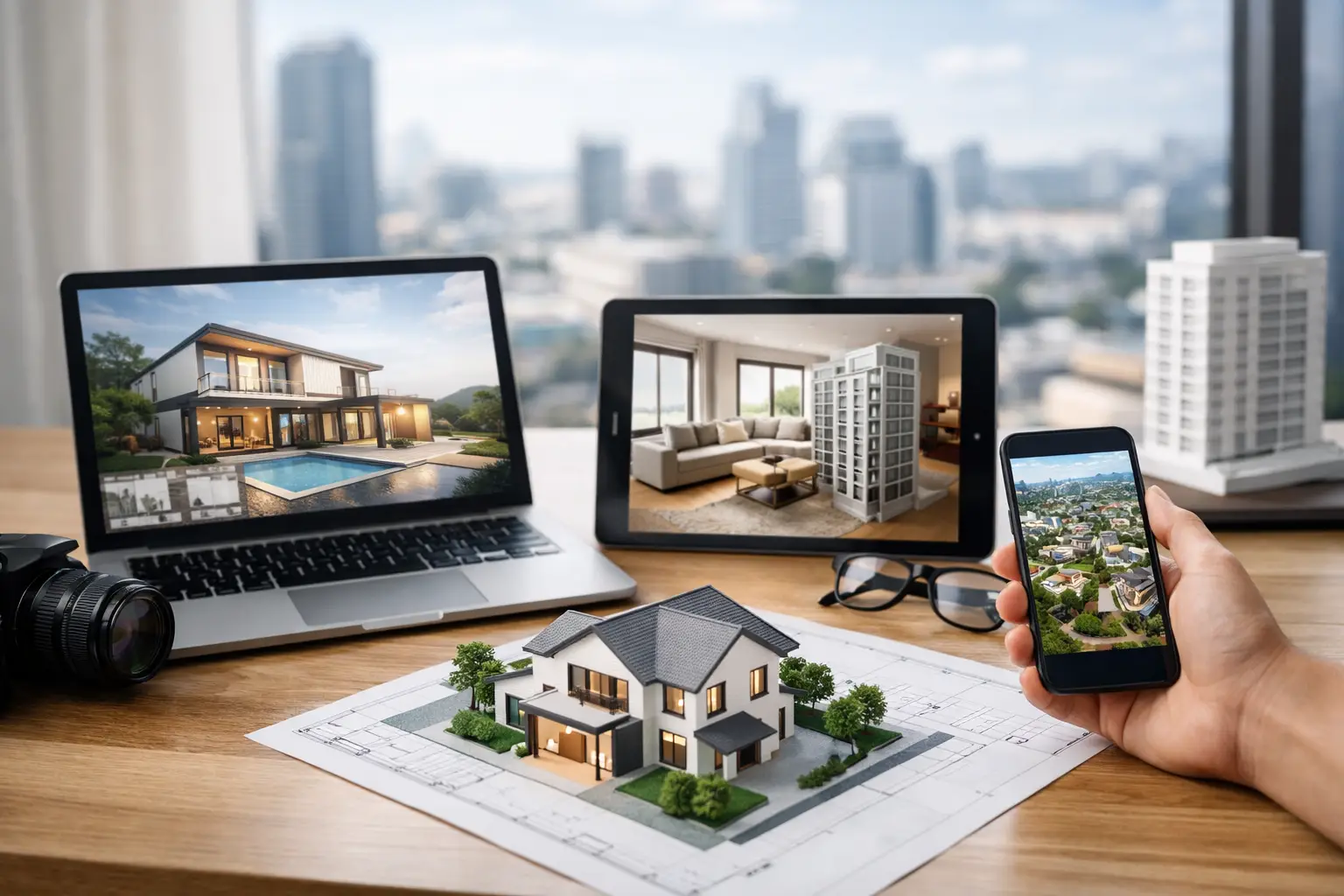

A site hoarding can promise a landmark development. A brochure can describe premium finishes and skyline views. But buyers, investors, and leasing stakeholders still make decisions based on what they can actually see. That is why 3D rendering for property developers has shifted from a marketing extra to a core sales and planning tool.
For developers, the value is not just visual polish. High-quality rendering reduces ambiguity at the exact stage where ambiguity slows deals. When a project is still under construction, or not yet built at all, every conversation depends on how clearly the future asset can be communicated. The more accurately a project is visualized, the easier it becomes to support pre-sales, secure internal approvals, align consultants, and build market confidence.
Why 3D rendering for property developers matters earlier than most teams think
Many developers first consider rendering when launching a campaign. That is often too late. By the time marketing materials are being assembled, core decisions about positioning, product mix, views, amenities, and buyer appeal should already be tested visually.
This is where rendering becomes commercially useful, not just attractive. A well-planned visualization package helps teams evaluate how a development will read from different buyer perspectives. Does the facade communicate the right level of prestige? Do common areas feel premium or generic? Does the show unit reflect the buyer profile the project is targeting? These are business questions disguised as design questions.
For mixed-use and large-scale developments, the stakes are even higher. Residential buyers, retail tenants, investors, and project partners all need different levels of detail. A single static image may help with advertising, but it will not answer leasing questions, investor concerns, or planning discussions. Developers who treat visualization as part of project strategy typically get better use from every asset they commission.
What buyers and investors actually want from a render
A strong render does not just look realistic. It reduces uncertainty.
For residential buyers, that usually means understanding space, light, material quality, layout flow, and the emotional feel of the property. For commercial stakeholders, the focus often shifts toward frontage, circulation, visibility, tenant appeal, and how the asset performs as a place of business. Investors may care less about decorative detail and more about whether the visual presentation supports a credible premium positioning.
This is where many rendering projects go wrong. The output may be technically impressive, but commercially weak. Oversaturated skies, impossible lighting, and overly staged interiors can create a polished image that still fails to build trust. Sophisticated audiences can sense when a render is selling fantasy instead of presenting a believable future asset.
The better approach is precision with intent. Materials should feel buildable. Views should reflect likely conditions. Furnishings should support the project’s target market rather than distract from the architecture. In practical terms, the render should help the viewer make a decision, not admire the software.
The business case behind 3D rendering for property developers
The clearest return on investment comes from faster and more confident decision-making.
At the sales stage, rendering helps pre-sell units before physical completion. That can improve cash flow visibility and strengthen campaign performance, especially when buyers are overseas or unable to visit regularly. In competitive markets, better visuals can also increase engagement rates across digital channels, improve inquiry quality, and support premium brand positioning.
Internally, renderings help align stakeholders who may interpret plans differently. Development teams, marketing departments, sales agents, consultants, and investors rarely look at technical drawings in the same way. Rendering turns abstract documentation into a shared reference point. That reduces revision cycles and avoids the kind of mismatch that often appears between design intent and market presentation.
There is also a longer-term brand value. Developers launching multiple projects need consistency in how they present quality, lifestyle, and product tier. A structured visualization workflow supports that consistency across brochures, launch materials, websites, digital campaigns, display galleries, and CGI walkthroughs.
Choosing the right type of rendering
Not every project needs the same deliverables. The right mix depends on the stage of development, the target audience, and the commercial objective.
Static exterior renders are often the starting point because they establish architectural identity. They work well for launch campaigns, investor decks, and outdoor advertising. Interior renders become more valuable when the developer needs to communicate livability, finishes, or unit differentiation. This is especially relevant for projects where layouts are compact and every spatial decision matters.
CGI walkthroughs add another layer when movement, sequencing, or amenity experience is central to the sale. For hospitality-branded residences, lifestyle-led condominiums, or commercial assets with large shared facilities, motion often communicates more than a still image can. Virtual staging is useful when developers want flexibility across buyer segments without physically dressing multiple spaces.
For more complex developments, digital twins, LiDAR-based site capture, and spatial data integration can add operational value beyond marketing. That is where visualization starts to support documentation, remote review, construction coordination, and future asset management. For some developers, especially those managing large portfolios or redevelopment projects, this broader ecosystem delivers more value than standalone rendering alone.
What separates effective rendering from expensive decoration
The difference usually comes down to inputs, process, and commercial understanding.
A rendering partner needs more than design software. They need to understand architecture, spatial data, and how development decisions affect market perception. If source information is incomplete, the output becomes guesswork. If the camera angles are chosen without a sales strategy, the visuals may be attractive but not persuasive. If the rendering team has no understanding of how built spaces are documented, measured, and updated, revisions can become slow and costly.
Developers should look for a workflow that starts with accurate project inputs and a clear brief tied to business goals. That may include architectural drawings, BIM files, LiDAR scans, material references, landscaping intent, lighting direction, and buyer personas. The more technical rigor behind the model, the more dependable the final visuals will be.
It also helps to work with a partner that can bridge marketing and technical teams. In practice, developers do not need images in isolation. They need a visualization system that can support websites, sales galleries, remote presentations, digital ads, and investor communication without recreating assets from scratch every time.
Common trade-offs developers should consider
More realism is not always better if it slows delivery beyond campaign timelines. Speed matters, especially when launch windows are fixed. On the other hand, rushing low-detail visuals can weaken confidence in a premium project. The right balance depends on what the render is meant to achieve.
There is also a trade-off between aspiration and accuracy. Every developer wants visuals that elevate the project, but overpromising creates downstream risk. If landscaping, views, or interior finishes are presented at a level the built outcome cannot support, marketing may create short-term interest while damaging long-term trust.
Budget is another factor. A single hero image may be enough for a small campaign, while a larger project may justify a full suite of exteriors, interiors, aerials, animations, and interactive content. The most efficient investment is usually a staged approach – core visuals first, then expanded assets as the project moves from approvals to launch to active sales.
Where rendering fits in a broader property visualization strategy
The strongest results usually come when rendering is part of a connected digital sales environment.
For example, a render may attract attention, but a 360 virtual tour keeps prospects engaged longer. A CGI walkthrough may explain the development story, while drone imagery provides real-world site context. A digital twin can support remote stakeholder review and post-completion asset documentation. When these tools are planned together, they stop functioning as separate media items and start working as a sales and decision-making system.
That is particularly relevant for developers targeting regional and international buyers across markets such as Malaysia and Singapore, where remote viewing and cross-border decision-making are now standard rather than exceptional. Clear digital presentation shortens distance. It also gives sales teams better material for follow-up conversations, not just first impressions.
Novo Reperio approaches this from both sides of the equation: visual impact and spatial accuracy. That matters because developers do not just need attractive imagery. They need digital assets that support faster decisions, stronger stakeholder alignment, and more effective market presentation across the life of a project.
How developers should brief a rendering project
The best briefs are commercially specific. Instead of asking for premium-looking visuals, define who the project is for and what the render needs to help them believe. Is the priority investor confidence, pre-launch lead generation, luxury positioning, retail leasing, or overseas buyer engagement?
It also helps to identify where the visuals will appear. A website hero banner needs a different composition than a large-format sales gallery display. Social media crops differently from a printed brochure. Walkthrough content requires a different storytelling rhythm than still imagery.
Finally, brief for decision support, not just aesthetics. If there are likely objections around unit size, street access, surrounding density, or amenity quality, the visual package should address them directly. Good rendering does not avoid commercial friction. It helps resolve it before it becomes a lost sale.
The most valuable property visuals do more than fill a brochure. They give people enough clarity to move forward with confidence. For developers, that is where rendering stops being a creative line item and starts performing like a business asset.