
A monthly site report can say that structural works are complete, but a decision-maker in another city needs to see what that means. Construction progress photography services provide that proof: a consistent visual record of work completed, work underway, site conditions, and the changes that affect delivery.
For developers, contractors, consultants, and asset owners, the value is not simply a library of attractive images. It is a reliable source of project intelligence that improves stakeholder communication, supports coordination, and creates a defensible record from mobilization through handover. When planned properly, progress photography becomes part of the project’s documentation workflow rather than an afterthought for the marketing team.
What Construction Progress Photography Services Should Deliver
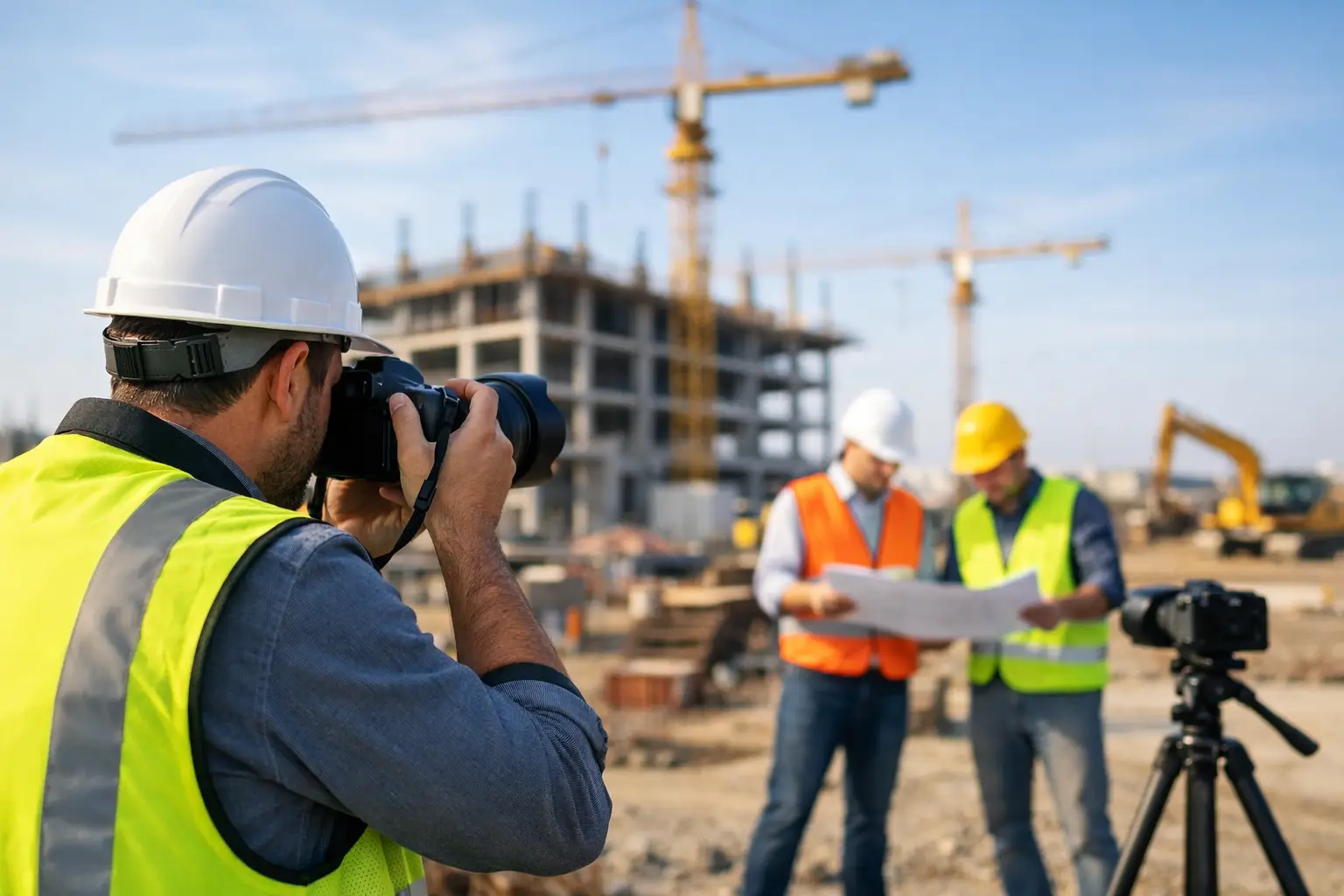
The standard is higher than occasional site visits and a folder of wide-angle shots. A professional service should create repeatable visual coverage at agreed milestones, using consistent viewpoints, image treatment, and naming conventions. This makes progress easy to compare over time, whether a stakeholder is reviewing a weekly update or assessing several months of construction activity.
The most useful images answer practical questions. Has façade installation reached the planned elevation? Is the site ready for a key trade to begin? What was the condition of the work before it was enclosed? Are temporary works, access routes, or staging areas affecting the next phase? Photographs cannot replace formal site inspections or quality controls, but they can give remote stakeholders a fast, accurate view of what merits attention.
A strong program also separates two needs that are often confused. Documentation photography is captured for consistency, traceability, and reporting. Milestone photography is composed to communicate achievement, reinforce confidence, and support investor, leasing, public relations, or marketing activity. The same visit can support both outcomes, but each requires a different shot plan.
Why Consistency Matters More Than Volume
A large volume of images is not automatically useful. Without repeatable coverage, teams spend too much time searching, interpreting unfamiliar views, or trying to compare images taken from different locations. Consistent camera positions turn photographs into a visual timeline.
For example, a fixed external viewpoint can show the progression from foundations to superstructure, envelope, and final landscaping. Inside the building, a defined set of room, corridor, plant room, and circulation views can document fit-out sequencing and reveal the transition from rough-in to finishes. Capturing these views at each agreed interval gives project leaders a simple way to verify change without being physically present.
This approach is particularly valuable on projects with regional investors, overseas consultants, or headquarters teams. Across Malaysia and Southeast Asia, construction programs frequently involve stakeholders working across multiple locations and time zones. Well-organized images reduce the friction of remote reviews and help discussions begin with an agreed view of site reality.
Progress Photography Is a Reporting Asset
Project reporting is often fragmented across schedules, spreadsheets, meeting notes, drawings, and messaging threads. Photography adds the spatial context those materials lack. A captioned image showing completed reinforcement, installed MEP services, or finished common areas can make a report easier to understand and more credible for a nontechnical audience.
The commercial benefit is clarity. Lenders, owners, purchasers, tenants, and senior management do not always need a detailed construction narrative. They need concise evidence that the project is advancing, that key milestones are visible, and that risks are being addressed. High-quality visual reporting can shorten the time required to prepare updates while improving confidence in the information presented.
Photography is also useful when questions arise later. A structured archive can help teams establish what was visible on a given date, document pre-existing conditions, and support discussions around sequence or access. Its evidentiary value depends on disciplined capture, timestamps, file management, and appropriate site records. It should complement contractual documentation, not be presented as a substitute for it.
Where Photography Alone Has Limits
Traditional photography is excellent for communicating visual progress, but it has limits when a project requires measurements, dimensional verification, or detailed existing-condition data. A photograph can show that ceiling services are installed. It cannot reliably provide the coordinates, clearances, or geometry needed to validate an as-built model.
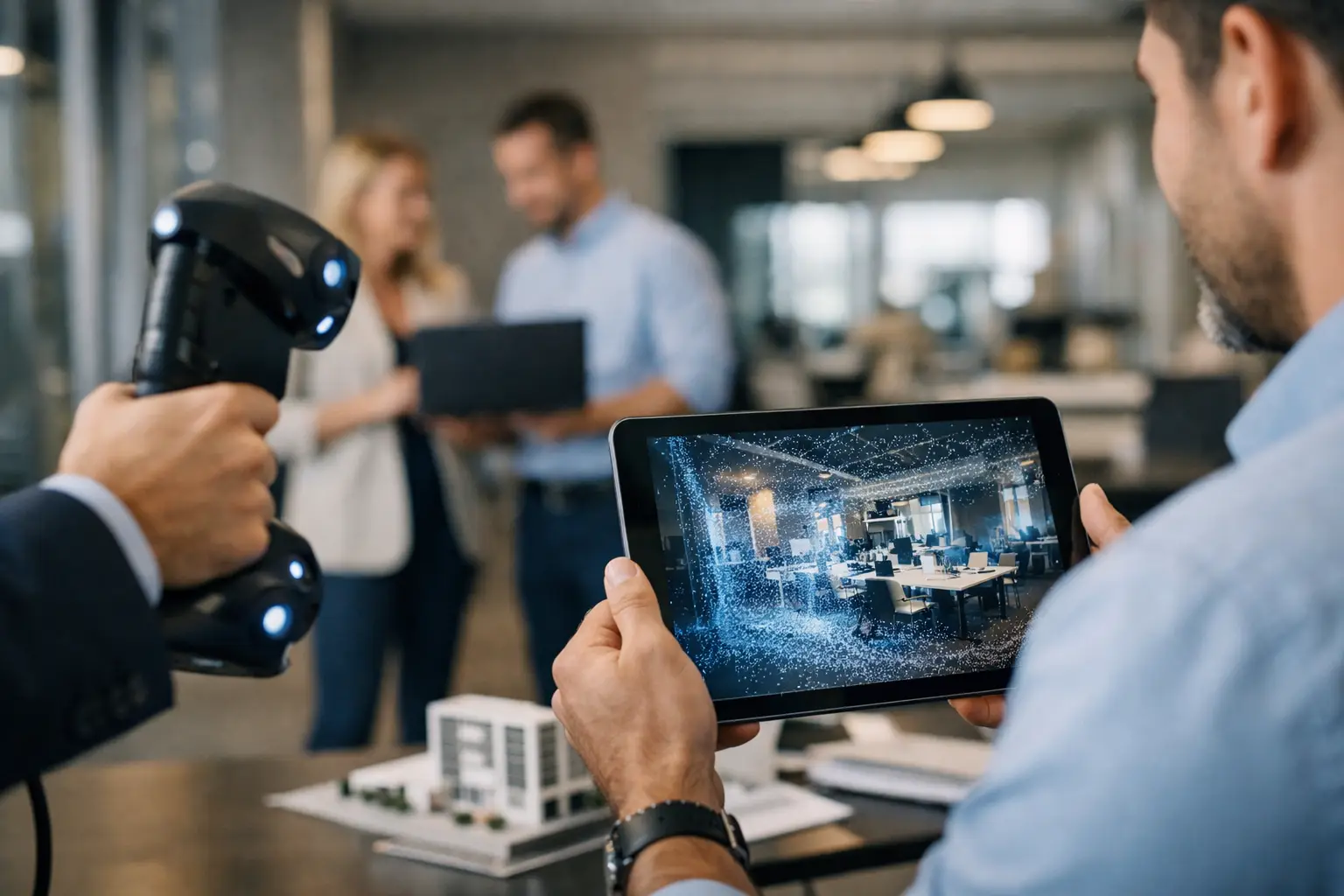
That is where a combined spatial capture strategy becomes more valuable. LiDAR scanning can capture dense 3D point cloud data, while Scan-to-BIM workflows convert verified site conditions into usable digital models. A Matterport digital twin or 360 virtual tour can give remote teams the freedom to navigate a space rather than rely on selected still images.
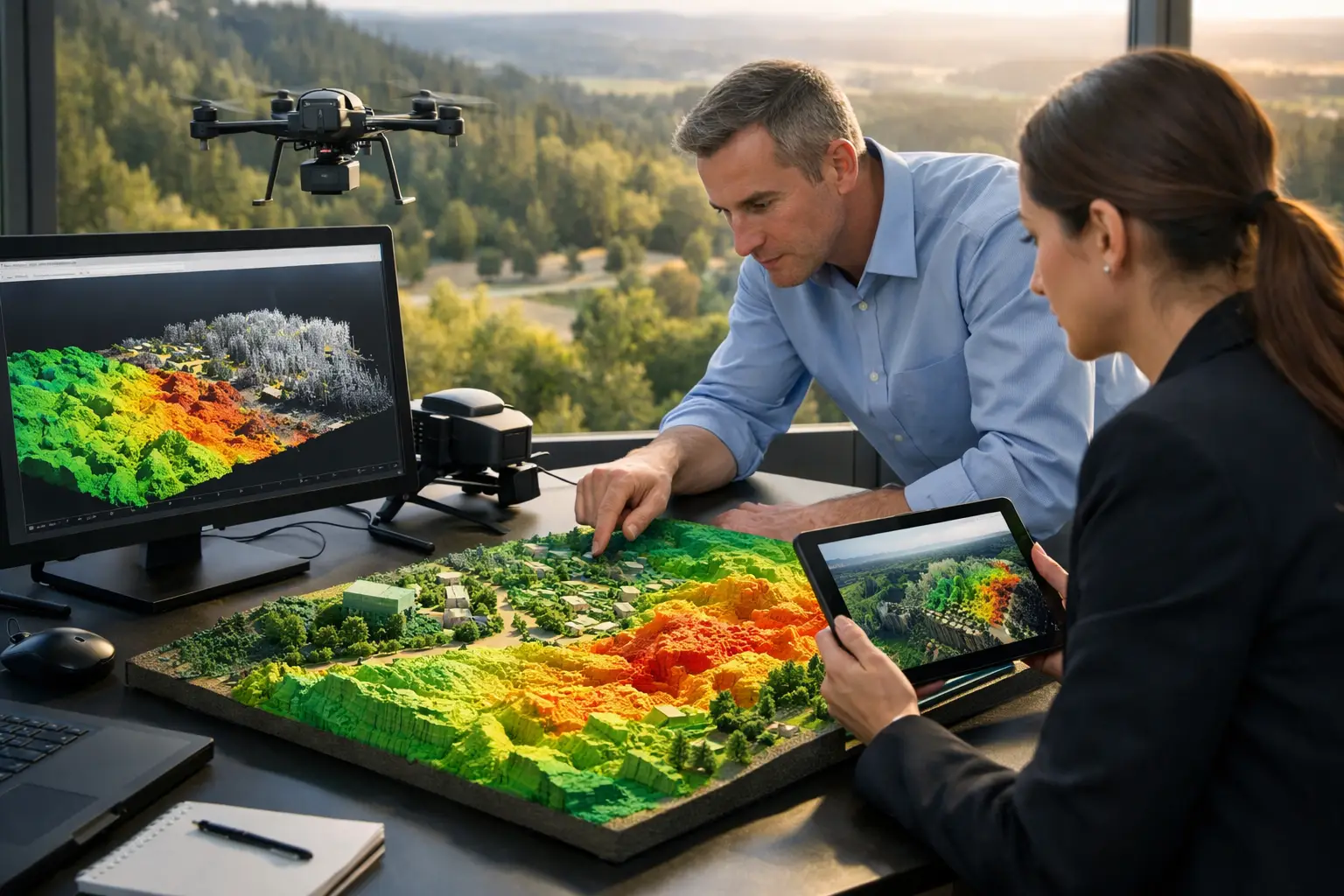
The right mix depends on project stage and decision requirements. Progress photography is often the most efficient choice for regular reporting and milestone communications. LiDAR and Scan-to-BIM are better suited to coordination-sensitive areas, renovation planning, complex MEP environments, and final as-built documentation. Drone imaging adds another layer for large sites, infrastructure work, roof conditions, and broader context that ground photography cannot show.
Planning a Program That Supports the Project
The best time to define photography requirements is before site activity accelerates. The project team should agree on the purpose of the imagery, the audience, capture frequency, priority zones, and how files will be delivered. A monthly schedule may suit a straightforward development, while a fast-moving fit-out or phased industrial project may require fortnightly or milestone-based capture.
Access and safety must shape the plan. Photographers need site induction, appropriate personal protective equipment, and coordination with the site manager. Some areas may be unsafe, restricted, or unsuitable for capture during active operations. A professional provider works within these constraints while preserving consistency wherever possible.
Image organization deserves the same attention as capture. Files should be grouped by date, location, building or zone, and project phase. Clear filenames and captions allow teams to retrieve the right material quickly. For recurring programs, a standardized reporting format can show key views side by side, highlight notable changes, and identify areas requiring follow-up.
A practical shot plan often covers overall site context, access points, exterior elevations, active work fronts, key interior zones, services coordination areas, material deliveries, safety-critical conditions, and milestone details. The exact scope should reflect the project’s risks and commercial priorities. A luxury hospitality development may place more emphasis on finish quality and guest-facing spaces, while a logistics facility may focus on structure, dock areas, racking zones, and MEP infrastructure.
Selecting a Provider Beyond the Portfolio
A polished portfolio matters, but it does not prove that a provider can operate within the realities of a live construction site. Ask how they maintain consistent viewpoints, manage access constraints, protect image files, and align capture with the construction schedule. Review their process for labeling, delivery, revisions, and coordination with site teams.
Technical capability also matters when the documentation requirement may expand. A provider that understands drone operations, 360 capture, LiDAR mapping, and BIM coordination can advise when a project needs more than still photography. This avoids the common problem of commissioning disconnected media services that cannot be combined into a useful project record.
Novo Reperio approaches construction visualization as a connected digital asset strategy. Photography can provide the regular visual narrative, while spatial capture and digital twin technologies add depth where teams need remote navigation, measurable context, or as-built intelligence. The objective is not to deploy technology for its own sake. It is to give each stakeholder the right level of visibility for faster, better-informed decisions.
From Site Images to Long-Term Value
Construction images retain value after practical completion. They can support project handover, warranty discussions, case studies, leasing collateral, investor communications, and future renovation planning. For owners and facility teams, a well-structured archive provides useful context that is otherwise lost as construction teams demobilize.
The most effective construction progress photography services do more than record a building taking shape. They create a dependable visual thread between site activity, project reporting, and the long-term management of the completed asset. Start with the decisions your stakeholders need to make, then design the capture program around the evidence that will help them make those decisions with confidence.