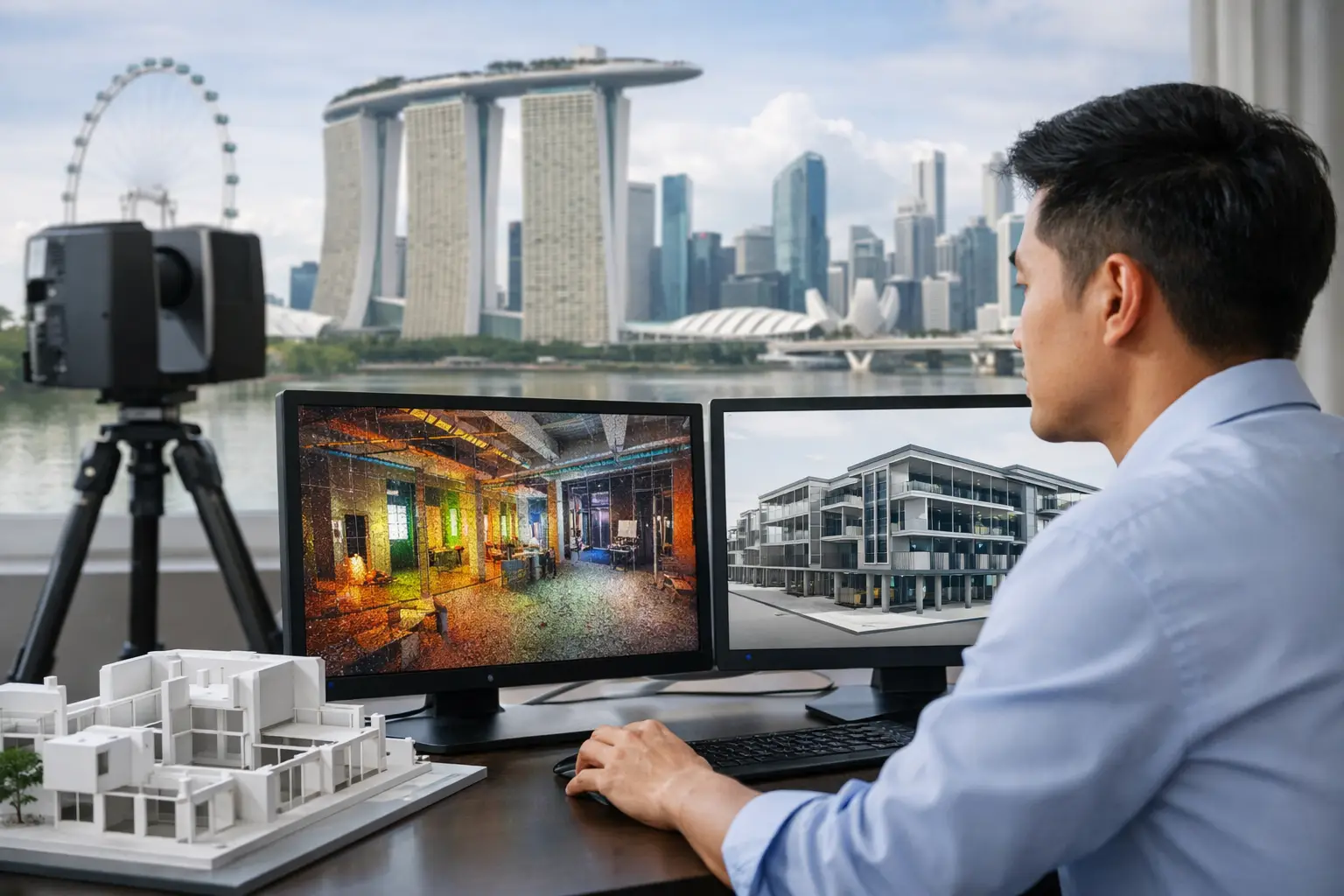

A renovation project in Singapore can lose weeks before work even starts if the existing building data is incomplete. Ceiling routes differ from old drawings, plant rooms have undocumented changes, and structural elements are not where the PDF set says they should be. This is where a Singapore scan to BIM consultant becomes commercially valuable – not just as a technical supplier, but as a partner who turns real-world conditions into usable digital information.
For owners, developers, architects, engineers, and facility teams, the question is not whether laser scanning and BIM are useful. The question is whether the consultant can produce the right model, at the right level of detail, for the decision that needs to be made. That distinction matters because scan-to-BIM is not a commodity. The same site can be captured once and modeled in very different ways depending on whether the outcome is renovation planning, MEP coordination, asset management, lease documentation, or digital twin integration.
What a Singapore scan to BIM consultant actually delivers
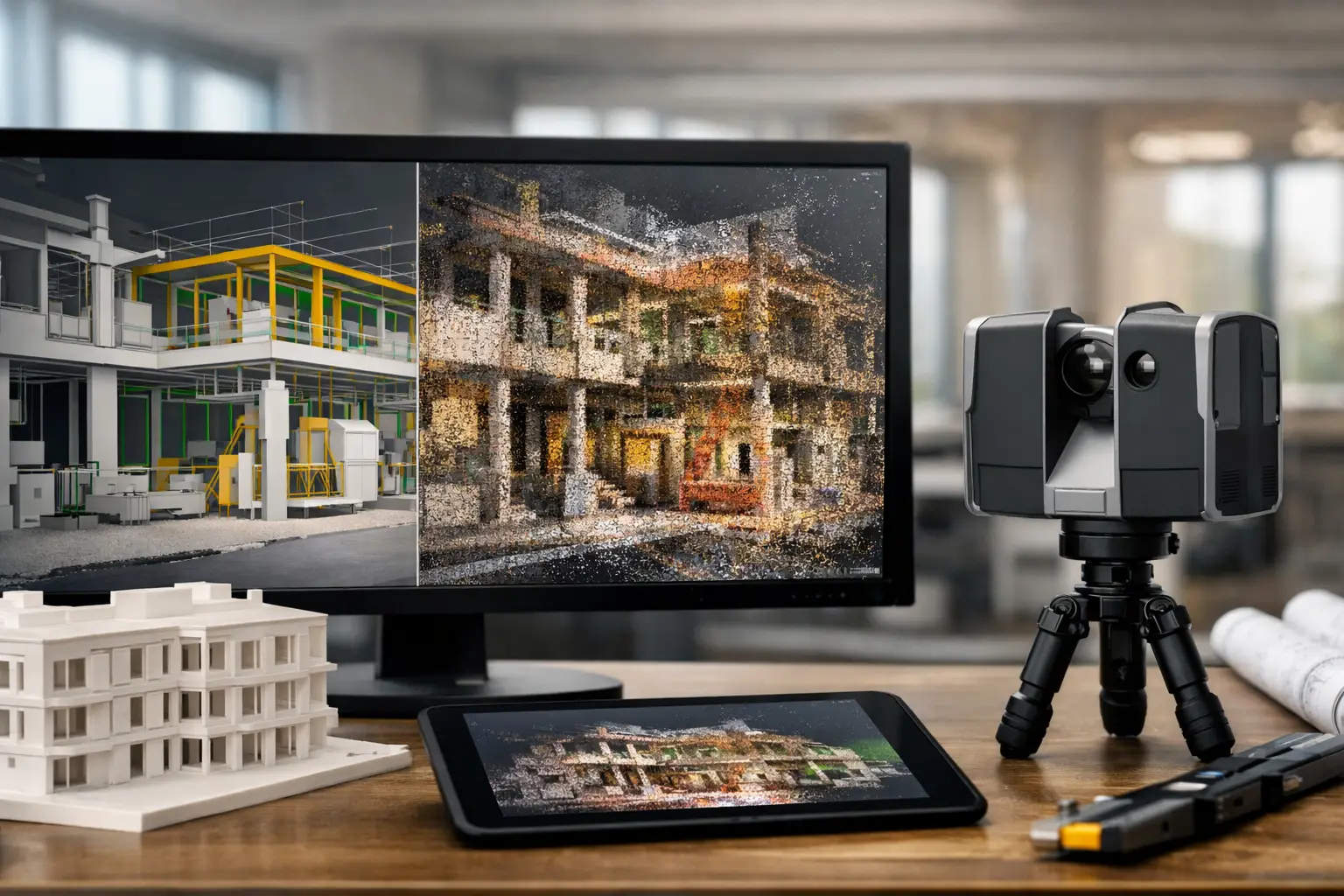
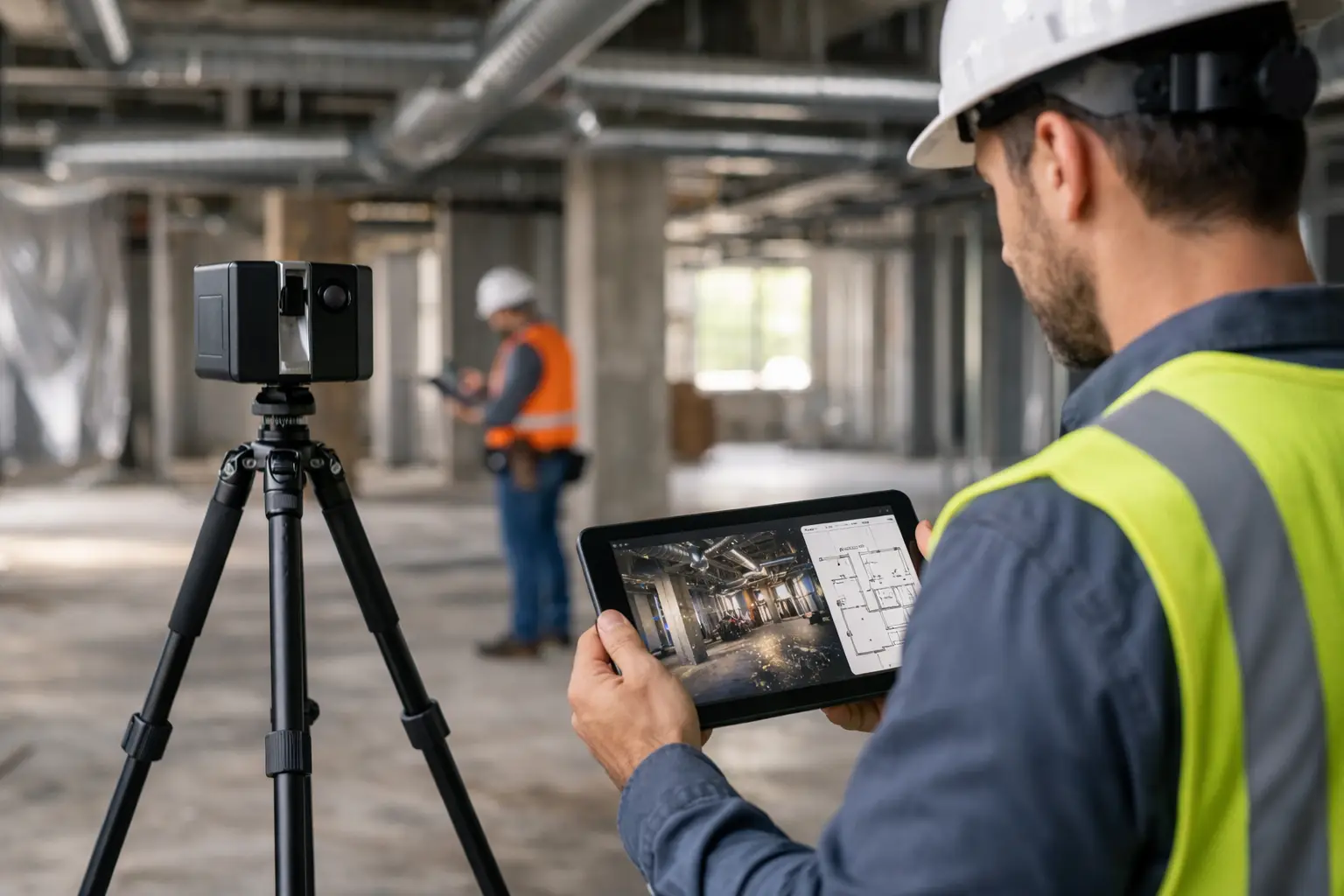
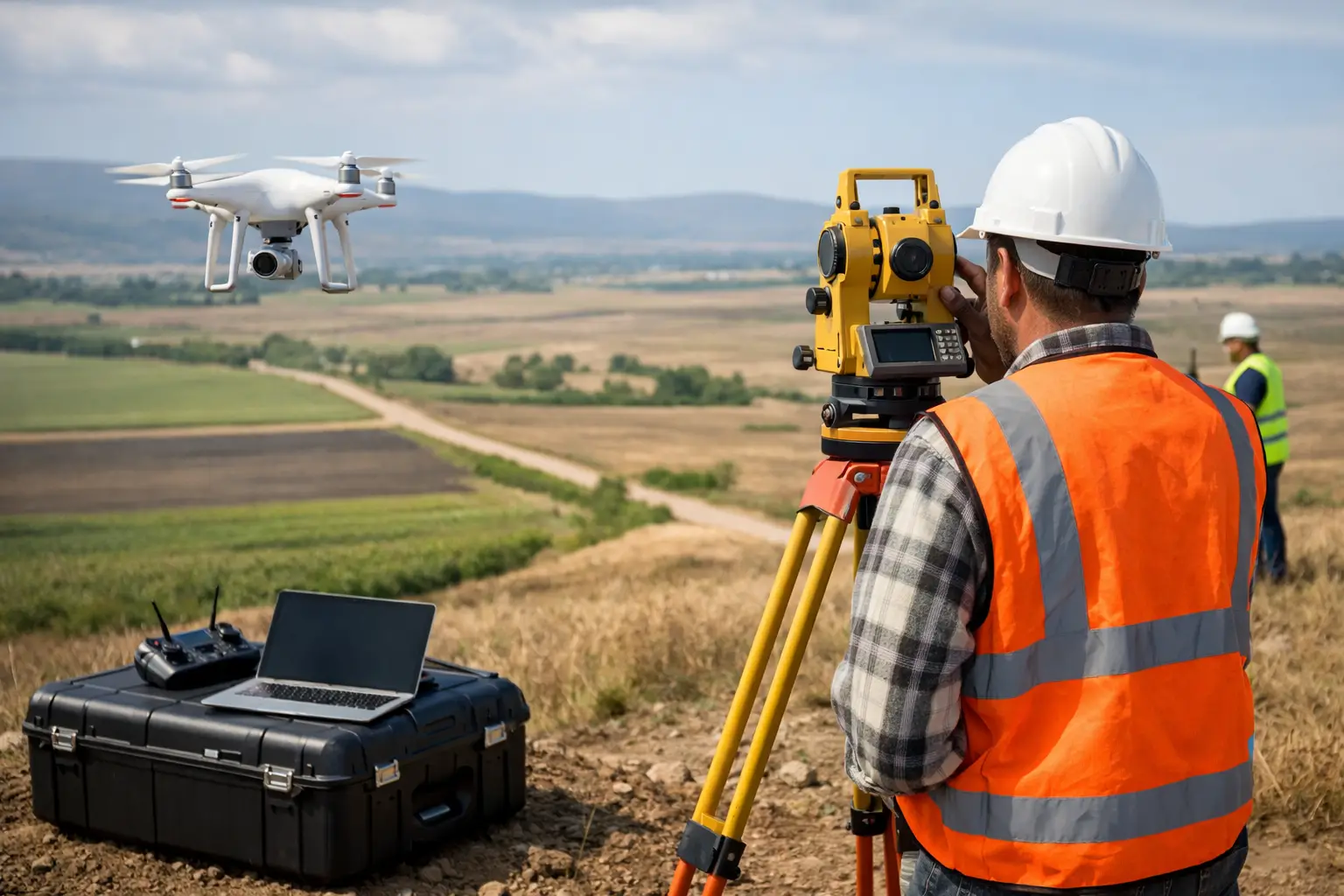
At its core, scan-to-BIM starts with reality capture. A site is scanned using LiDAR or related 3D capture methods to generate a point cloud that reflects the as-built condition of the space. That raw data is then converted into a structured BIM model, typically with architectural, structural, and MEP elements modeled to an agreed scope.
What separates a serious consultant from a basic drafting vendor is how that scope is defined and controlled. A useful engagement begins with the end use of the model. If the client only needs floor plans, reflected ceiling plans, and major services for renovation design, over-modeling every bracket and fitting wastes budget. On the other hand, if the model will support plant replacement, prefabrication, or clash detection, missing service runs and equipment geometry can create downstream cost.
A good consultant therefore advises on the practical middle ground. They help define level of accuracy, level of development, model tolerance, deliverable format, and survey coverage before any fieldwork starts. That planning stage is where risk is reduced.
Why scan-to-BIM projects in Singapore need tighter planning
Singapore is a strong fit for scan-to-BIM because the built environment is dense, vertical, and operationally constrained. Commercial towers, mixed-use assets, hotels, hospitals, transport-linked developments, and industrial facilities often require surveys to happen in live environments with limited shutdown windows. That changes how capture and modeling should be approached.
In these settings, speed alone is not enough. Access sequencing, safety compliance, occupancy patterns, and coordination with building management all influence the survey strategy. A consultant working in Singapore should understand how to capture complete geometry without disrupting operations, especially in high-traffic or security-sensitive sites.
There is also a practical challenge with older and modified buildings. Many assets have gone through phased upgrades, tenancy works, and undocumented retrofits. Existing drawings may exist, but they may not reflect current conditions. In those cases, scan-to-BIM is less about producing a nice 3D file and more about establishing a dependable baseline for design, approvals, and execution.
How to evaluate a Singapore scan to BIM consultant
The first thing to check is whether the consultant asks about outcomes before quoting scope. If the conversation starts and ends with price per square foot, that is a warning sign. Reality capture is only one part of the job. The real value comes from understanding how the model will be used after delivery.
Experience across building types matters as well. A consultant who has only modeled empty retail units may struggle with operational plants, hotels, factories, or complex MEP-heavy facilities. Different environments require different scanning strategies, tolerances, and modeling decisions.
You should also look closely at deliverable discipline. Some firms are strong in field capture but weak in BIM structure. Others produce visually clean models that are difficult for design teams to use because category naming, family logic, or data organization is inconsistent. The best consultants bridge both sides – accurate site capture and production-ready BIM outputs.
Communication is another practical differentiator. On fast-moving projects, commercial teams and technical teams need clear updates on site status, data gaps, exclusions, and model assumptions. A consultant who explains trade-offs early will save time later.
The questions worth asking before appointment
Ask what level of accuracy can be achieved for your site conditions, not just in ideal scenarios. Ask what is included in the modeled scope and what remains as point cloud reference only. Ask how hidden services, inaccessible ceiling voids, or occupied spaces are handled. And ask whether the final model is intended for design coordination, asset records, FM integration, or another use case entirely.
These questions sound basic, but they expose whether the consultant is thinking like a project partner or a scanning operator.
The trade-off between model detail and business value
One of the most common mistakes in scan-to-BIM procurement is assuming that more detail automatically means more value. In practice, it depends.
For concept design, early-stage planning, or area verification, an ultra-detailed model can slow design teams down and increase cost without improving decisions. For major MEP replacement or fabrication-led coordination, however, under-modeling creates risk because teams cannot rely on the geometry where it matters most.
This is why scope calibration is central to a good engagement. The consultant should help determine which elements must be modeled as intelligent BIM objects, which can remain in point cloud form, and which are not commercially worth capturing at all. Done properly, this protects both budget and timeline.
The same principle applies to update cycles. Not every project needs a living model. Some clients need a one-time as-built record for renovation. Others benefit from integrating scan data into broader digital twin workflows for ongoing facility visibility, remote review, or asset planning. The right answer depends on whether the building is being redesigned, marketed, maintained, or continuously optimized.
Where scan-to-BIM creates the strongest return
The clearest return usually shows up where uncertainty is expensive. Renovation and retrofit projects are an obvious example. Accurate as-built geometry reduces redesign, RFIs, site rework, and coordination surprises. For owners and developers, that means better timeline control and fewer late-stage variations.
In facility management, scan-to-BIM helps teams understand what they actually operate, especially across large or aging sites. Mechanical spaces, service routes, and equipment layouts become easier to review remotely and plan around. That can improve maintenance planning and contractor coordination, particularly when records are fragmented.
There is also a growing use case where BIM outputs support wider digital visualization strategies. Once spatial data is captured accurately, it can feed into digital twins, virtual walkthroughs, and operational planning environments. That is especially relevant for organizations managing multiple sites or stakeholders who need remote access to verified spatial information.
Signs you may need more than a model
Some projects start as a scan-to-BIM requirement but quickly reveal broader needs. A developer may want as-built BIM for design coordination, then realize the same capture could support marketing visuals, progress reporting, or a digital record for future operations. A facility owner may begin with documentation needs, then see value in linking spatial data to asset and maintenance workflows.
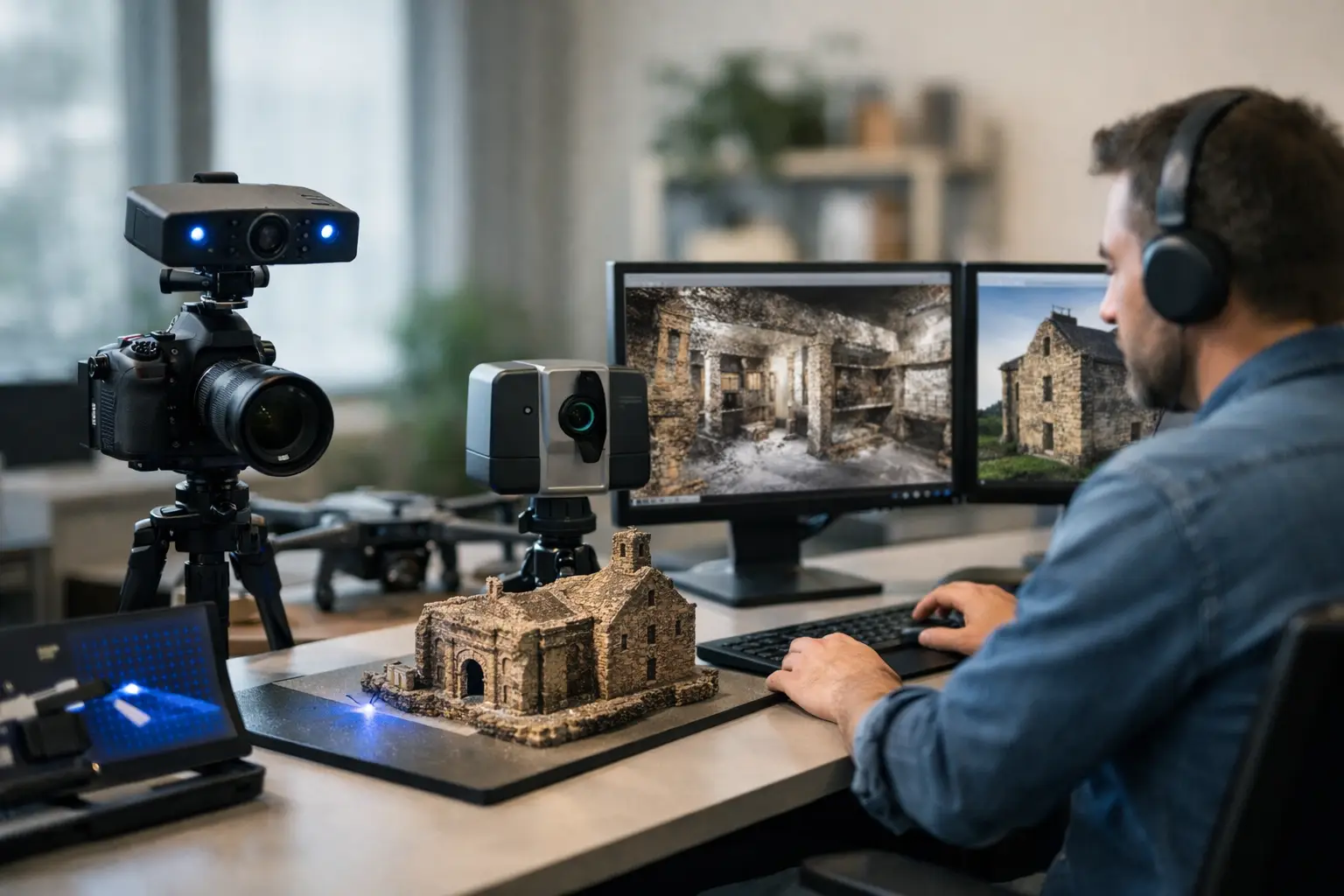
This is where a consultant with wider spatial technology capability is useful. If the same partner understands LiDAR capture, BIM production, digital twins, and visual delivery, the project can be planned with future use in mind rather than treated as a one-off model exercise. For clients across Southeast Asia, including Singapore, that joined-up approach often creates better long-term value than procuring each output separately.
Novo Reperio works in this space with a focus on turning physical environments into decision-ready digital assets, which is often the difference between receiving a file and gaining an operational tool.
Choosing for reliability, not just price
A low quote can look attractive until exclusions surface. Limited scan coverage, minimal MEP modeling, weak QA, or unclear assumptions often become expensive once downstream teams begin using the model. Price matters, but reliability matters more when the BIM output will influence design, procurement, and execution.
The better commercial question is this: what level of certainty does the project need, and what will poor data cost if decisions are made on top of it? When viewed that way, the right consultant is not simply the cheapest provider of scans and models. It is the team most capable of reducing uncertainty in a way that supports your project objectives.
If you are selecting a Singapore scan to BIM consultant, look for one who can define scope precisely, explain trade-offs clearly, and align every deliverable with a business use case. Accurate geometry is valuable. Accurate geometry that helps teams move faster and decide with confidence is where the real return starts.