
A luxury listing rarely fails because the property lacks value. It fails because the marketing does not translate that value clearly enough to the right buyer.
That is the real question behind how to market luxury property. The goal is not to publish prettier photos or spend more on promotion. It is to position a high-value asset so buyers can understand its scale, privacy, craftsmanship, and lifestyle appeal before they ever step on site. In the luxury segment, weak presentation does more than reduce inquiries. It attracts the wrong audience, slows decision-making, and weakens pricing power.
How to market luxury property starts with positioning
Luxury buyers do not purchase square footage alone. They assess rarity, design intent, brand association, location value, privacy, and future relevance. That means your marketing strategy has to define what makes the property exceptional in commercial terms, not just visual terms.
A penthouse with panoramic views requires different messaging than a branded residence, a waterfront villa, or a landed estate built for multigenerational living. One buyer may care about architecture and pedigree. Another may prioritize security, remote viewing convenience, or entertainment space. If the campaign tries to appeal to everyone, it usually lands with no one.
Strong positioning starts by answering three questions. What is genuinely unique about the property? Who is most likely to value that uniqueness? What digital experience will help that buyer move from curiosity to confidence?
For luxury real estate teams, this is where many campaigns become too generic. They rely on static brochures, standard photo sets, and listing-copy language that could apply to almost any premium home. In a crowded market, premium pricing requires premium clarity.
Static media is not enough for premium assets
Traditional photography still matters. So does video. But luxury property marketing has shifted because buyer behavior has shifted. High-net-worth buyers often shortlist remotely, compare multiple markets at once, and involve advisors or family members who may never visit during the first stage of evaluation.
That changes the role of digital presentation. Marketing is no longer just about creating desire. It must also reduce uncertainty.
Static images can create emotional appeal, but they often fail to communicate spatial flow, room relationships, ceiling height, site context, and the practical feel of movement through the property. For a luxury asset, those are not minor details. They influence whether a buyer sees the property as livable, entertaining-friendly, investment-worthy, or simply overpriced.
This is why immersive media has become commercially important rather than optional.
Use digital twins to qualify buyers faster
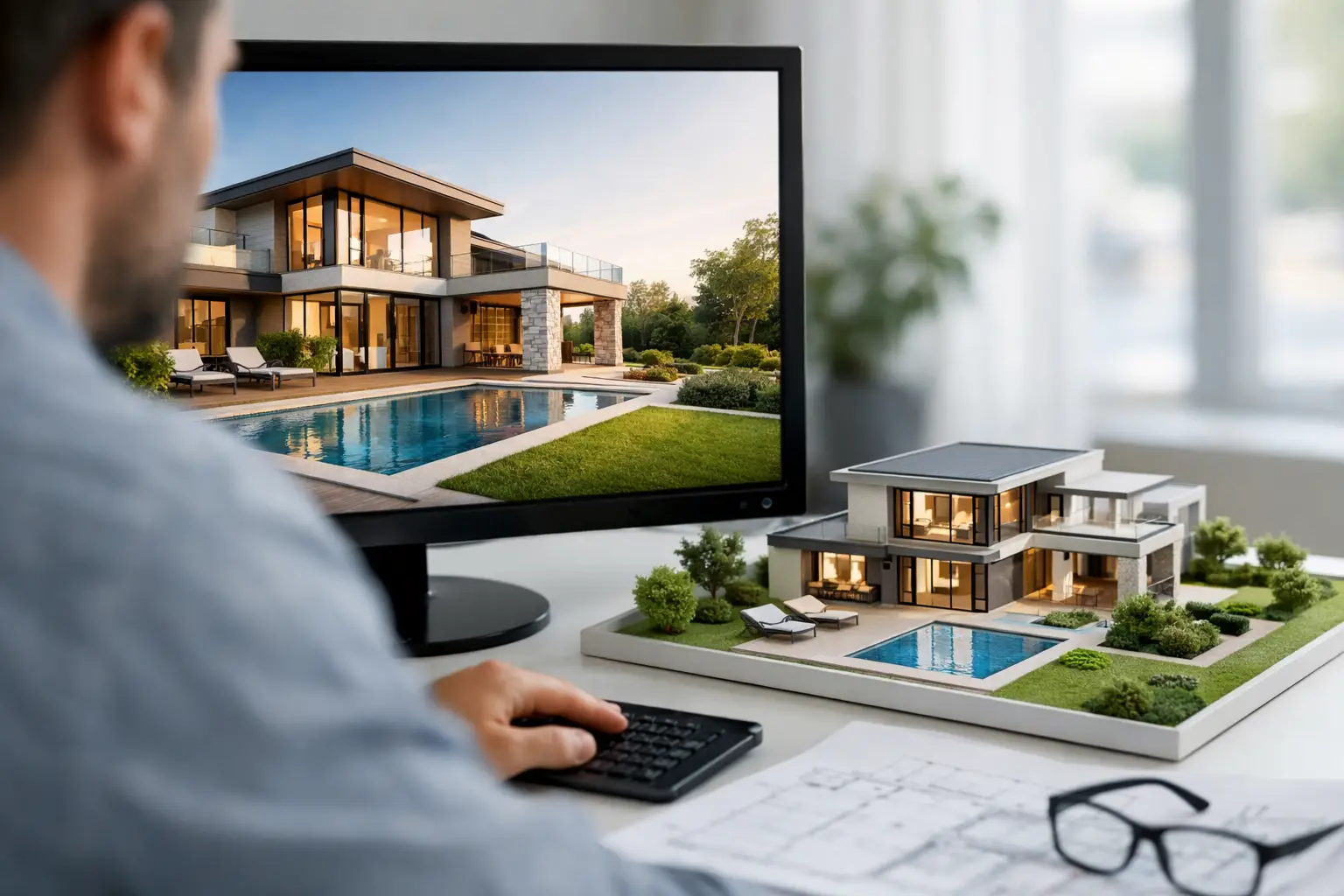
One of the most effective answers to how to market luxury property is to treat the property as a digital asset, not just a listing. A digital twin gives buyers an interactive, spatially accurate experience of the home, allowing them to move through it remotely and understand layout, proportion, and flow with far more confidence than photos alone can provide.
That matters for cross-border buyers, relocating executives, private investors, and time-constrained decision-makers. It also matters for agents and developers trying to reduce low-intent viewings. When prospects can explore a property in detail before a physical appointment, the conversations become more serious and better informed.
The trade-off is straightforward. Not every listing needs this level of production. But for high-ticket properties where each qualified lead carries substantial revenue potential, immersive presentation can improve sales efficiency significantly. It supports better lead quality, stronger buyer engagement, and fewer wasted site visits.
In markets such as Kuala Lumpur, Singapore, and other regional hubs where luxury buyers often compare inventory remotely, digital twins can also extend reach without diluting exclusivity. The experience remains high-touch, but access becomes more efficient.
Build a visual stack, not a single asset
Luxury property marketing performs best when media assets work together. A single hero video or photo gallery is rarely enough because luxury buyers evaluate properties in layers.
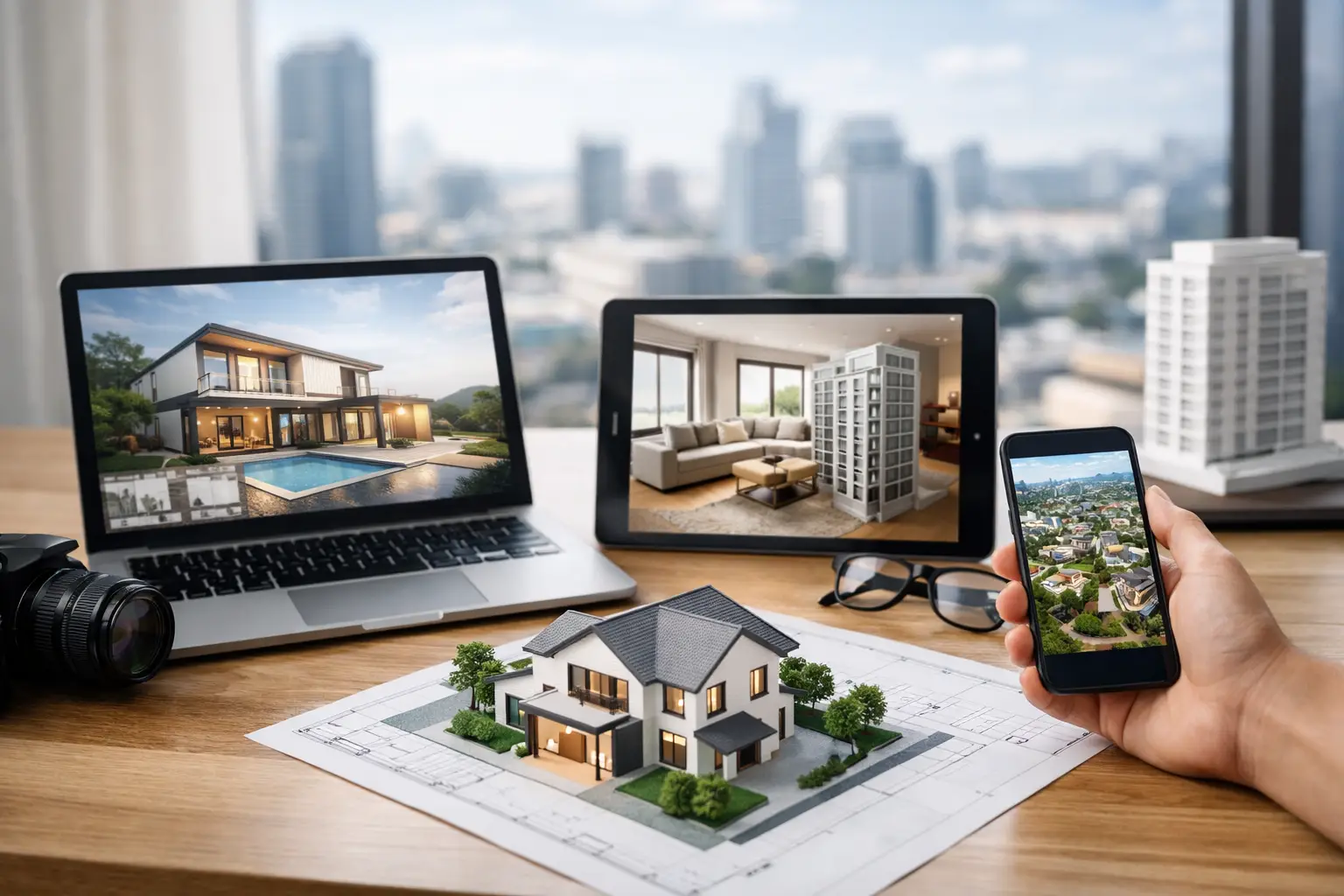
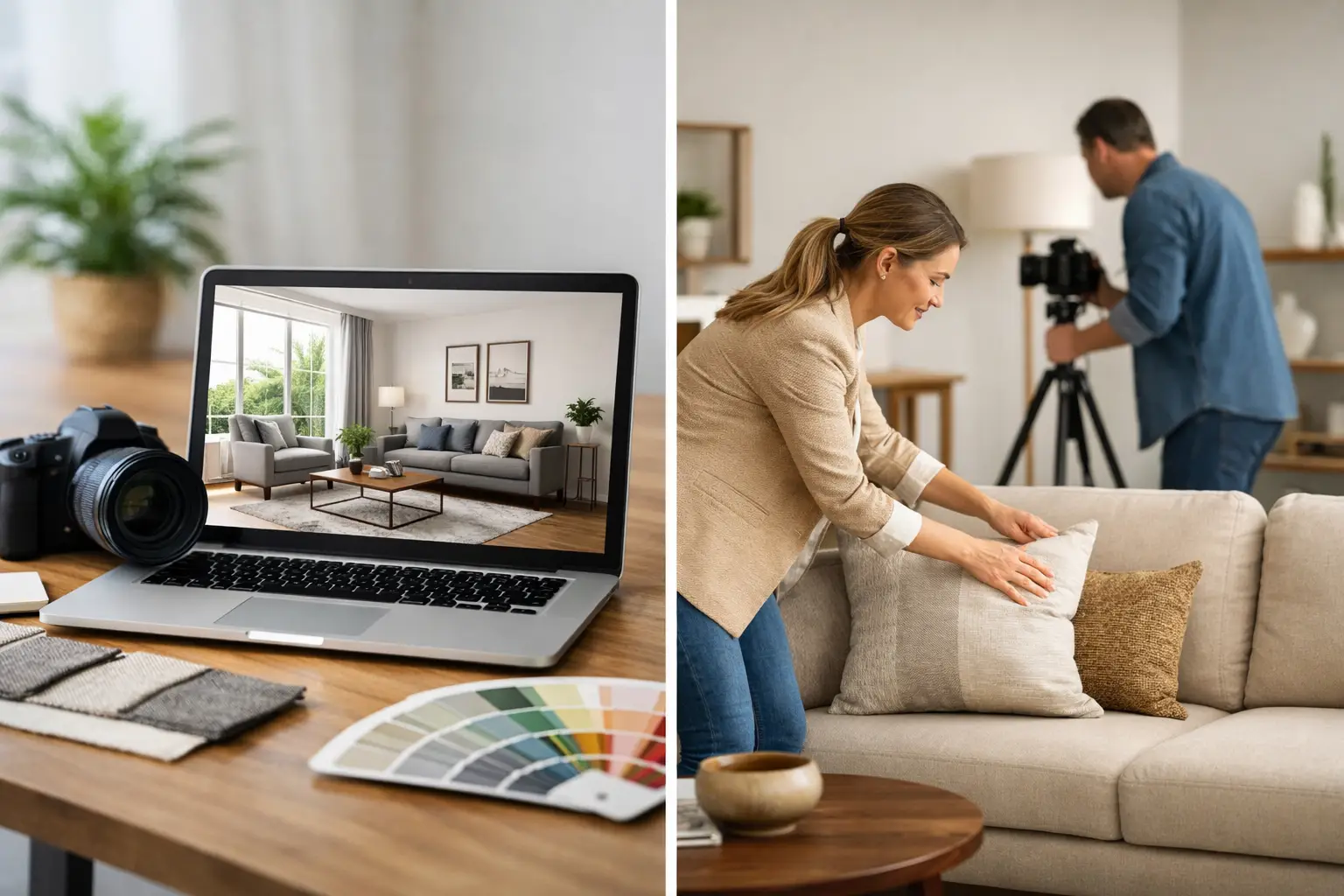
Commercial photography establishes first impression and design quality. Drone imaging gives context around land, neighborhood positioning, waterfront access, or skyline advantage. A 360 virtual tour or digital twin gives navigable depth. CGI walkthroughs and virtual staging help when a property is under construction, partially furnished, or difficult to visualize at its highest potential.
This layered approach is especially useful for developers and marketers handling branded residences, resort homes, or architect-led projects where the selling point includes both current reality and future experience. A strong visual stack helps bridge that gap.
The key is consistency. If the photography suggests one level of polish but the website, virtual tour, or brochure feels dated, buyer trust drops quickly. In the luxury segment, inconsistency reads as compromise.
Your website experience affects perceived value
Many luxury campaigns lose momentum after the initial click. The ad may be strong and the visuals may be impressive, but the landing experience feels generic, cluttered, or slow. That disconnect damages perceived value.
A luxury property website or campaign page should function as part presentation layer, part sales tool. It needs clean architecture, strong image handling, mobile responsiveness, and a clear path for inquiry without feeling transactional. It should support high-resolution visuals, immersive experiences, and buyer qualification without overwhelming the user.
This is where technology and marketing need to work together. If your virtual experience loads slowly, breaks on mobile, or sits awkwardly inside a generic listing environment, the property loses impact. Premium assets require premium delivery.
For developers and agencies, this also creates a measurement advantage. A well-structured digital experience can show which assets prospects engage with, how long they stay, and where they drop off. That allows teams to optimize campaigns based on behavior rather than assumption.
Market the lifestyle, but prove the asset
Luxury marketing often leans too heavily on aspiration. It sells mood, exclusivity, and prestige. Those elements matter, but serious buyers also want substance.
A strong luxury campaign balances emotional appeal with evidence. It shows the arrival sequence, the quality of materials, the relationship between indoor and outdoor zones, the privacy of the master suite, the entertainment logic of the floor plan, and the broader context of the property. For some buyers, technical details such as built-up area, orientation, structural quality, smart home features, or redevelopment potential may carry as much weight as the visuals.
That is why spatially accurate capture, measured digital documentation, and clear architectural representation can support marketing performance. In some cases, especially for ultra-premium or custom-built homes, credibility is a differentiator. Buyers want to know the property is not just beautiful in photographs but coherent in reality.
Targeting matters more than reach
A common mistake in luxury campaigns is overvaluing exposure. More impressions do not necessarily create better outcomes. In fact, broad targeting can flood the sales team with unqualified interest, create noise, and distract from serious prospects.
A better approach is controlled visibility. That means building campaigns around the buyer profile most likely to convert, then matching the media format to that buyer’s decision process. An overseas investor may respond well to a digital twin and area context. A family office representative may want documentation and private presentation materials. A lifestyle buyer may engage first through video and design-led storytelling.
It depends on the property and the audience. The underlying principle remains the same: luxury marketing should filter as much as it attracts.
How to market luxury property with projects still in development
Off-plan and under-construction luxury properties present a different challenge. You are not only selling a finished space. You are selling belief in the finished outcome.
This is where CGI rendering, cinematic walkthroughs, virtual staging, and interactive visualization become especially valuable. They help buyers understand the final atmosphere, the level of finish, and the spatial intent before completion. For developers, that can improve pre-sales performance and help maintain pricing strength earlier in the project cycle.
Accuracy matters here. Over-rendered visuals that promise more than the delivered product can damage trust. The goal is not fantasy. It is informed anticipation.
Companies such as Novo Reperio work well in this space because the strongest luxury campaigns now sit at the intersection of spatial accuracy, visual impact, and commercial usability. Buyers do not just need to see a property. They need enough confidence to act.
The best luxury marketing shortens the path to decision
If you strip away the aesthetics, the core function of luxury property marketing is simple. It should help a qualified buyer understand the asset faster, trust the presentation more, and move toward a decision with less friction.
That means every marketing choice should be judged by business outcome. Does it improve engagement quality? Does it help remote stakeholders review the property? Does it reduce time wasted on poor-fit inquiries? Does it support premium positioning without adding unnecessary complexity?
The answer to how to market luxury property is rarely one tactic. It is a system built around precision, presentation quality, and buyer confidence. When the property is exceptional, the digital experience has to be equally considered.
The most effective campaigns do not just make luxury real estate look expensive. They make its value easier to understand.