
A property listing gets traffic but few qualified inquiries. A hotel receives clicks yet struggles to convert international guests. A showroom looks impressive in person, but online it becomes a flat gallery of still images. That gap is exactly where a digital twin marketing guide becomes useful – not as a trend piece, but as a commercial playbook for turning physical spaces into high-performing digital assets.
For businesses that sell, lease, promote, or manage physical environments, digital twins change the standard marketing equation. Instead of asking prospects to imagine scale, layout, flow, and quality from photos alone, you let them experience the space remotely. That shift improves engagement, supports faster decision-making, and gives sales teams a more credible way to qualify intent.
What a digital twin marketing guide should actually help you do
A useful digital twin marketing guide should answer one core question: how does immersive spatial content contribute to revenue, pipeline quality, and buyer confidence?
A digital twin is not just a virtual tour with better visuals. When built properly, it becomes a navigable, measurable, and reusable digital representation of a real environment. For marketing teams, that means a single asset can support lead generation, remote walkthroughs, investor presentations, tenant discussions, sales enablement, and post-campaign analysis.
That matters in sectors where space is the product. Real estate developers need to communicate unit layouts and shared facilities clearly. Hospitality operators need guests to feel the atmosphere before booking. Retail brands and exhibition teams need to recreate discovery, not just display inventory. In each case, the challenge is the same: static media often explains too little and persuades too slowly.
Why digital twins outperform static visual content
Photos still matter. Video still matters. Drone footage still matters. But each format captures only part of the decision-making process.
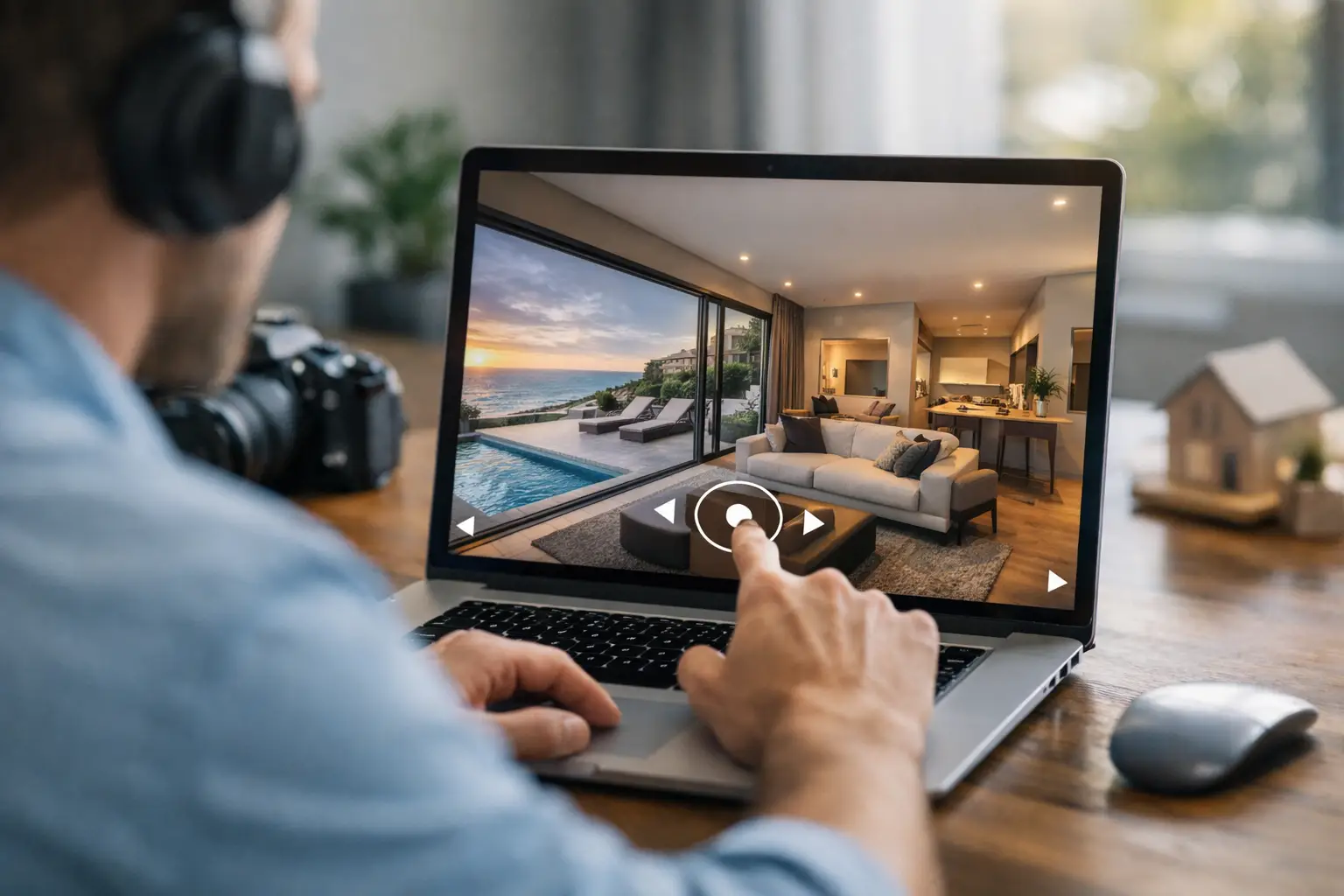
A digital twin gives prospects control. They can move through a commercial lobby, inspect a hotel suite, understand circulation in a retail environment, or review access points in an industrial facility. That control changes behavior. People spend more time exploring spaces they can navigate. They ask more informed questions. Sales conversations begin further down the funnel.
There is also a trust factor. In high-value transactions, buyers and stakeholders are cautious about presentation gaps. If a listing relies too heavily on curated angles, confidence drops. A digital twin reduces ambiguity because it presents the environment in context. Prospects can evaluate adjacency, dimensions, pathways, and spatial logic more realistically.
The trade-off is that immersive content sets a higher expectation for capture quality. Poor scanning, weak lighting, confusing navigation, or lack of strategic labeling can reduce impact. The asset is only as useful as the planning behind it.
Digital twin marketing guide: where to start
The first step is not choosing a camera platform. It is defining the commercial objective.
If your goal is lead generation, the digital twin should be designed to increase inquiry quality and reduce friction in remote viewing. If your goal is sales enablement, it should help account managers, leasing agents, or business development teams answer questions without requiring every stakeholder on site. If your goal is brand positioning, the experience must reflect the standard of the asset itself.
That distinction affects how the twin is captured and deployed. A luxury property campaign may prioritize visual polish, guided storytelling, and emotional pacing. An industrial facility may prioritize accuracy, navigation clarity, and operational annotations. A hotel may need both marketing appeal and booking support.
Before capture begins, it helps to align around four variables: who the audience is, what decision they need to make, which parts of the space matter most, and what action should follow the viewing experience. Without that clarity, teams often create immersive content that looks impressive but does not move a commercial process forward.
Matching the format to the industry use case
The strongest digital twin strategies are industry-specific. A generic walkthrough rarely performs as well as one built around real buying behavior.
Real estate and property marketing
In residential and commercial real estate, digital twins reduce wasted site visits and improve listing differentiation. Buyers, tenants, and investors can understand floor flow, room relationships, amenities, and fit-out quality before scheduling an in-person viewing. That tends to improve lead quality rather than just lead volume.
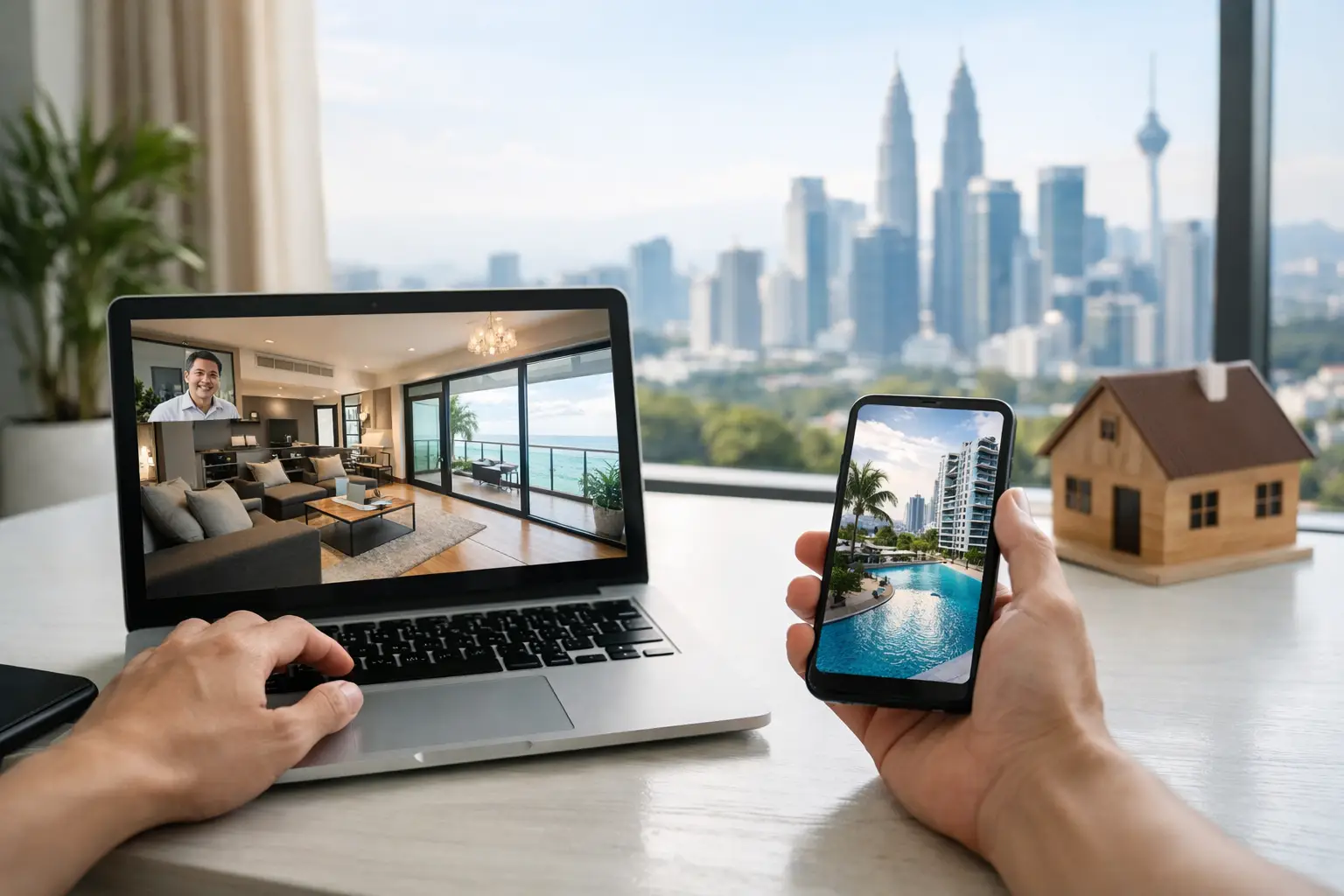
For developers marketing across borders or to out-of-state stakeholders, this becomes even more valuable. Remote decision-makers can review a project without waiting for travel logistics, which supports faster shortlisting and more efficient sales conversations.
Hospitality and tourism
Hotels, resorts, and venues benefit when guests can evaluate room types, shared spaces, event halls, dining areas, and surrounding experience before booking. In hospitality, hesitation often comes from uncertainty. If the guest cannot picture the arrival sequence, room scale, or ambiance, conversion suffers.
A digital twin can reduce that uncertainty. It can also support group sales, weddings, and corporate event bookings where multiple stakeholders need to review a venue together.
Retail, exhibitions, and showrooms
Retail and exhibition environments depend on discovery. A standard photo gallery does not replicate the feeling of moving through a branded space. Digital twins help audiences understand product placement, spatial design, merchandising logic, and experiential elements.
For automotive, luxury, gallery, or museum environments, this format also extends reach. People who are not physically present can still engage with the space in a structured and meaningful way.
AEC, industrial, and facility environments
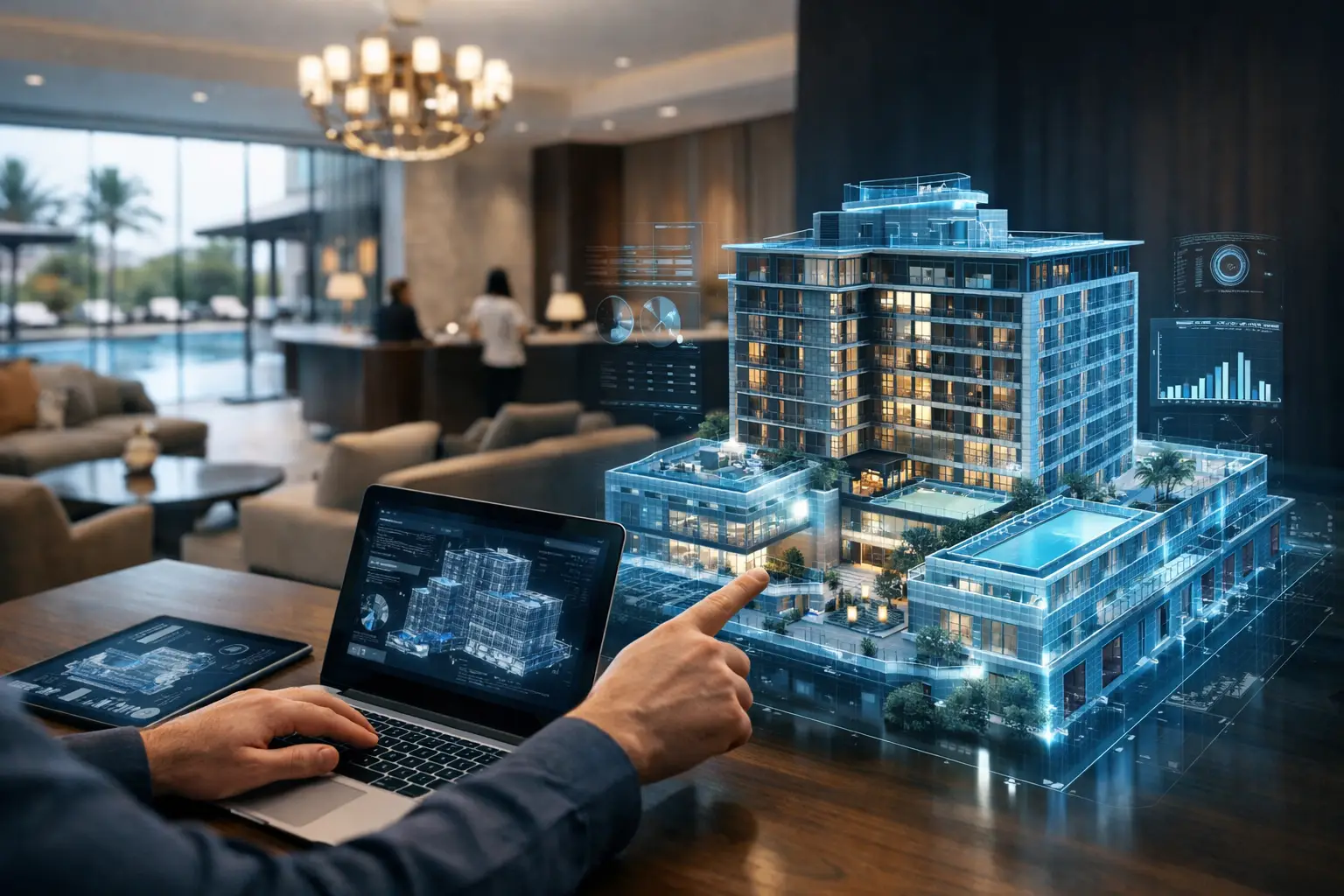
In technical sectors, marketing is not always the only use case. A digital twin may support proposals, stakeholder reviews, operational planning, and documentation alongside promotion. That hybrid value matters because the same captured environment can serve multiple departments.
This is where precision-led workflows such as LiDAR scanning and Scan-to-BIM alignment can create more long-term value than a purely visual asset. The upfront investment may be higher, but the reuse potential is far stronger.
What separates a useful digital twin from a novelty
Not every immersive experience drives results. The difference usually comes down to structure.
First, the capture must prioritize the buyer journey. If the most commercially important areas are buried or hard to navigate, users leave early. Second, the experience should include meaningful information, whether through labeled points, guided highlights, or integration with sales messaging. Third, it should sit inside a wider campaign rather than operate as a standalone asset.
That wider campaign may include landing pages, paid ads, broker outreach, sales presentations, QR-enabled print materials, or investor communication. The digital twin works best when it supports a clear next step.
Measurement matters too. Teams should assess dwell time, viewing depth, repeat visits, lead quality, time to decision, and the role of immersive content in conversion. Not every benefit appears in top-line traffic. Often the clearest gain is better-qualified conversations and fewer unnecessary physical viewings.
Common mistakes in digital twin marketing
One common mistake is treating the digital twin as the campaign instead of one part of it. Another is scanning a space too early, before staging, branding, or fit-out is ready. Timing affects perceived quality.
There is also a recurring issue with overproduction. Some teams add too many interactive elements, labels, or visual layers, making the experience harder to use. More functionality is not always better. The right level of complexity depends on the audience.
Decision-makers should also be realistic about adoption. Some audiences will spend several minutes inside a digital twin. Others will only engage if the experience is fast, mobile-friendly, and clearly relevant. That is why implementation should be tied to audience behavior, not just internal enthusiasm.
Building for ROI, not just presentation
The strongest business case for digital twins is not that they look advanced. It is that they improve commercial efficiency.
They can help sales teams pre-qualify buyers, reduce repetitive walkthroughs, support remote approvals, and present large or complex environments more accurately. They can also extend the lifespan of a marketing asset, especially when the same spatial capture supports multiple business functions.
For organizations across real estate, hospitality, retail, and industrial sectors in markets such as Malaysia and Singapore, that matters because competition is high and attention is expensive. Better presentation alone is not enough. Marketing assets need to help people understand value faster and commit with more confidence.
That is why a serious digital twin marketing guide should not end at image quality or platform choice. It should focus on commercial intent, spatial storytelling, deployment strategy, and measurable outcomes. When those elements are aligned, a digital twin stops being a nice-to-have visual layer and starts functioning as infrastructure for marketing and decision support.
Novo Reperio approaches this work from that broader view: not just capturing space, but helping businesses turn physical environments into digital assets that perform across visibility, engagement, and operational use.
The useful question is not whether digital twins are impressive. It is whether your current marketing gives people enough confidence to act before they ever step on site.