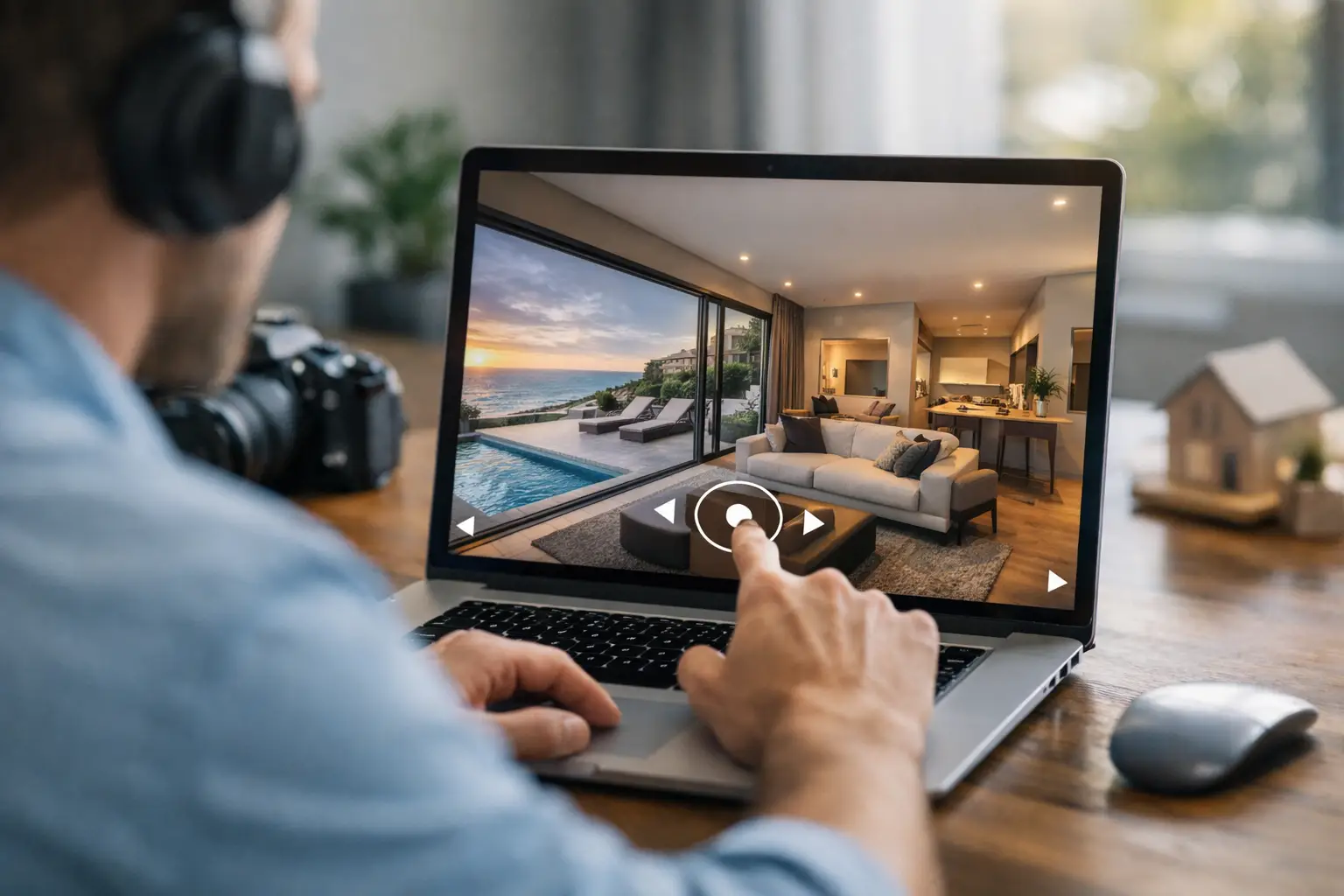

A leasing team sends a brochure, a floor plan, and a gallery of polished photos. The prospect replies with interest, then goes quiet. That pattern is common in property marketing because static assets rarely answer the real question: what does this space actually feel like? Commercial real estate virtual tours close that gap by letting buyers, tenants, and stakeholders experience a property on their own terms before a site visit is even scheduled.
For commercial developers, brokers, landlords, and asset managers, that shift matters. Office floors, retail units, industrial facilities, hospitality venues, and mixed-use projects are not simple products. They are spatial decisions with operational, branding, and financial consequences. A high-quality virtual tour turns a property from a collection of visuals into an interactive, data-rich sales asset that supports faster qualification and better decision-making.
Why commercial real estate virtual tours perform better than static marketing
A commercial property is usually judged by more than appearance. Prospects want to understand circulation, frontage, access points, vertical movement, fit-out potential, spatial proportions, and how different zones connect. Photos can highlight features, but they also flatten context. Video adds movement, yet it still controls the viewing path.
Commercial real estate virtual tours give control back to the viewer. A tenant can inspect customer flow in a retail lot. A regional decision-maker can review office layout suitability without flying in. An investor can examine the condition and presentation of shared areas before requesting more documentation. That level of self-directed exploration increases engagement because it mirrors how people evaluate space in real life.
There is also a commercial advantage. Better-informed prospects tend to ask better questions. That improves lead quality and reduces time spent on poorly matched inquiries. In many cases, tours do not replace physical site visits. They make those visits more productive by moving early-stage filtering online.
What makes a virtual tour effective in commercial real estate
Not every tour contributes equally to leasing or sales performance. The difference usually comes down to whether the experience was built as a marketing novelty or as a business tool.
An effective tour starts with capture quality. If imagery is inconsistent, navigation is awkward, or key spaces are missing, confidence drops immediately. Commercial users are quick to notice gaps. If a warehouse omits loading access, or a hotel tour skips service areas relevant to event planners, the experience feels selective rather than informative.
The second factor is structure. A useful tour should reflect how the property is evaluated commercially. For an office asset, that may mean beginning with arrival experience, lobby presentation, lift access, common facilities, and then available suites. For an industrial site, the logic may focus on yard space, loading zones, clear height, production areas, and circulation paths. Good sequencing reduces friction and helps stakeholders assess suitability faster.
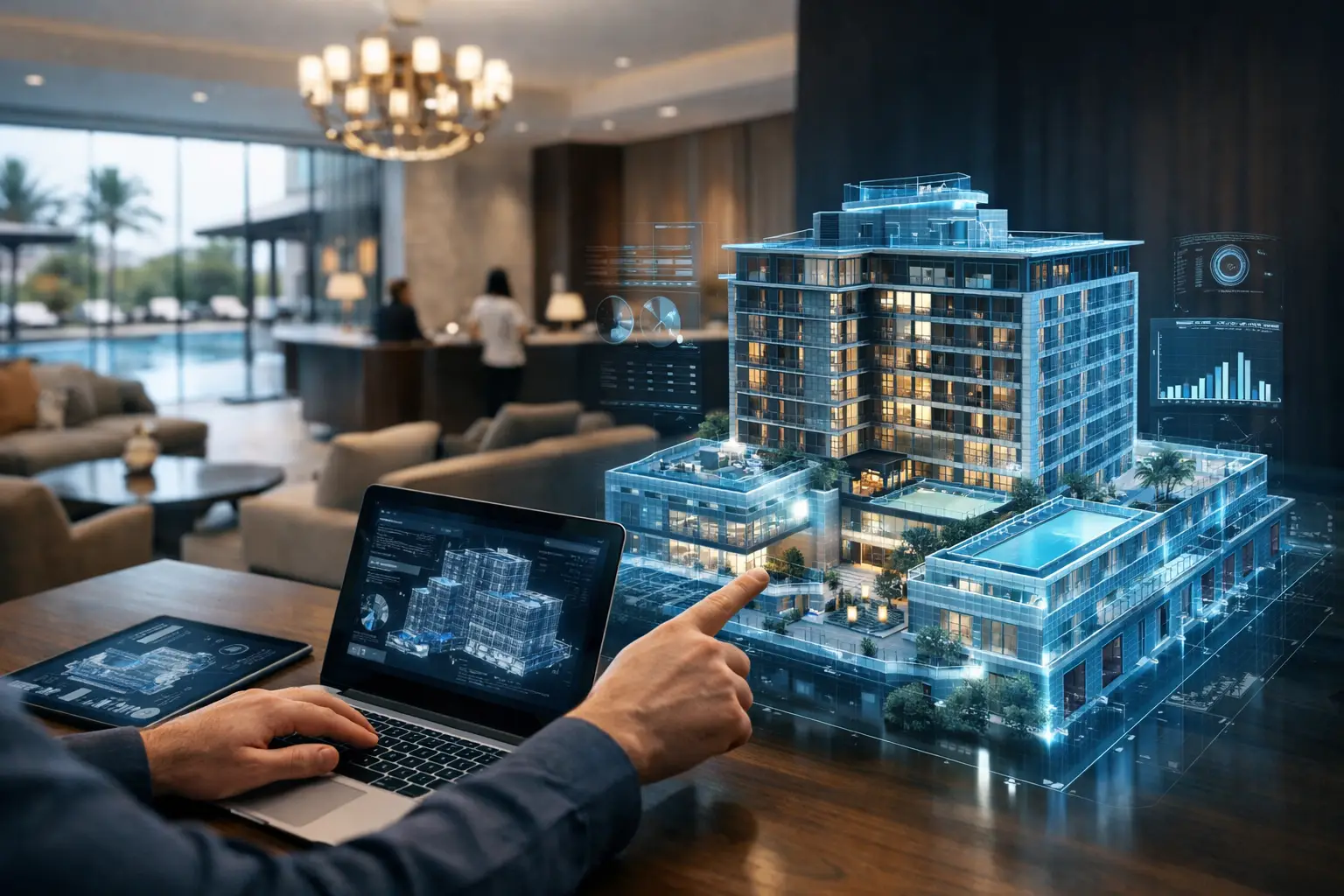
The third factor is information layering. This is where digital twin workflows become especially valuable. A tour becomes more powerful when it includes embedded floor plans, measurement references, tagged features, media callouts, and contextual information that supports real decisions rather than passive viewing. For complex assets, integration with LiDAR-derived spatial data or Scan-to-BIM processes can extend value beyond marketing into planning, documentation, and facilities use.
Commercial real estate virtual tours as a sales enablement tool
In many organizations, property marketing and sales are still fragmented. One team manages photography, another handles brochures, and leasing agents rely on ad hoc follow-up to answer common questions. Virtual tours work best when they reduce that fragmentation.
A well-executed tour can sit at the center of the sales conversation. It supports listing campaigns, outbound prospecting, broker presentations, investor updates, and internal approvals. Instead of asking prospects to imagine the property from disconnected files, teams can direct them to one immersive environment that communicates the asset more clearly.
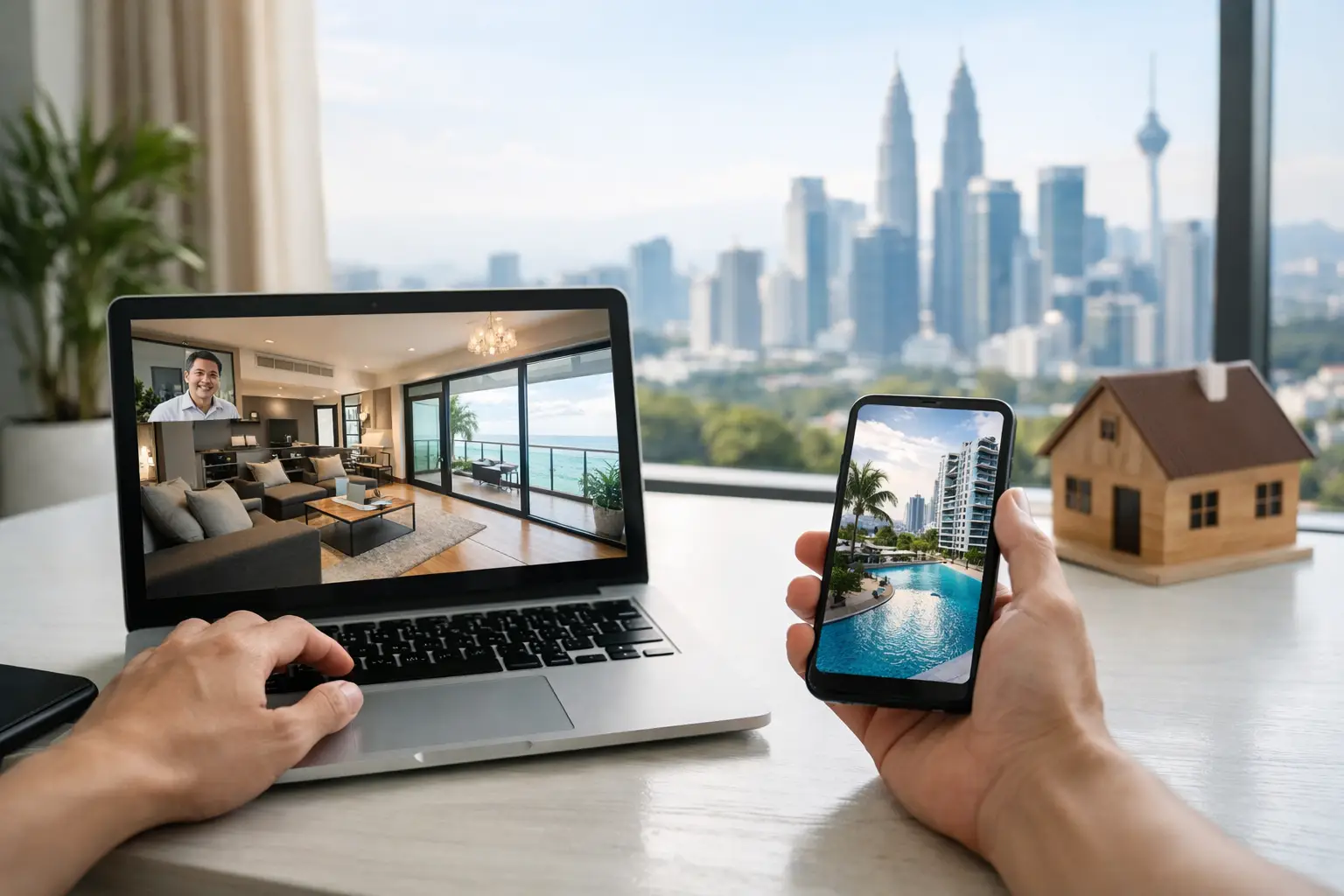
This is particularly useful when multiple stakeholders are involved. Commercial leasing decisions often include country managers, finance leads, operations teams, and brand representatives. They may not attend the same site visit, and they often evaluate different criteria. A virtual tour creates a shared reference point, which shortens review cycles and reduces misunderstandings.
For regional markets such as Malaysia and Singapore, where cross-border decision-making is common, that remote accessibility is more than a convenience. It can directly influence how quickly opportunities move from inquiry to negotiation.
Where virtual tours deliver the strongest ROI
The return on investment depends on the asset type, target audience, and sales process. There is no universal benchmark. Still, several use cases consistently show strong commercial value.
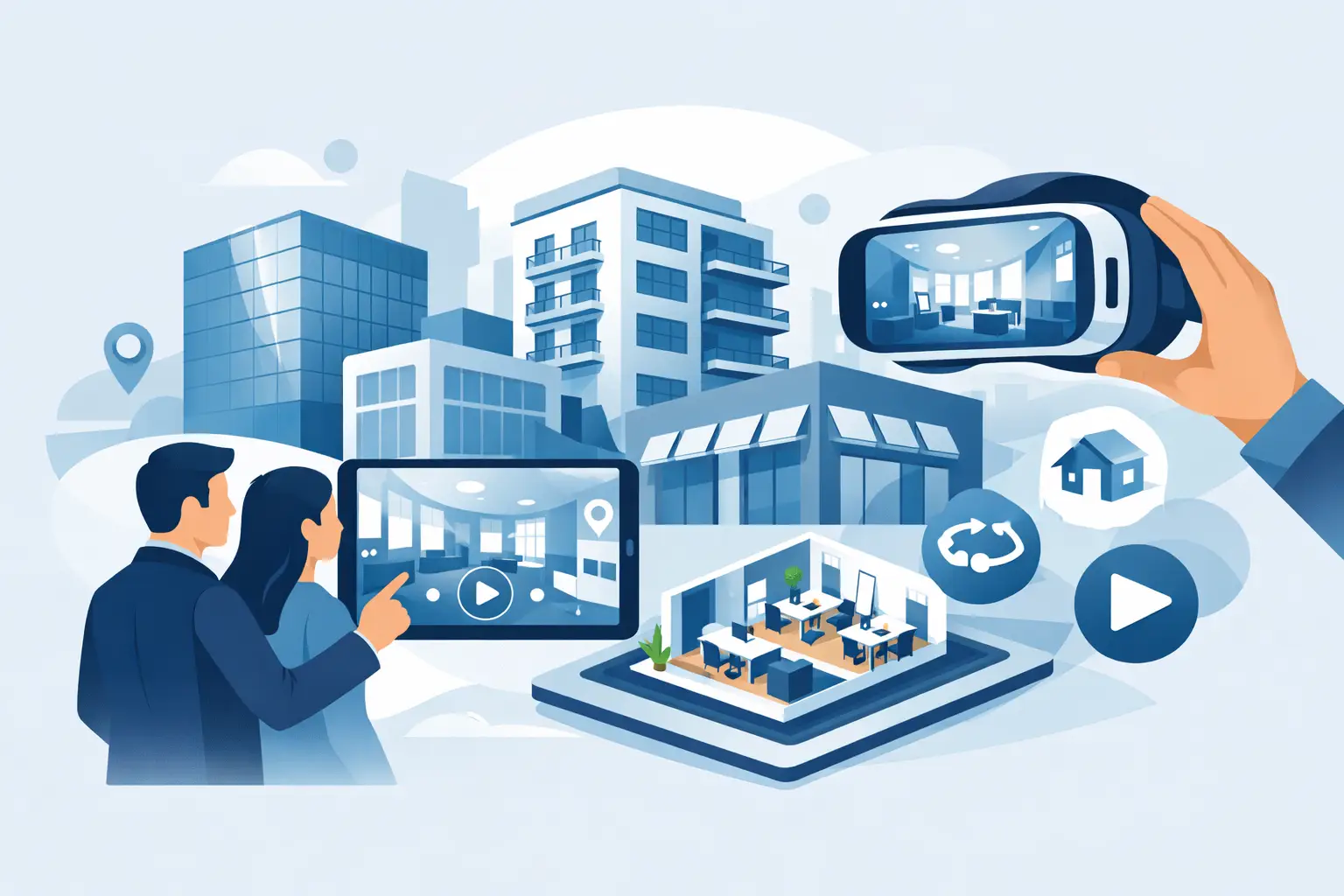
Office leasing benefits when tours help corporate tenants pre-qualify locations before arranging inspections. Retail assets gain from showing frontage, mall positioning, adjacency, and footfall-related spatial context. Industrial and logistics properties benefit when decision-makers can inspect layout, access, and operational suitability remotely. Hospitality venues use tours to convert event inquiries by showing ballrooms, guest circulation, pre-function areas, and room categories in one connected experience.
New developments and pre-launch campaigns can also benefit, though the format may shift. If the physical space is not ready, CGI walkthroughs, virtual staging, and digital twin planning visuals may be more suitable than a conventional captured tour. This is where it depends on project phase. Existing assets need accurate spatial capture. Future assets need credible visualization tied to design intent.
Properties with large footprints or layered stakeholder groups usually see the clearest benefit because the cost of unclear communication is higher. When a poor-fit site visit consumes multiple calendars, travel budgets, and sales time, digital pre-qualification creates immediate efficiency.
What buyers and tenants actually expect now
Expectations have changed. Commercial audiences no longer see immersive viewing as a premium extra reserved for trophy assets. They increasingly treat it as part of a credible digital presentation standard, especially in competitive markets.
That does not mean every listing needs a highly complex digital twin. Some smaller units may only justify a straightforward 360 tour with clear navigation and accurate presentation. But for flagship offices, hospitality venues, mixed-use developments, industrial facilities, and institutional properties, a richer spatial experience can materially improve market perception.
The key is matching the solution to the asset. Overproducing a simple property can be wasteful. Underrepresenting a high-value or technically complex space can be costly in a different way. Commercial audiences respond best when the digital experience feels aligned with the scale and importance of the decision.
Common mistakes that weaken results
The most common mistake is treating a virtual tour as a standalone media product. If it is captured once, uploaded, and left disconnected from the broader sales process, its value is limited. Tours perform better when they are part of a wider asset strategy that may include photography, aerial imaging, floor plans, website integration, and sales collateral.
Another issue is prioritizing appearance over accuracy. In commercial real estate, trust matters. If dimensions feel misleading, navigation hides constraints, or post-production creates an unrealistic impression, the tour may attract attention but damage credibility later.
There is also a timing issue. Some teams wait until marketing pressure builds, then commission a tour as a reactive fix. The better approach is to plan spatial capture early, especially for assets that may later require documentation, BIM reference, facilities management input, or phased campaign rollouts. That creates more long-term value from the same underlying spatial data.
Novo Reperio approaches this as a digital asset strategy rather than a one-off visual deliverable, which is why technologies such as LiDAR scanning, Matterport digital twins, and Scan-to-BIM can support both market-facing and operational goals.
Choosing the right partner for commercial real estate virtual tours
If the goal is only to create a visual walkthrough, many providers can produce something usable. If the goal is to improve engagement, support leasing decisions, and create a reusable digital record of the space, the standard should be higher.
A strong partner should understand how commercial property is bought, leased, approved, and managed. That means thinking beyond camera placement. It means capturing the property in a way that reflects buyer questions, supports remote stakeholders, and preserves spatial accuracy. For some clients, that may also mean integrating tours into websites, sales funnels, or technical workflows that extend well past marketing.
That is why the right question is not just, can they create a tour? It is, can they build a digital representation of the asset that improves how the space is marketed, understood, and acted on?
Commercial real estate is full of decisions that stall because people cannot get close enough to the space, fast enough, with enough clarity. Virtual tours solve that when they are executed with technical precision and commercial intent. The real opportunity is not simply showing a property online. It is helping the right people decide sooner, with fewer blind spots.