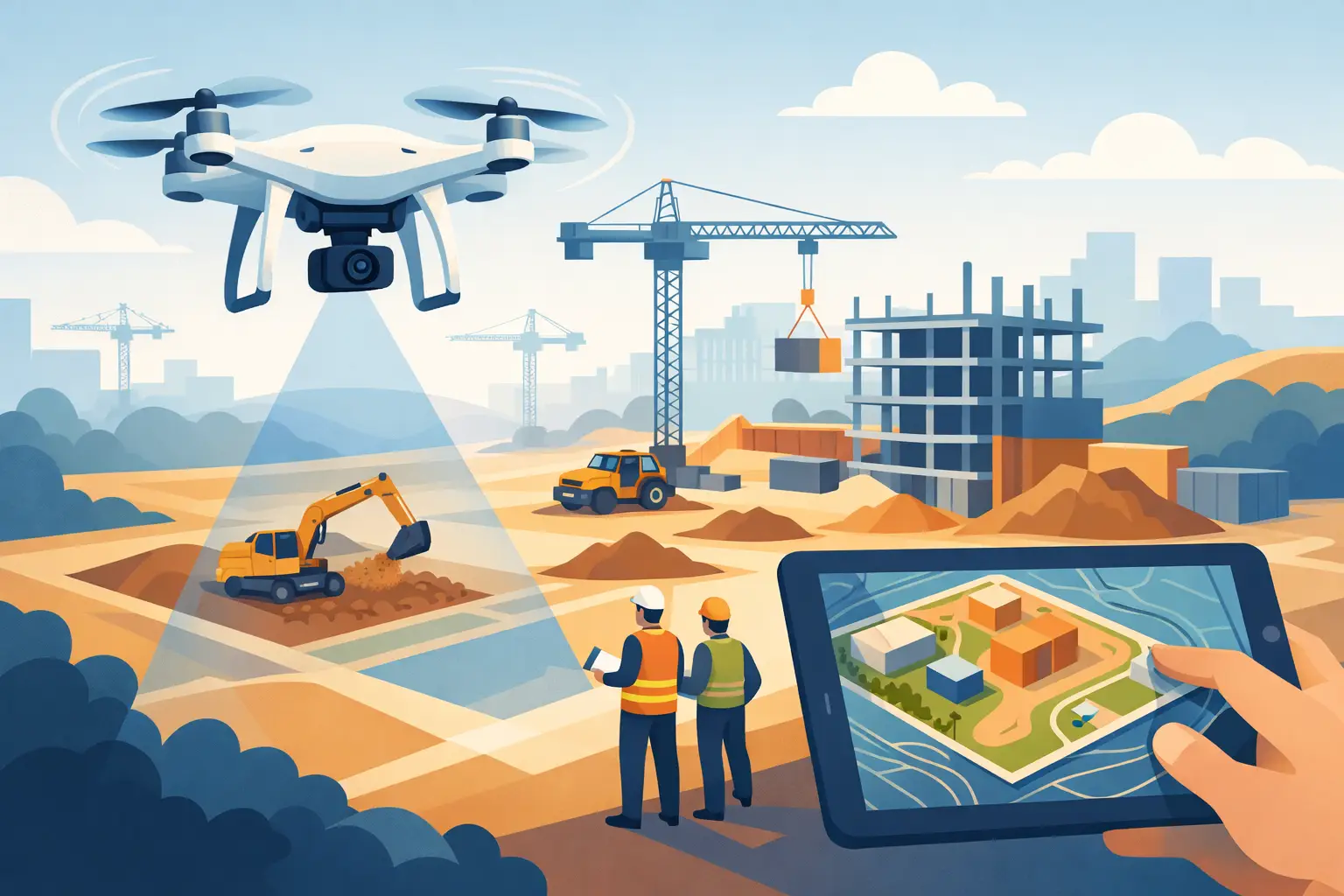

A grading issue rarely starts as a major problem. It starts as a few missed centimeters, a stockpile measured by eye, or a progress report built on outdated site photos. By the time it reaches the project team, the cost is no longer minor. That is where drone mapping services for construction change the conversation – replacing guesswork with current, measurable site data that teams can actually act on.
For developers, contractors, consultants, and owners, the value is not just aerial imagery. It is faster visibility across active sites, cleaner coordination between field and office teams, and a more reliable record of what is happening on the ground. When used properly, drone mapping supports planning, progress tracking, quantity verification, stakeholder reporting, and dispute reduction. The technology matters, but the business outcome matters more.
What drone mapping services for construction actually deliver
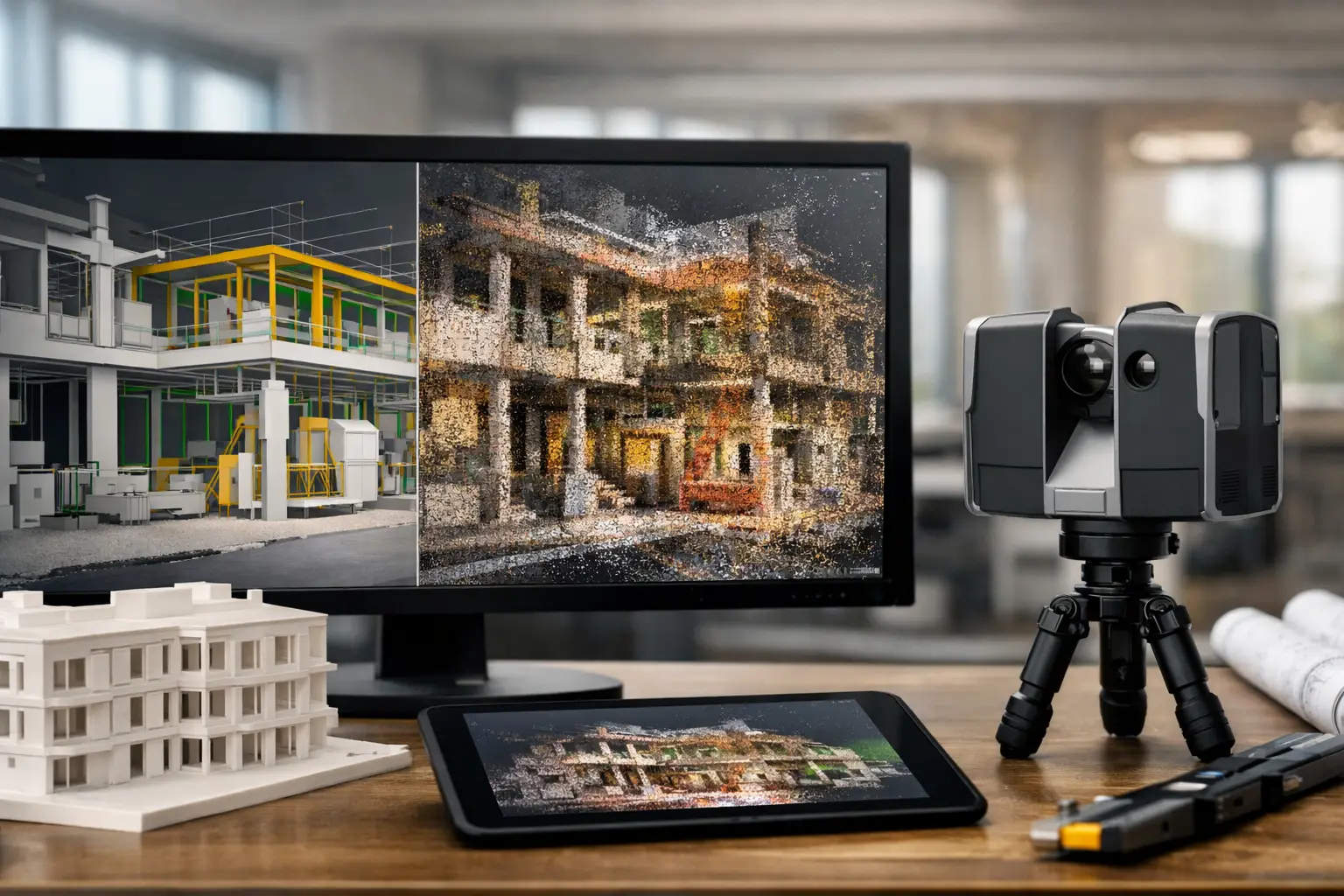
Drone mapping in construction is the process of capturing aerial data and converting it into usable spatial outputs such as orthomosaics, topographic maps, point clouds, elevation models, contours, and volumetric measurements. In more advanced workflows, this data is combined with LiDAR scanning, scan-to-BIM documentation, or digital twin environments so the site becomes easier to analyze, communicate, and manage.
That distinction is important. Many firms can fly a drone and provide images. Far fewer deliver mapping outputs that are accurate enough to support operational decisions. Construction teams do not need impressive footage for its own sake. They need a reliable basis for comparing site conditions against plans, validating contractor claims, identifying delays early, and aligning site reality with design intent.
The strongest services are built around decision-making. They define capture scope based on project stage, control accuracy through proper flight planning and ground reference methods, and package outputs in a format the wider team can use. A project manager may need an updated orthomosaic for weekly coordination. A quantity surveyor may need cut-and-fill calculations. A design team may need aerial data aligned with BIM or CAD workflows. The service should match the use case, not force every project into the same deliverable set.
Where drone mapping has the highest value on a construction project
Pre-construction and site planning
Before mobilization, drone mapping helps teams understand existing site conditions faster than traditional visual inspections alone. Aerial mapping can capture terrain, drainage patterns, vegetation, access routes, and adjacent constraints across large or hard-to-reach parcels. For early feasibility work, that means better visibility before major commitments are made.
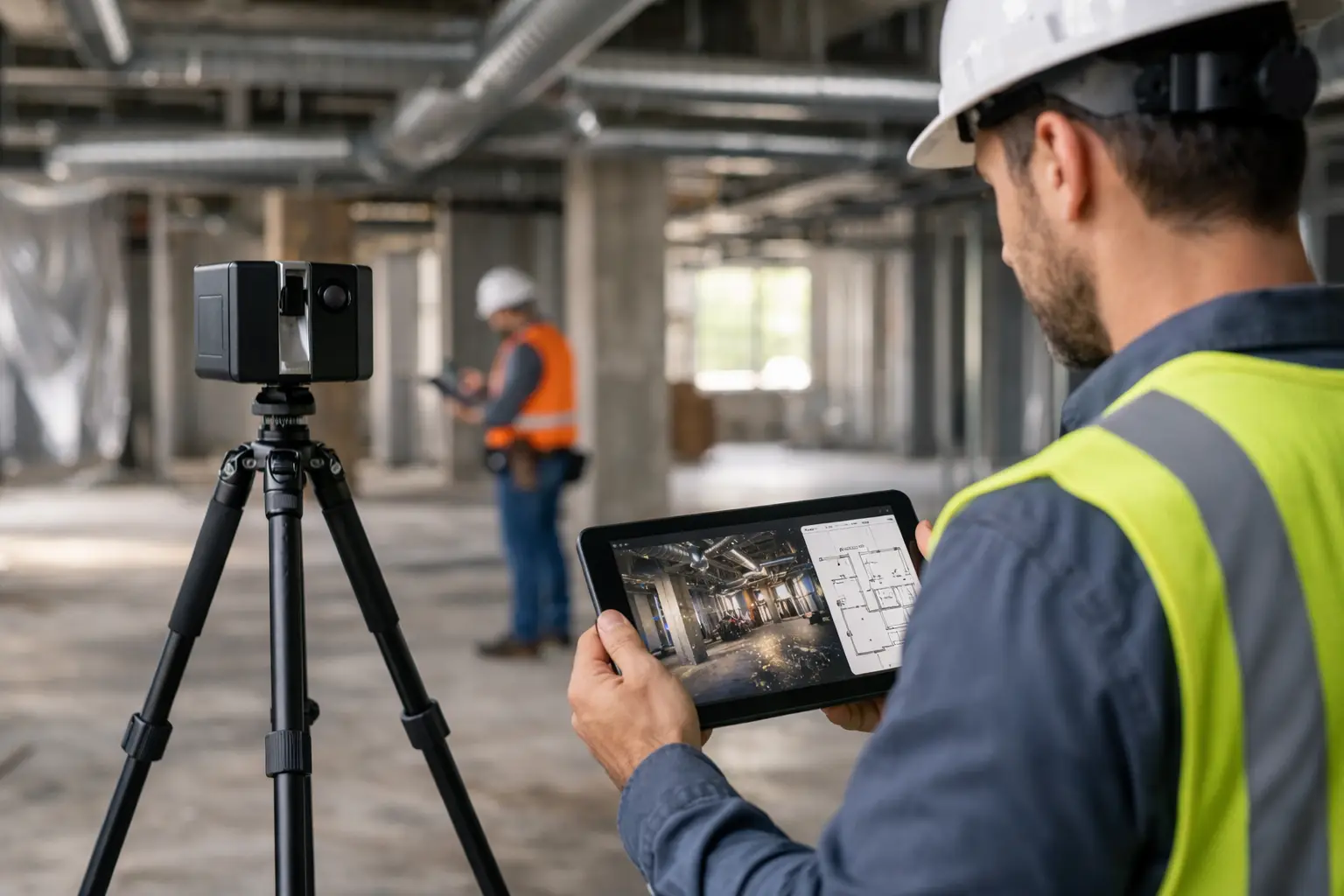
This stage is where combining drone data with LiDAR or scan-to-BIM workflows can be especially useful. If the site includes existing structures, utility interfaces, or irregular topography, richer spatial data creates a stronger base for planning, coordination, and downstream design decisions.
Earthworks and quantity verification
Earthworks are one of the clearest cases for drone mapping ROI. Progress can change quickly, and manual checks are often too slow or too infrequent to keep pace. Drone surveys make it easier to calculate stockpile volumes, monitor cut-and-fill progress, and compare actual terrain changes against the construction program.
The advantage is not just speed. It is consistency. When the same capture method is repeated across the project timeline, teams get comparable datasets that support trend analysis and reduce debate over what changed and when.
Progress monitoring and stakeholder reporting
Construction reporting often suffers from a simple problem: different stakeholders are working from different versions of reality. Site teams know what changed yesterday. Management sees a dashboard from last week. Investors or clients may only get curated images with limited context.
Drone mapping creates a shared visual record. Orthomosaic updates and 3D site models make progress easier to verify and easier to communicate. For regional projects or distributed stakeholders, this is especially useful because remote decision-makers can review actual site conditions without waiting for fragmented updates.
Quality control and issue detection
Not every issue is visible from ground level. Access roads, drainage paths, temporary works, material staging, and site logistics often make more sense from above. Drone mapping helps identify inconsistencies earlier, when corrections are still manageable.
That said, it is not a replacement for all inspections. It works best as part of a broader documentation and verification process. Aerial data can show pattern, position, and scale very efficiently, but close-range inspections, engineering review, and trade-level checks still matter.
Why drone mapping outperforms conventional site reporting
Traditional progress reporting usually depends on manual photos, field notes, isolated survey points, and verbal updates. Those methods still have a place, but they are often slow, selective, and difficult to standardize. Drone mapping improves reporting because it captures the site systematically and converts that capture into measurable outputs.
This reduces several common friction points. First, it shortens the lag between site activity and office-level visibility. Second, it gives teams a visual and spatial reference that is easier to interpret than text-heavy reporting. Third, it creates an archive of time-stamped conditions that can support claims management, compliance records, and handover documentation.
For commercial decision-makers, the key benefit is control. Better visibility usually leads to faster approvals, tighter coordination, and fewer surprises. That does not mean every project needs weekly drone flights. Some need monthly capture, while others only benefit at milestone stages. The right frequency depends on project complexity, pace, and reporting demands.
Choosing the right drone mapping services for construction
A construction project should not buy drone mapping the way it buys marketing photography. Accuracy, repeatability, processing standards, and integration capability all matter. If the output is going to inform cost, sequencing, or design coordination, the provider needs more than piloting skills.
Start with the question of what decisions the data needs to support. If the priority is executive visibility, high-quality orthomosaics and regular progress captures may be enough. If the project involves major earthworks, utility coordination, or as-built verification, the workflow may need higher survey rigor and stronger alignment with CAD, BIM, or digital twin systems.
It also helps to assess how the service provider handles downstream use. Construction teams get more value when aerial capture is part of a wider spatial documentation strategy rather than a standalone deliverable. A partner that understands LiDAR mapping, scan-to-BIM, and digital twin environments can usually support better continuity from early survey through project closeout.
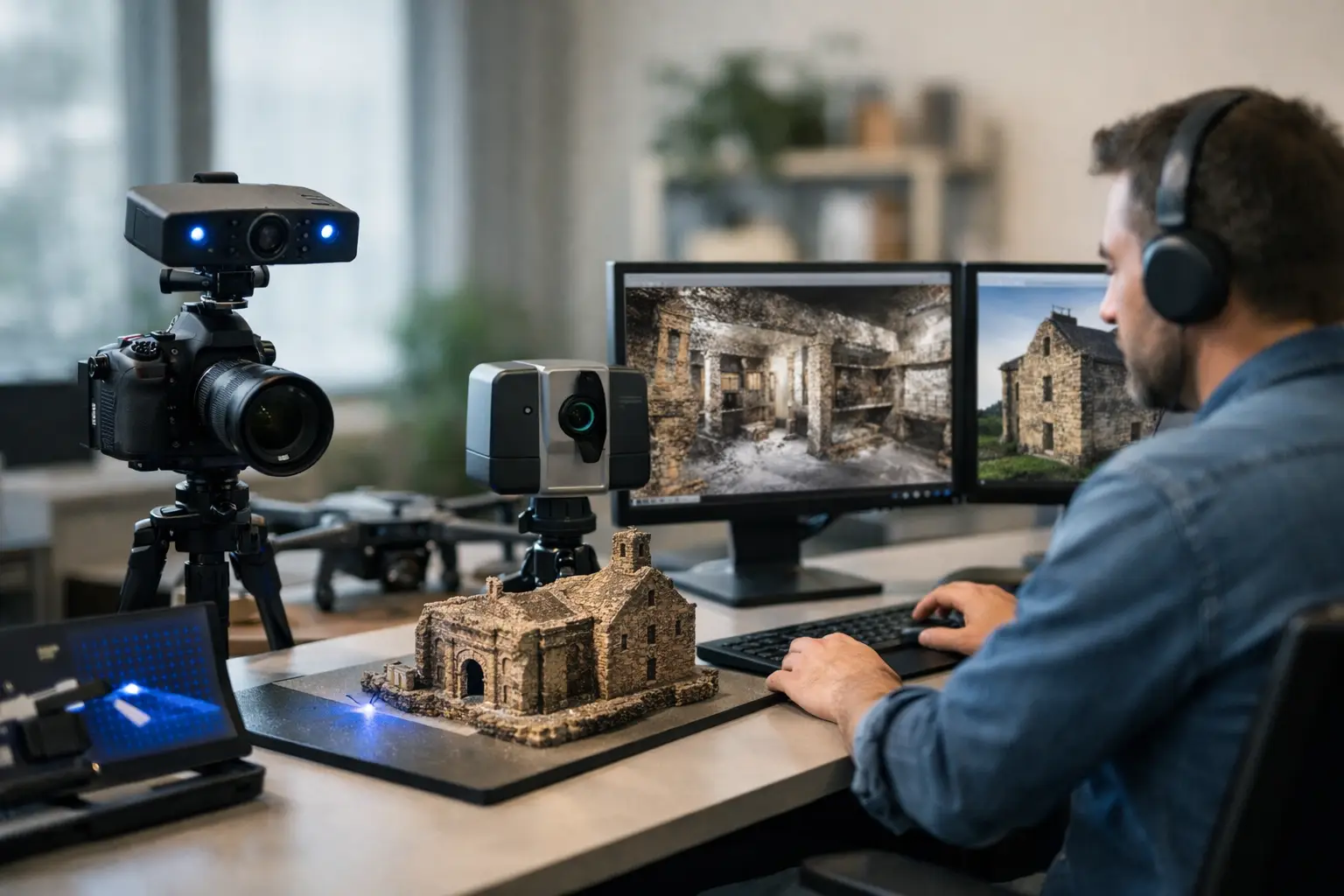
This is one reason many large or technically demanding projects are moving toward integrated spatial data models. Instead of managing separate files from drone flights, laser scans, photos, and design updates, teams can work from connected datasets that improve traceability and context.
The trade-offs construction teams should understand
Drone mapping is highly effective, but it is not magic. Weather can delay flights. Dense urban conditions can affect flight planning. Reflective surfaces, heavy tree cover, or highly complex structures may require supplemental capture methods. If a project expects engineering-grade precision in every condition, drone mapping alone may not be enough.
There is also a difference between visual usefulness and survey usefulness. A map can look sharp and still be unsuitable for measurement-sensitive decisions if the workflow was not controlled properly. That is why methodology matters as much as equipment.
Another trade-off is adoption. Good data only helps if teams can use it. Some organizations already have strong BIM, GIS, or project management systems in place. Others need simpler outputs that fit existing reporting habits. The best implementation is usually the one that aligns with real internal workflows rather than adding another disconnected platform.
From aerial capture to better project control
The real case for drone mapping is not about replacing people. It is about giving project teams a more complete picture of the site, more often, with less friction. When that picture is reliable, conversations change. Progress meetings become more concrete. Quantity checks become easier to validate. Client reporting becomes clearer. Coordination improves because teams are not arguing over stale or partial information.
For construction businesses managing multiple sites, that visibility compounds. Standardized drone mapping creates a repeatable reporting layer across projects, which helps leadership compare performance, identify delays, and spot risk earlier. In fast-moving markets such as Malaysia and Singapore, where project timelines, stakeholder expectations, and site complexity can all be intense, that kind of operational clarity has real commercial value.
Novo Reperio approaches drone mapping as part of a broader spatial intelligence workflow, where aerial data supports documentation, digital twins, LiDAR mapping, and construction decision-making instead of sitting in a folder after the flight is done.
If you are evaluating drone mapping services for construction, the right question is not whether drones are useful. It is whether the data will help your team make better decisions this week, next month, and at handover.