
A missed scan rarely looks expensive on site. The cost shows up later – when a design team cannot trust the model, a marketing team needs a reshoot, or an operations team is working from outdated documentation. That is why a guide to reality capture workflows should start with one point: the workflow matters more than the hardware list.
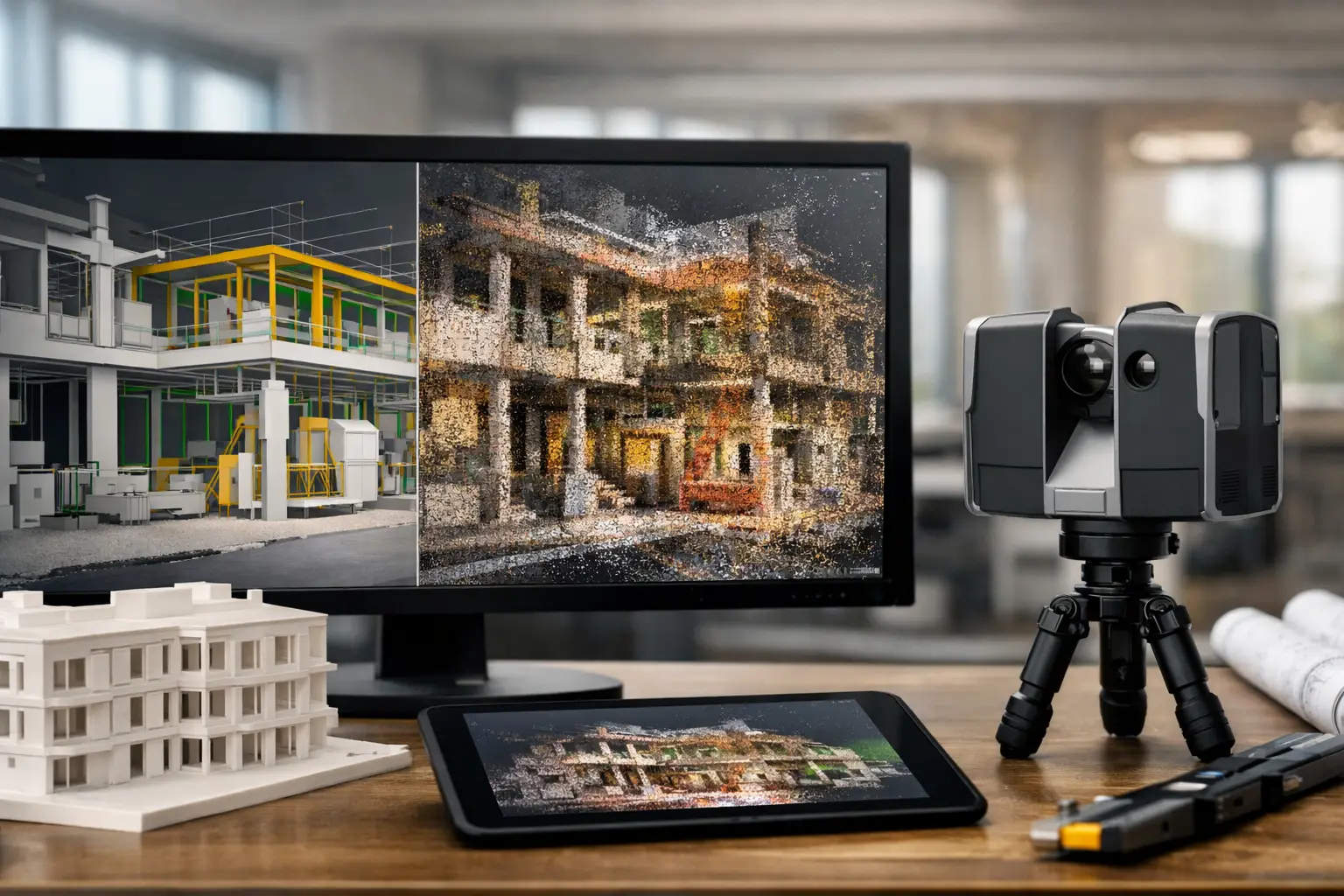
Reality capture is not a single task. It is a chain of decisions that turns a physical environment into a usable digital asset. For some organizations, that asset is a digital twin that supports remote sales and stakeholder review. For others, it is an accurate point cloud for Scan-to-BIM, as-built documentation, progress tracking, or facility planning. The right workflow connects capture, processing, validation, and delivery to a defined business outcome.
What a guide to reality capture workflows should actually cover
Many teams approach reality capture as a production exercise. Book the scanner, collect the data, export the files, and move on. That approach works for small, low-risk jobs, but it breaks down quickly on complex sites, live environments, or multi-stakeholder projects.
A better workflow begins with intended use. If the output will support BIM modeling, tolerance expectations, scan density, and registration quality become critical. If the asset is meant for real estate marketing or hospitality sales, visual quality, navigation flow, and viewer experience carry more weight. If the use case is insurance documentation or industrial asset management, traceability and repeatability matter most.
This is where many projects either gain momentum or lose value. The same building can be captured in very different ways depending on whether the goal is design coordination, commercial leasing, maintenance planning, or immersive presentation.
Start with the end use, not the equipment
The first decision is not whether to use LiDAR, photogrammetry, drones, or a 360 camera. The first decision is what the delivered asset needs to do. That determines the capture method, level of detail, turnaround time, and cost structure.
For AEC teams, reality capture workflows often need survey-grade accuracy, structured naming, and interoperability with BIM platforms. For commercial property marketers, the workflow may prioritize speed, visual polish, and compatibility with virtual tour platforms. For industrial or facilities teams, the real priority may be navigable space data that supports asset tagging, maintenance planning, or remote inspections.
When scope is unclear, teams tend to over-capture or under-capture. Over-capture increases processing time and file management overhead. Under-capture creates gaps that are expensive to fix because site revisits disrupt schedules and introduce inconsistencies. A commercially sound workflow aims for fit-for-purpose capture, not maximum possible data.
Scoping the site before capture
Pre-site planning is where experienced providers separate risk from routine. Access constraints, occupancy levels, lighting conditions, reflective surfaces, GPS availability, vertical circulation, and weather all influence capture quality.
A warehouse, hotel, active construction site, and luxury showroom should not be scoped the same way. In a live hospitality environment, guest disruption and staging control affect how usable the final digital twin will be. On a construction site, sequencing and safety can limit scan positions and drone flight windows. In dense urban environments across Kuala Lumpur or Singapore, aerial capture may also require tighter operational planning than teams expect.
Good scoping also defines deliverables in practical terms. That means agreeing on file formats, coordinate systems, modeling standards, measurable tolerances, floor coverage, and exclusions before fieldwork starts. If those details remain vague, stakeholders may all approve the same quote while expecting different outcomes.
Field capture: accuracy, coverage, and context
This is the stage most people think of first, but field capture is only as good as the planning behind it. The objective is to collect enough data, from enough positions, with enough overlap, to support the intended output without creating unnecessary redundancy.
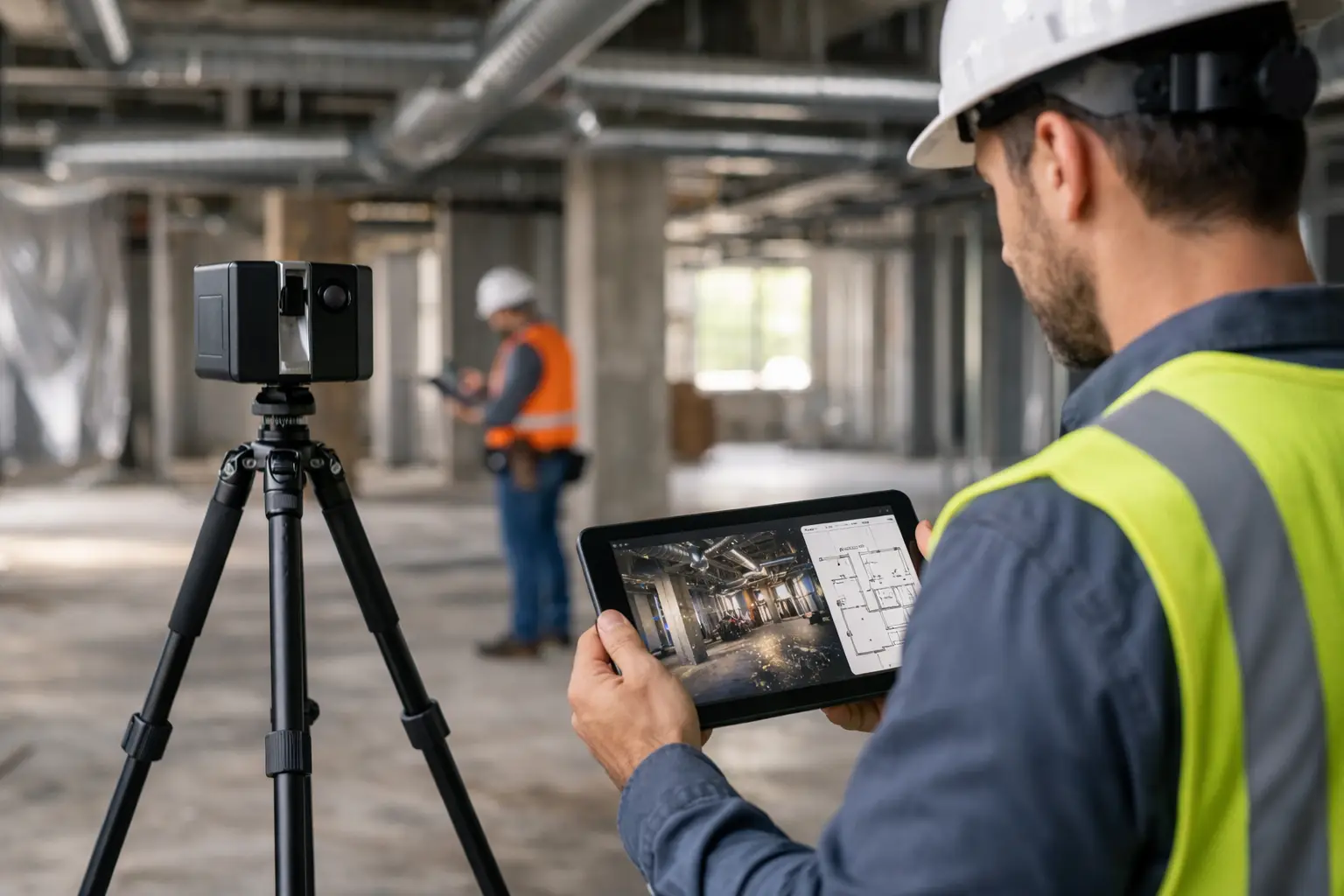
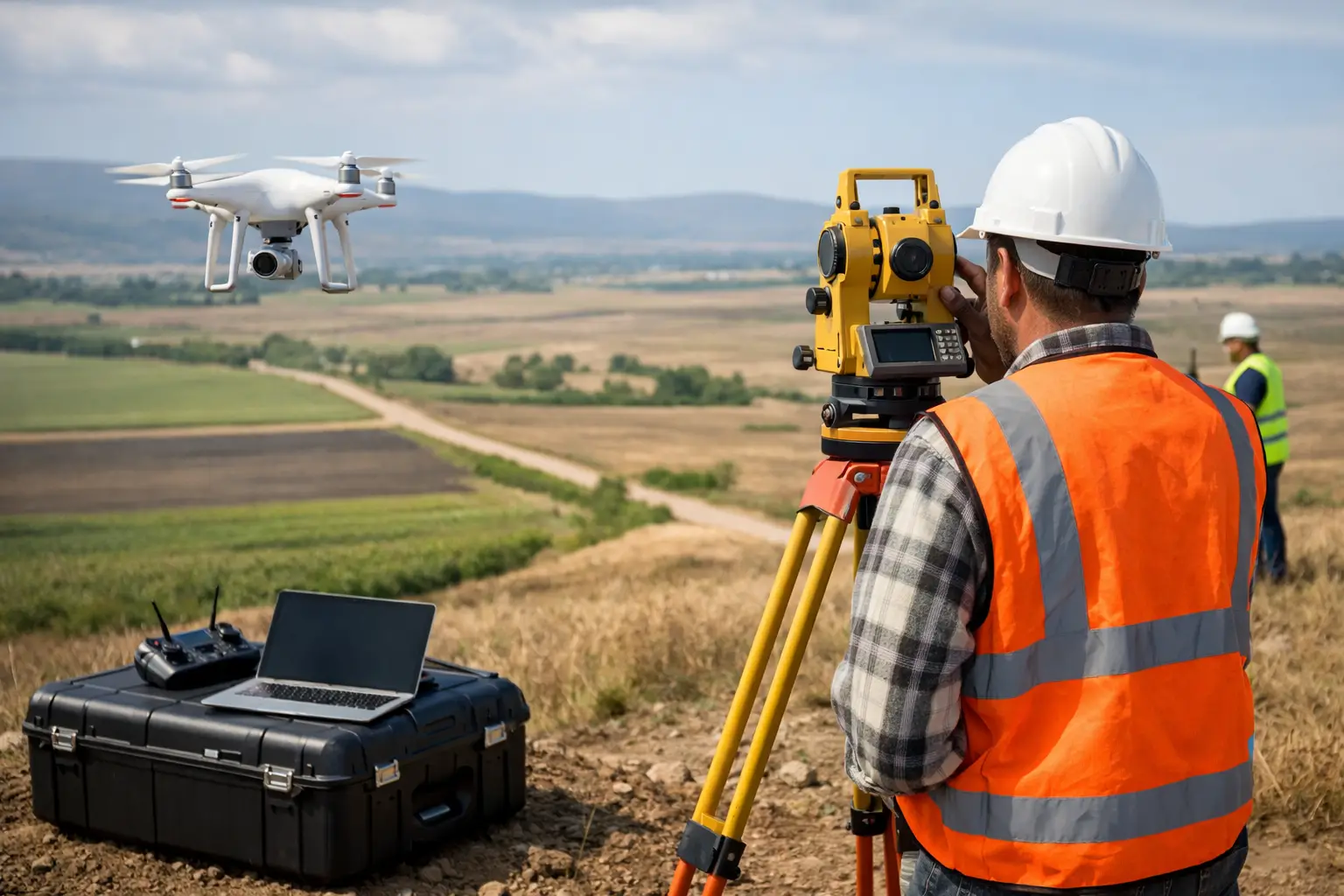
LiDAR scanning is typically the right choice where dimensional accuracy is central. It performs well for as-builts, MEP coordination, façade documentation, and larger commercial or industrial spaces where geometry matters. Photogrammetry adds value where texture, color, and visual realism are important, particularly for marketing assets, heritage spaces, or presentation-driven environments. Drone capture extends visibility across roofs, exteriors, land parcels, and inaccessible areas.
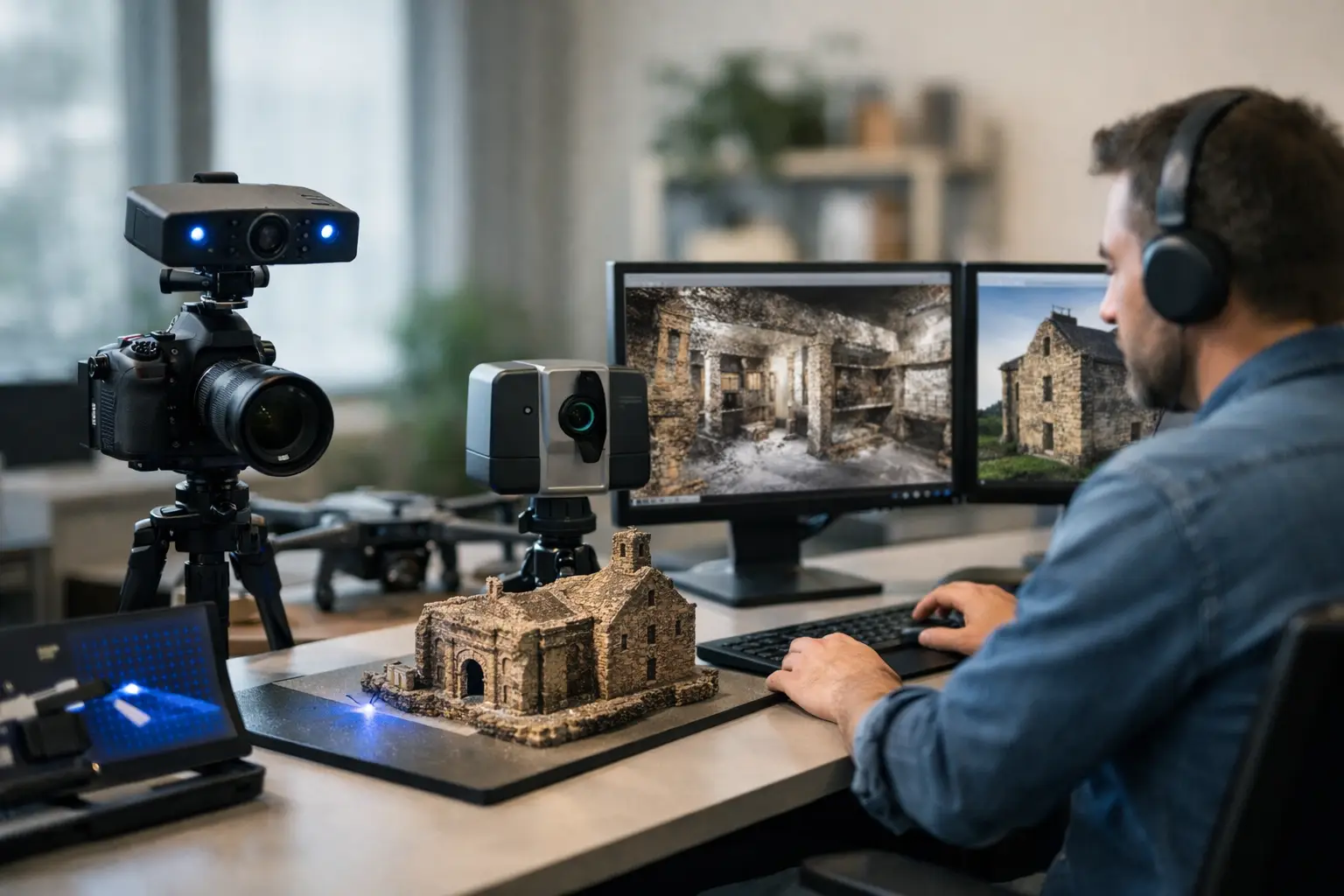
In practice, the strongest workflows often combine methods. A mixed capture strategy might use terrestrial LiDAR for interiors, drones for external envelope and roof data, and 360 imagery for immersive navigation. That hybrid approach produces a richer output, but only if the data is structured correctly from the start.
Processing is where raw data becomes a business asset
Once field capture is complete, the project moves into registration, alignment, cleanup, and structuring. This stage is often underestimated by clients because the site work feels like the main event. In reality, processing determines whether the final dataset is reliable, navigable, and usable across teams.
For point cloud workflows, registration quality is non-negotiable. Misaligned scans can distort dimensions, weaken confidence in downstream modeling, and create disputes about what is actually accurate. For digital twins and virtual tours, processing also includes image balancing, transition logic, and interface configuration. A technically complete capture can still perform poorly if users find the experience confusing or visually inconsistent.
This is also the stage where metadata starts to matter. Organized file structures, zone naming, floor segmentation, asset references, and annotation planning all improve downstream usability. If a facilities team needs to locate plant equipment quickly, or a leasing team wants to direct prospects through a showroom sequence, clean processing has direct commercial value.
The role of Scan-to-BIM in reality capture workflows
For many built environment projects, capture is only the first half of the job. The real operational value comes when point cloud data is translated into BIM models, as-built documentation, or structured records that design and construction teams can act on.
A guide to reality capture workflows would be incomplete without addressing this handoff. Scan-to-BIM is not automatic. Teams still need to define modeling scope, object categories, level of development, and tolerance expectations. Modeling every visible element may sound comprehensive, but it can create cost without adding decision value. In renovation and retrofit work, selective modeling is often more efficient than exhaustive modeling.
The best approach depends on project use. If the model will support clash detection and design coordination, the workflow should prioritize precise geometry and systems representation. If it is mainly for lease planning or asset reference, a lighter model may be enough. Matching BIM output to business intent keeps the workflow commercially rational.
Delivery should fit how teams actually work
A finished dataset has limited value if the client team cannot use it easily. Delivery is not just a file transfer. It is the final design decision in the workflow.
Different stakeholders need different outputs from the same capture. Executives may need a navigable digital twin for remote review. Designers may need registered point clouds and modeled files. Marketing teams may need virtual tours, stills, or spatial content for campaigns. Operations teams may need annotated layouts tied to maintenance or training workflows.
This is why single-format delivery often underperforms. A better model is layered delivery, where the same capture campaign supports multiple use cases. One site visit can produce assets for sales, documentation, planning, and long-term facilities management when the workflow is built that way from the beginning.
Common workflow mistakes that reduce ROI
Most failures in reality capture are not dramatic. They are small decisions that compound. Scope is approved without agreeing on accuracy. Site access is assumed instead of confirmed. A model is requested without defining level of detail. Data is delivered in technically correct formats that the end user does not know how to open or apply.
There is also a common misconception that more data always means more value. It does not. High-volume capture can become a storage burden if no one has planned for indexing, retrieval, model conversion, or stakeholder access. On the other hand, overly compressed workflows can save money upfront while creating blind spots that slow decisions later.
This is where a strategic partner adds more value than a capture vendor. The goal is not simply to scan a site. The goal is to create a spatial dataset that improves visibility, speeds approvals, supports remote collaboration, or reduces rework.
Choosing the right workflow for your sector
In real estate and hospitality, speed-to-market and visual engagement usually drive the workflow. In AEC, dimensional trust and interoperability tend to lead. In insurance and restoration, evidence quality and time-stamped documentation matter more. In industrial and facility management settings, the workflow often needs to support both present needs and future updates.
That is why no single workflow is best in every case. What works for a residential sales gallery may be wrong for a manufacturing plant. What works for one-off marketing may be too lightweight for long-term asset management. Novo Reperio typically approaches this by aligning capture strategy with the commercial objective first, then building the technical process around it.
The strongest reality capture projects are not the ones with the most impressive specs on paper. They are the ones where the digital output gets used – by sales teams, designers, operators, and decision-makers who need clear spatial information without revisiting the site. If you are planning a capture project, start by asking what business decision the asset needs to support, and let the workflow answer the rest.